What a Portuguese Water Dog Judge Puts a Hand On First
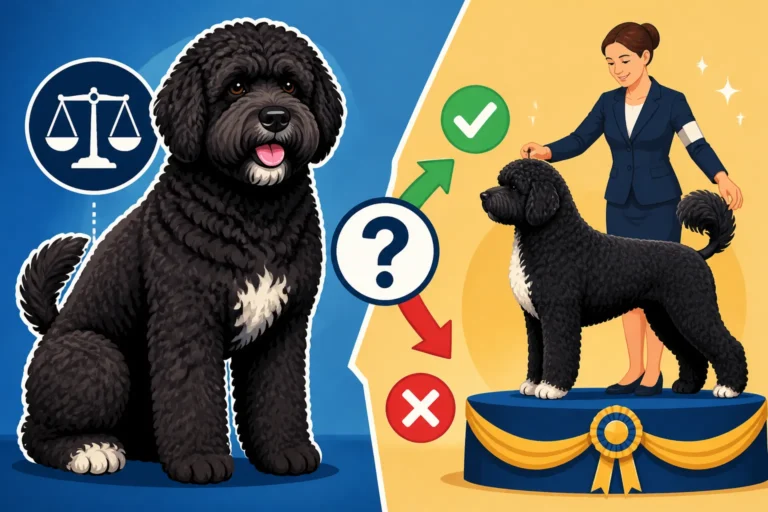
A Portuguese Water Dog judge does not usually begin by testing swimming ability or asking the dog to perform a trick. The examination is a hands-on check of breed type, structure, and condition, and the exact order can vary. Knowing what the judge may touch first—and what they are looking for—helps owners prepare without turning a show-ring visit into a stressful rehearsal.
What a Portuguese Water Dog judge checks first
The initial approach and overall impression
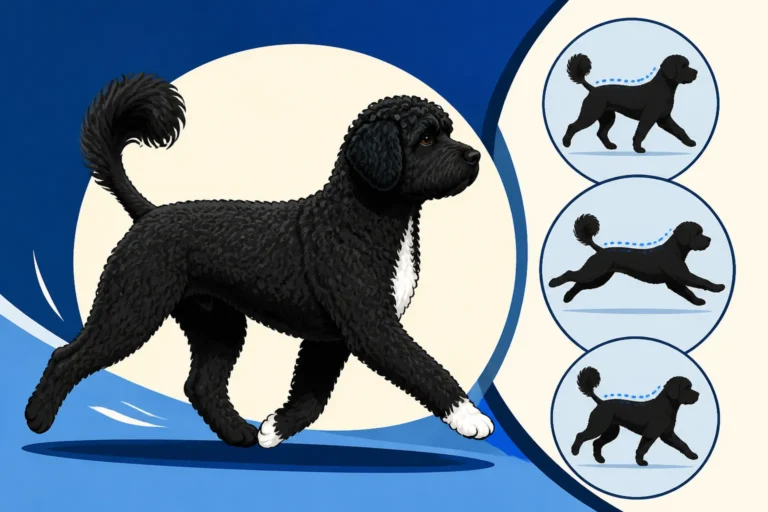
Before a judge puts a hand on the dog, they usually take in its general outline. They may watch the Portuguese Water Dog stand naturally, then observe it moving with its handler. That first look helps the judge assess balance, proportions, carriage, and whether the dog appears sound and confident.
The judge’s first touch is not fixed by one universal rule. Depending on the show, the judge, and the individual dog, the examination may begin at the head, with a check of the bite, or with a brief hands-on assessment of the body. In some rings, the handler is asked to show the dog’s teeth before the judge examines it. In others, the judge may approach the head and begin the examination there.
For an owner watching from the side, that can look like the judge has a standard sequence written in stone. In practice, judges are assessing the same broad features while adapting their handling to the dog in front of them. A dog that is uneasy about its face being handled, for example, may need a calmer, more deliberate approach.
The head and mouth
The head is an important part of Portuguese Water Dog type. A judge may look at its shape and proportions, feel the skull and muzzle, and inspect the mouth and bite. The dog should be comfortable enough to allow this examination, though a little uncertainty in a busy ring is not unusual, especially for a young dog.
Handlers may be asked to lift the lips or open the mouth so the judge can see the teeth. This is a practical check, not a trick or obedience test. A judge needs to see the bite clearly and may also examine the teeth more closely. Owners preparing a puppy can practise brief, gentle lip lifts at home, rewarding the dog for staying relaxed rather than holding it still through a long inspection.
A good first handling experience matters. If the dog pulls away, the handler can calmly reposition it and follow the judge’s instructions. Grabbing the muzzle, repeatedly opening the mouth, or correcting the dog sharply can make a routine examination feel more alarming than it needs to be.
The body and structure
After looking at the head, a judge may run their hands over the dog’s body to assess its structure. They can feel the shoulders, back, chest, ribs, and hindquarters, and check how the dog is put together beneath its coat. This is one reason a dog show examination is not just about appearance: the judge is evaluating physical features that can be hard to judge by sight alone.
A Portuguese Water Dog’s dense coat can obscure the outline of the body. Hands-on examination helps the judge assess what is underneath, including the dog’s proportions and general condition. The coat should not prevent the judge from feeling the structure, although a well-prepared coat can make the examination easier and neater.
A judge may also assess the dog’s legs, feet, and tail, and look at how it stands when the handler sets it up. The What a Correct Portuguese Water Dog's Outline Looks Like guide explains the general silhouette judges are trying to assess, while What a Portuguese Water Dog's Feet Should Look Like covers another feature that can draw attention during the examination.
What the judge may feel during the examination
Shoulders, topline, and body proportions
A judge may feel around the shoulders and along the topline, the line of the back from the withers toward the tail. These areas help reveal the dog’s proportions and how it is built. The judge is not simply checking whether the dog has a straight back; they are assessing the whole outline and how its parts fit together.
The chest and ribs may also be assessed by touch. A long coat can make a dog look broader or heavier than it is, while a recently clipped coat can make its shape more obvious. The hands-on examination helps distinguish coat from body and gives the judge a better sense of the dog’s condition.
Owners sometimes worry that a judge pressing or feeling through the coat means something is wrong. Usually, it is simply how the judge evaluates structure. The What a Portuguese Water Dog Weighs and How Tall It Stands article provides context on size, but a judge considers the dog’s overall balance rather than relying on weight alone.
Hindquarters, legs, and feet
The judge may feel the hindquarters and examine the legs for structure and condition. They may look at how the dog stands, how its joints align, and whether it appears comfortable as it moves. These checks are part of assessing soundness, not an attempt to diagnose a medical problem in the ring.
The feet may also receive attention. Portuguese Water Dogs have webbed feet suited to their historical work in water, but the judge is evaluating the dog against the breed standard, not asking it to swim or demonstrating how quickly it can paddle. The Why a Portuguese Water Dog Has Webbed Feet guide explains the feature’s purpose and how it fits into the breed’s history.
A dog that has practised standing on a nonslip surface and having its paws handled may find this part easier. At home, briefly touching each foot and rewarding calm behavior can make routine handling less surprising. If a dog is uncomfortable, keep practice short and pleasant rather than turning it into a wrestling match.
Coat, tail, and other breed details
The judge will also consider the coat, including texture, presentation, and how it contributes to the dog’s overall appearance. Portuguese Water Dogs have curly or wavy coats, and both coat type and condition affect the impression the dog makes. The Which Coat Types a Portuguese Water Dog Comes In guide offers a closer look at those differences.
The tail and its carriage may be observed while the dog stands and moves. A judge may touch or inspect the tail as part of the hands-on examination, but the broader question is how the dog’s features fit together. They are looking at the complete animal, not judging one detail in isolation.
Grooming preparation can help the judge see and feel the dog’s structure without mats getting in the way. Some owners look for combs, brushes, and coat-care supplies through retailers such as Chewy, especially when building a regular brushing routine. The goal is not to disguise the dog or create an artificial outline; it is to keep the coat clean, manageable, and ready for examination.
| Part of the examination | What the judge may assess | Helpful preparation |
|---|---|---|
| First impression | Outline, balance, posture, confidence | Practise standing calmly and walking on lead |
| Head and mouth | Head proportions, teeth, bite | Briefly practise having the lips lifted |
| Body | Shoulders, topline, chest, ribs, proportions | Help the dog get used to gentle handling along its body |
| Hindquarters and legs | Structure, stance, and apparent soundness | Practise standing on a stable, nonslip surface |
| Feet and tail | Breed features, condition, and presentation | Make paw and tail handling familiar |
| Coat | Texture, condition, and presentation | Brush regularly and prevent mats |
How to prepare a Portuguese Water Dog for a judge’s hands
Practise calm handling in short sessions
Start with a relaxed dog in a familiar place. Touch a shoulder, pause, and reward calm behavior. Gradually work toward the chest, back, hindquarters, legs, feet, tail, and head. Keep each session brief; a puppy does not need to endure a full show-style examination all at once.
For mouth practice, lift one lip gently, reward the dog, and stop. Repeat on another occasion rather than holding the mouth open for a long time. If your dog turns away or stiffens, make the step easier and reward a smaller moment of cooperation. The aim is to build trust, not to force compliance.
It can also help to practise with another person doing the touching while you reward the dog. That gives the dog experience with a stranger’s hands without the noise and movement of a show environment. Choose someone calm, move slowly, and let the dog take breaks.
Make grooming part of the routine
A clean, brushed coat makes handling more comfortable and helps the judge assess the dog’s outline. Regular brushing is especially useful around areas where the coat can tangle, such as behind the ears, under the collar, and where a harness rests. Owners who need to restock basic grooming items may find them at retailers including Chewy, but consistent handling and brushing matter more than any particular product.
Do not try a major new grooming technique just before a show. A last-minute clip, unfamiliar dryer, or long grooming session can leave a dog uncomfortable and distracted. If you are unsure how to prepare the coat, ask an experienced Portuguese Water Dog groomer or breeder to explain the routine suited to your dog’s coat and show plans.
Nails and feet deserve attention, too. A dog with overgrown nails may be less comfortable standing or moving, and a dog unused to having its paws handled may pull away when the judge checks them. Build those habits gradually, and ask a professional for help if nail trimming is difficult or stressful.
Keep the ring experience low-pressure
A conformation examination is not an obedience test. The dog does not have to perform a perfect sit or stare continuously at the handler while the judge checks its mouth and body. The handler’s job is to follow instructions, position the dog safely, and help it remain as comfortable as possible.
If the judge approaches while your dog is nervous, stay composed and listen to the directions. Avoid apologizing repeatedly or tightening the lead unnecessarily, since that can add tension. If your dog needs a moment, a calm pause is often more useful than hurriedly trying to make it stand still.
Preparation should also include movement. Judges commonly observe a dog moving with its handler, so practising a steady walk and an easy turn can help the dog settle into the ring routine. The How a Portuguese Water Dog Should Move guide discusses movement, while How Trainable a Portuguese Water Dog Is offers broader context on the breed’s learning style.
What the examination does and does not tell you
It is a breed evaluation, not a veterinary exam
A judge evaluates the dog’s conformation and presentation against the breed standard. They may notice something that appears unusual, but a show-ring examination is not a substitute for a veterinary assessment. If your dog seems painful, limps, or reacts strongly when touched, arrange a veterinary check rather than relying on a judge’s impression.
This distinction is useful for owners who see a judge feel the dog’s joints or back and wonder whether the judge has found a health problem. The judge is checking physical structure in the context of the competition. That is different from diagnosing a condition or ordering tests.
For information on health screening, see What a Portuguese Water Dog Breeder Should Have Tested and Hips and Joints in a Portuguese Water Dog. Those topics address health considerations outside the scope of a conformation-ring examination.
The sequence can differ without changing the purpose
One judge may begin with the mouth; another may first look at the dog standing and then move to the head. The order can vary with ring procedure, the judge’s preferred approach, the handler’s presentation, and the dog’s comfort. A different sequence does not necessarily mean the judge is favoring or criticizing a particular dog.
What remains consistent is the purpose: the judge is assessing breed type, structure, movement, and condition. The first touch is only one moment in a broader examination. A confident dog that is clean, comfortable with gentle handling, and able to move naturally gives the judge a clearer opportunity to evaluate it.
If you are attending your first show, watch how experienced handlers respond to instructions and allow the judge room to work. You do not need to anticipate every movement. Knowing that the judge may inspect the mouth, feel the body, check the feet, and observe the dog in motion is enough to make the process feel more predictable.
Disclaimer
This article is for general informational purposes only and does not constitute professional advice. Laws, prices and regulations vary by location and change over time. Consult a qualified professional for guidance on your specific situation.