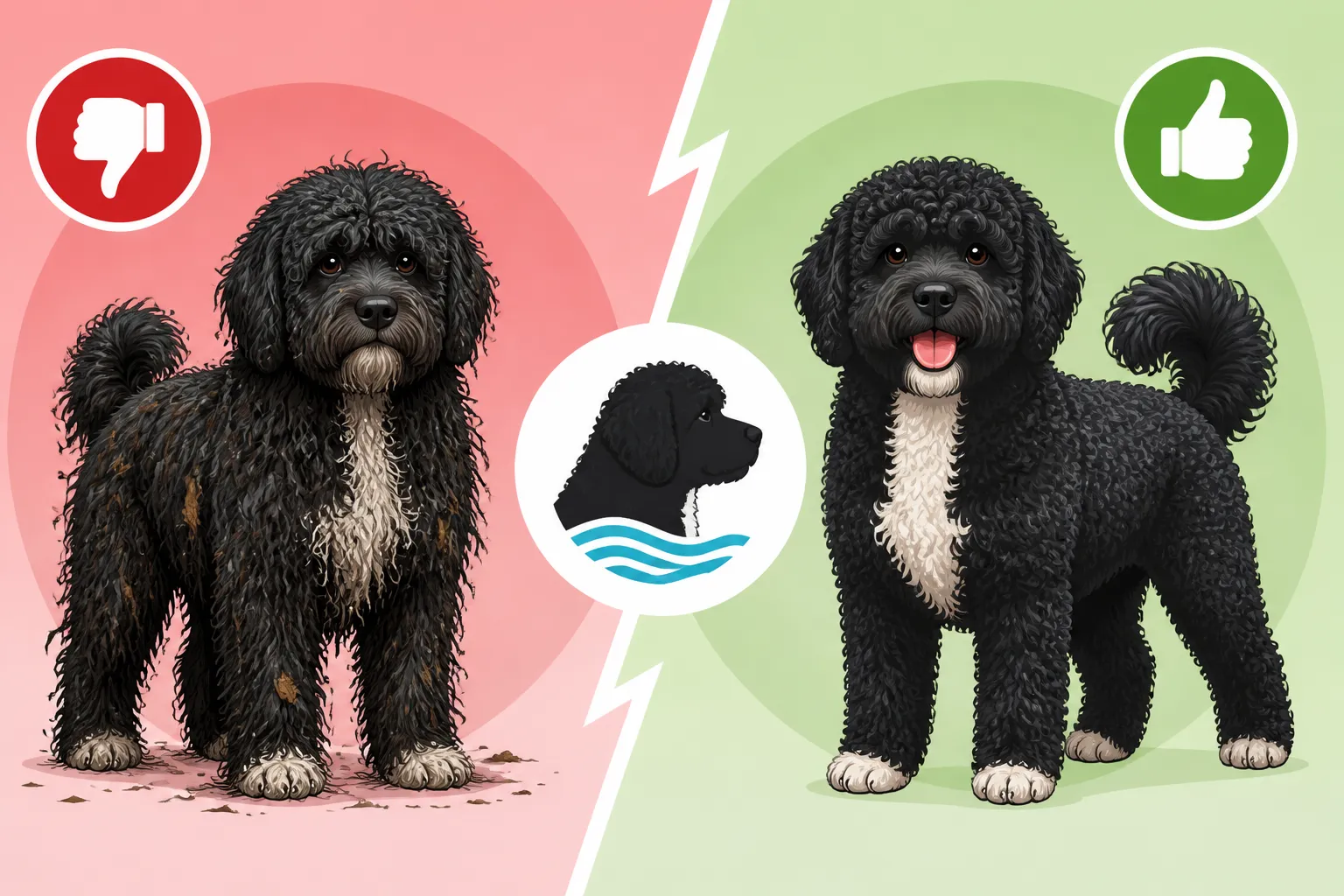
What Improper Coat Means in a Portuguese Water Dog
It can be incredibly disheartening and confusing for new Portuguese Water Dog owners, or even those just researching the breed, to encounter terms like "improper coat." You might worry if it means your beloved pup isn't healthy, or if you've somehow ended up with a less-than-ideal companion. Rest assured, an improper coat isn't a health issue, but it's important to understand what it is and what it means for your dog and your family. This comprehensive guide will explain everything you need to know about the PWD's coat, what an improper coat looks like, why it happens, and how it impacts your dog's life.
Understanding the Portuguese Water Dog's Signature Coat
When you think of a Portuguese Water Dog, a distinct image probably comes to mind: a dog with a robust, often curly or wavy coat that seems perfectly designed for the water. This unique coat is not just for looks; it's a testament to the breed's working heritage, keeping them insulated in cold water and protecting them from the elements while working alongside fishermen. Understanding the proper coat is the first step to truly grasping what an "improper coat" entails.
The Ideal PWD Coat: Curly vs. Wavy
The Portuguese Water Dog breed standard recognizes two distinct coat types, both equally cherished and integral to the breed's identity: the curly coat and the wavy coat. These aren't just minor variations; they present with quite different textures and appearances, yet both perform the same protective function that makes the PWD so unique.
The curly coat is dense, firm, and forms tight, cylindrical curls that cover the entire body. Imagine tiny ringlets, uniform in their spiral, packed closely together. When you run your hand through a properly curly coat, it feels resilient and springy, almost like coarse wool, offering excellent insulation. This texture means the curls hold very little dander and shed minimally, trapping any loose hairs within the curls themselves rather than releasing them into your home. This density and structure are crucial for repelling water and providing warmth during their vigorous aquatic activities.
On the other hand, the wavy coat is also dense, but it's much softer and has a slight sheen. Instead of tight ringlets, it forms flowing waves that can be quite pronounced, giving the dog a shaggier, yet still distinctly PWD, appearance. The hair often looks longer than on a curly-coated dog, especially around the ears and tail, though it's technically the same length. While softer to the touch, this coat type is equally adept at protecting the dog in water, quickly drying and preventing chilling. Both coat types require diligent grooming to prevent matting, a constant battle for owners who want to keep their PWD comfortable and healthy.
Why the PWD Coat is Unique and Hypoallergenic
What truly sets the Portuguese Water Dog's coat apart is its composition: it's a single coat without an undercoat. Unlike many dog breeds that have a soft, dense undercoat for warmth and a coarser outer coat for protection, the PWD relies solely on its robust outer layer. This structural difference is a key factor in why the breed is often touted as "hypoallergenic," a claim that, while popular, needs a bit more nuance.
Because the PWD lacks an undercoat and its hair grows continuously like human hair, it sheds very little compared to double-coated breeds. The shed hairs tend to get caught within the existing coat rather than falling out and spreading dander around the house. This reduced shedding means fewer allergens are released into the environment, which can be a huge relief for individuals with dog allergies. However, no dog is truly 100% hypoallergenic, as people can react to dander, saliva, or urine, not just hair. But for many allergy sufferers, a Portuguese Water Dog is a fantastic option due to its unique coat. If you're curious about the specifics, delving into Why a Portuguese Water Dog Has a Single Coat and How Portuguese Water Dog Is Hypoallergenic can provide even more clarity. This unique coat requires special care, including regular brushing and professional grooming, to prevent it from becoming a matted mess, a common challenge PWD owners face.
What Exactly is an "Improper Coat" (IC)?
When we talk about an "improper coat" in a Portuguese Water Dog, it’s not just a subtle variation from the standard; it's a distinct genetic trait that results in a coat completely different from the breed's characteristic curly or wavy texture. This term can sound alarming, almost like there’s something inherently wrong with the dog, but it’s crucial to understand that it’s purely about aesthetics and adherence to the breed standard, not the dog’s health or personality.
The Genetic Basis of Improper Coat
At its heart, an improper coat (IC) in a Portuguese Water Dog is a genetic anomaly, the result of a specific gene. This trait is inherited in a recessive manner, which means a puppy must inherit two copies of the "improper coat" gene—one from each parent—to express the trait. The gene in question is the FGF5 gene, which influences hair length and growth patterns. Normal PWDs (those with curly or wavy coats) either have two dominant copies of the gene or one dominant and one recessive (making them carriers).
A dog with an improper coat has two recessive copies of this gene. This means that two seemingly "proper" coated Portuguese Water Dogs can produce a litter containing puppies with an improper coat, if both parents are carriers of the recessive gene. This genetic lottery can be a real surprise for breeders if they aren't diligent with their health testing. Fortunately, responsible breeders today utilize DNA testing to understand the genetic makeup of their breeding stock, preventing the unintentional production of IC puppies. Understanding Which Gene Causes Improper Coat in a Portuguese Water Dog is foundational to ethical breeding.
Visual Characteristics of an Improper Coat
So, what does an improper coat actually look like? Well, it's quite a departure from the luscious curls or waves we expect. An IC coat is typically much flatter, often resembling the coat of a Labrador Retriever or a short-haired Golden Retriever rather than the PWD's signature look. Instead of dense curls or distinct waves, you'll see hair that lies flat against the body, with little to no texture or spring. It can sometimes even feel a bit wiry or coarse in places, particularly along the back, and it often lacks the characteristic sheen of a wavy coat.
Another common characteristic is the presence of "feathering," which refers to longer hair on areas like the backs of the legs, tail, and sometimes around the ears. This feathering is not present in the proper PWD coat, which should be uniform in length and texture. You might also notice that the coat appears much thinner or less dense than a typical PWD coat, failing to provide the same insulating properties. If you're trying to visualize it, imagine the sleek, straight coat of a short-coated breed, but on a PWD body, perhaps with a slightly rougher texture. It's a striking difference, and once you've seen a few, it's generally easy to distinguish from a proper curly or wavy coat. For a deeper visual understanding, you might want to look up What an Improper Coated Portuguese Water Dog Looks Like.
How an IC Coat Differs in Function and Maintenance
Beyond the visual difference, an improper coat also behaves quite differently from the standard PWD coat, particularly when it comes to shedding and grooming. The biggest distinction is that an improper coat does shed, and often quite noticeably. While a proper PWD coat tends to trap shed hairs, preventing them from falling out, an IC coat behaves more like a typical dog's coat, releasing hair more freely into the environment. This means that if you're getting a PWD specifically for its low-shedding qualities due to allergies, an IC dog might not be the best fit, as its shedding can be comparable to many other breeds. To understand more about this, explore Whether an Improper Coat Sheds More.
In terms of grooming, an improper coat might actually be perceived as "easier" by some owners, simply because it doesn't mat in the same way a dense, curly or wavy coat does. You won't typically deal with the tight, felt-like mats that can form deep within a proper PWD coat if not brushed diligently. However, "easier" doesn't mean "no maintenance." An IC coat still requires regular brushing to remove loose hair and keep the skin healthy, and regular bathing is still important, especially for a dog that loves water. While the dramatic grooming costs associated with maintaining a show-quality PWD coat might be less, an IC dog still needs consistent care to look its best and stay comfortable. The coat provides less insulation than a proper PWD coat, so owners might need to be more mindful of temperature extremes, particularly in very cold water or weather.
The Implications of an Improper Coat for PWDs
Discovering that a Portuguese Water Dog has an improper coat can raise a lot of questions and sometimes even anxiety for potential owners. It's a deviation from the breed standard, which naturally leads people to wonder about everything from the dog's health to its ability to live a full, happy life. Let's clear up these common concerns and focus on what truly matters for an IC PWD.
Health and Well-being: Is an IC Dog Healthy?
This is perhaps the most important point to emphasize: an improper coat is purely a cosmetic trait and has absolutely no impact on a Portuguese Water Dog's health, temperament, or inherent abilities. Let me say that again: an IC dog is just as healthy, just as smart, just as playful, and just as full of that typical PWD zest for life as a dog with a perfect curly or wavy coat. This is often a huge relief for people who initially worry that an "improper" coat signifies a deeper underlying health problem.
The gene responsible for the improper coat only affects hair growth and texture; it doesn't link to any other health conditions. An improper coat does not make a dog more susceptible to diseases, nor does it affect their organs, joints, or cognitive functions. These dogs can still excel in dog sports, be fantastic family companions, and swim with the same joyous abandon as their proper-coated counterparts. So, if you're concerned about Whether an Improper Coated Portuguese Water Dog Is Healthy or Whether the Improper Coat Gene Affects Anything Else, you can rest easy knowing the answer is no – their health is unaffected. They are still strong, vibrant, and capable Portuguese Water Dogs in every way that counts. That's why considering pet insurance from providers like Healthy Paws can still be a smart choice for any PWD, improper coat or not, to cover unforeseen accidents or illnesses that are common to any dog, regardless of coat type.
Impact on Breeding and Showing
While an improper coat doesn't affect a dog's health, it does have significant implications within the world of dog shows and responsible breeding. According to the breed standard set by organizations like the American Kennel Club (AKC), a Portuguese Water Dog with an improper coat cannot be shown in conformation events. These shows judge dogs based on how well they conform to the ideal physical traits and appearance of their breed, and an IC coat is considered a disqualifying fault. This means that while an IC dog can still participate in performance events like agility, obedience, or water work, it won't be able to compete for titles that judge its appearance.
For breeders, the improper coat gene is a critical consideration. Responsible breeders aim to produce puppies that meet the breed standard and are free from known genetic health issues. Therefore, they diligently DNA test their breeding stock for the IC gene. A dog that is "affected" with an improper coat should not be bred, as it will pass on two copies of the recessive gene. Similarly, two dogs that are "carriers" (meaning they carry one copy of the recessive gene but have proper coats themselves) should not be bred together, because statistically, 25% of their offspring will have improper coats. Breeders strive to make informed choices, often opting to breed a carrier to a "clear" dog (one with no copies of the gene) to ensure all puppies have proper coats, even if some might be carriers themselves. This rigorous approach is key to maintaining breed integrity and preventing the spread of the IC gene. Understanding Whether an Improper Coated Portuguese Water Dog Can Be Shown and Whether Two Carriers Produce an Improper Coat highlights the importance of these breeding decisions.
Ownership Experience and Considerations
For families considering a Portuguese Water Dog, encountering an IC puppy often brings up questions about value and perception. It's true that due to not meeting the breed standard for conformation, puppies with improper coats are often sold for less than their proper-coated littermates. This is not because they are "lesser" dogs, but simply reflects the fact that they cannot be shown and breeders do not want to encourage the spread of the trait in the breeding pool. For a family looking for a loving companion, this can actually be a benefit, as it might make a PWD puppy more accessible financially. If you're looking for information on Whether an Improper Coated Puppy Is Sold Cheaper, the answer is often yes, due to these circumstances.
Despite not having the "correct" coat, an IC Portuguese Water Dog will offer the same intelligence, energy, affectionate nature, and strong bond that makes the breed so beloved. They are still PWDs through and through, eager to please, ready for adventure, and incredibly devoted to their families. The only tangible difference you'll experience as an owner is the coat itself – perhaps less matting but more shedding to manage. Many owners of IC PWDs absolutely adore their dogs, often finding their unique appearance endearing. The bond you form with your dog is what truly matters, far more than the texture of their fur. They are just as worthy of love, training, and a happy home as any other Portuguese Water Dog.
Testing and Responsible Breeding Practices
The discovery of the improper coat gene and the development of reliable DNA testing have been huge advancements for the Portuguese Water Dog breed. It empowers breeders to make informed decisions, protecting the future of the breed while ensuring that potential owners receive healthy, well-socialized puppies. This proactive approach is a hallmark of truly responsible breeding.
DNA Testing for Improper Coat
Fortunately, determining whether a Portuguese Water Dog carries or is affected by the improper coat gene is straightforward, thanks to readily available DNA tests. These tests typically involve a simple cheek swab, which collects cells containing the dog's genetic material. This sample is then sent to a specialized veterinary genetics laboratory for analysis. Some common and reputable labs that offer this testing include OptiGen, Embark Veterinary, and Canine Health Check, among others. These labs are at the forefront of genetic testing for various breeds, providing critical information for breeders and owners.
The DNA test will provide one of three results: "Clear" (N/N), meaning the dog does not carry any copies of the improper coat gene; "Carrier" (N/IC), meaning the dog carries one copy of the gene but has a proper coat itself; or "Affected" (IC/IC), meaning the dog has two copies of the gene and will express an improper coat. This simple test is a powerful tool in a breeder's arsenal, allowing them to confidently plan matings and offer transparency to puppy buyers. It's one of The Four DNA Tests Every Portuguese Water Dog Breeder Runs as standard practice, providing essential insights into a dog's genetic health profile.
How Breeders Use IC Test Results
Responsible breeders take these DNA test results very seriously and use them as a cornerstone of their breeding program. The goal is to avoid producing puppies with improper coats while maintaining genetic diversity within the breed. A "clear" dog (N/N) can be safely bred to another "clear" dog, and all puppies will also be clear. A "clear" dog can also be bred to a "carrier" dog (N/IC); in this scenario, none of the puppies will have an improper coat, but statistically, about half of the litter will be carriers. This is often an acceptable mating strategy, as it allows breeders to use valuable genetics from a carrier without producing affected offspring.
What responsible breeders never do is breed two "carrier" dogs together. Doing so would mean that statistically, 25% of the puppies in that litter would be "affected" (IC/IC) and have an improper coat, 50% would be carriers, and 25% would be clear. Similarly, a dog that is "affected" with an improper coat should never be used for breeding, as it will pass on a copy of the improper coat gene to all of its offspring. By carefully selecting breeding pairs based on their DNA test results, breeders can confidently assure prospective owners that their puppies will have the characteristic PWD coat. This commitment to genetic testing is a key indicator of a reputable breeder, and it's certainly something you'll want to inquire about when researching What a Portuguese Water Dog Breeder Should Have Tested.
Living with a Portuguese Water Dog with an Improper Coat
So, you've learned about the genetics, the appearance, and the implications within the breed community. But what does it truly mean for your day-to-day life if you share your home with a Portuguese Water Dog that has an improper coat? The reality is, it’s far more similar than different to owning a proper-coated PWD, with just a few nuanced considerations, primarily around grooming.
Grooming Adjustments for an IC Coat
One of the most common questions people have is about grooming. Given that the standard PWD coat is known for its intensive grooming requirements to prevent matting, it’s natural to wonder how an improper coat compares. While an IC coat typically sheds more than a proper PWD coat, it actually tends to be less prone to severe matting because it lacks the dense, curly texture that traps hairs so effectively. This can be a double-edged sword: less matting might mean less frequent professional grooming appointments for dematting, but the increased shedding means you might find more dog hair around your home, a new experience for those used to the virtually shed-free PWD.
However, "less matting" doesn't equate to "no grooming." An improper coat still needs regular attention. Brushing is essential to remove loose hairs, distribute natural oils, and keep the skin healthy. For a dog that loves water, as most PWDs do, even an IC coat needs to be kept clean and dry to prevent skin issues. Depending on the exact texture and length of the IC coat, you might still need to trim it periodically to keep it tidy and prevent it from getting too long. While the specific tools might vary slightly (you might not need the same intense slicker brushes and dematting rakes), the commitment to regular care remains. For a broader perspective on grooming needs, understanding How Often a Portuguese Water Dog Needs Grooming can be helpful.
Embracing the "Unique" Look
Ultimately, owning a Portuguese Water Dog with an improper coat is about embracing individuality. These dogs may not fit the conventional image of the breed's coat, but they possess every other wonderful trait that makes PWDs so exceptional. They are intelligent, loyal, energetic, and eager to participate in whatever their human companions are doing, especially if it involves water or a good game of fetch. Their improper coat does not diminish their spirit, their trainability, or their capacity for love and companionship.
Many owners who have IC Portuguese Water Dogs find their unique appearance endearing and wouldn't trade it for anything. It becomes a part of their dog's charm, a conversation starter, and a reminder that true beauty and value in a companion animal go far beyond breed standards or show ring eligibility. What truly defines a Portuguese Water Dog is its vibrant personality, its working drive, and its deep connection with its family. Whether they have a traditional curly coat, a flowing wavy coat, or a sleek improper coat, they are all incredible dogs deserving of love and a full, active life. Just like any pet, ensuring their lifelong health can sometimes mean vet visits, and having a reliable pet insurance plan from a company like Healthy Paws can offer peace of mind, no matter what their coat looks like.
Understanding Coat Differences in Portuguese Water Dogs
To truly appreciate the nuances, let's look at a clear comparison between the standard Portuguese Water Dog coats and an improper coat. This table highlights the key distinctions across various characteristics.
| Feature | Proper PWD Coat (Curly/Wavy) | Improper Coat (IC) |
|---|---|---|
| Appearance | Dense, firm, cylindrical curls OR flowing waves. Uniform texture. | Flat, often shorter, wiry/coarse, resembles retriever coat. May have feathering. |
| Shedding | Very low shedding; shed hair trapped in coat. | Moderate shedding; hair released into environment. |
| Matting Tendency | High; requires diligent brushing. | Lower than proper coats, but still needs care. |
| Hypoallergenic | Generally considered low-allergen (not 100%). | Less suitable for severe allergy sufferers due to increased shedding. |
| Insulation/Water | Excellent insulation, water-repellent. | Less effective insulation, may absorb more water. |
| Show Eligibility | Yes (conformation). | No (disqualifying fault in conformation). |
| Health Impact | None. | None; purely cosmetic. |
| Breeding Status | Can be bred (if clear/carrier paired correctly). | Should not be bred. |
| Cost (Puppy) | Typically higher. | Often lower due to cosmetic deviation. |
Disclaimer
The information provided in this article is for general informational purposes only and does not constitute veterinary advice. Always consult with a qualified veterinarian for any health concerns or before making any decisions about your pet's care or treatment.