Bladder Stones in a Portuguese Water Dog
Few things are more unsettling than noticing your beloved Portuguese Water Dog struggling to urinate, or worse, finding blood in their urine. This can be a sign of bladder stones, a painful and potentially serious condition that can leave any dog owner feeling worried and helpless. This guide aims to thoroughly explain what bladder stones are, how they're diagnosed and treated, and what you can do to prevent them in your active companion.
Understanding Bladder Stones in Your Portuguese Water Dog
When we think of our Portuguese Water Dogs, we often picture them romping by the water's edge, diving into lakes, or perhaps even joining us on a boat trip. Their zest for life and incredible athleticism can make it hard to imagine them suffering from something as mundane, yet painful, as bladder stones. But just like people, dogs can develop these mineral formations in their urinary tract, and it's something every PWD owner should be aware of.
What Are Bladder Stones and Why Do They Form?
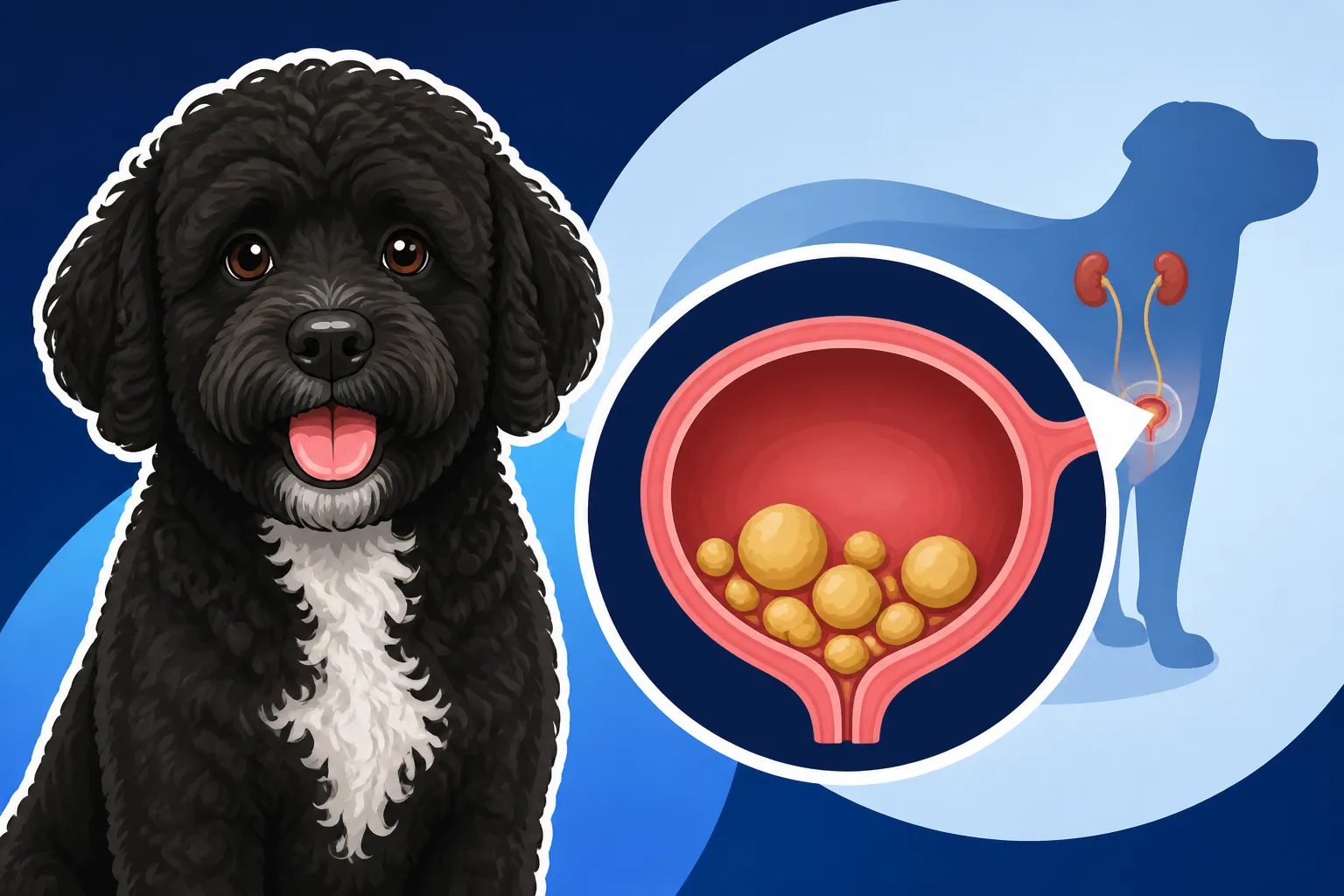
Bladder stones, also known as uroliths, are essentially mineral deposits that form in a dog's bladder. Think of it like sand or gravel collecting in a bucket; over time, these tiny particles can clump together, hardening into stones of various sizes and shapes. These aren't just little pebbles; some can be as small as grains of sand, while others can grow to several centimeters, sometimes even filling the entire bladder.
The formation process usually begins with an imbalance in the urine's chemistry. This might be due to a specific diet, a urinary tract infection, or even genetic predisposition. When the urine becomes oversaturated with certain minerals, or the pH level is consistently off, these minerals can start to crystallize. These tiny crystals then aggregate, forming larger structures. For our Portuguese Water Dogs, who are often so active and love to swim, it's easy to overlook subtle changes, but these internal issues can build up silently.
Common Types of Bladder Stones in Portuguese Water Dogs
While several types of bladder stones can affect dogs, a few are more commonly seen. Understanding which type your Portuguese Water Dog might have is crucial because it directly influences the treatment and prevention strategies.
- Struvite Stones: These are perhaps the most common type and often form in conjunction with a urinary tract infection (UTI). Bacteria present in the bladder can alter the urine's pH, making it more alkaline, which creates an ideal environment for struvite crystals to form. Your vet will often look for a UTI first if struvite stones are suspected.
- Calcium Oxalate Stones: Unlike struvite, calcium oxalate stones typically form in acidic or neutral urine and are not usually associated with bacterial infections. These stones are more common in certain breeds, though they can appear in any dog. They are often harder and more difficult to dissolve with diet alone, frequently requiring surgical removal.
- Urate Stones: Less common than struvite or calcium oxalate, urate stones can sometimes be seen in Portuguese Water Dogs, especially if there's an underlying liver condition or a genetic predisposition to abnormal uric acid metabolism. Certain breeds are more prone to these, but any dog can develop them.
- Cystine Stones: These are thankfully quite rare and are linked to a genetic disorder that prevents the proper reabsorption of cystine in the kidneys. This results in high levels of cystine in the urine, leading to stone formation. If your Portuguese Water Dog develops cystine stones, it often points to a specific inherited metabolic issue.
Identifying the exact type of stone is paramount. Without this information, treating and preventing recurrence becomes a shot in the dark, leading to repeated discomfort and vet visits for your beloved PWD.
Signs Your PWD Might Have Bladder Stones
Catching bladder stones early can make a world of difference in your Portuguese Water Dog's comfort and recovery. Unfortunately, our stoic companions often hide pain well. How a Portuguese Water Dog Hides Pain is a common challenge for owners. Here are some signs to look out for that might indicate your PWD is struggling with bladder stones:
- Straining to Urinate (Dysuria): You might notice your dog squatting or lifting a leg multiple times, but only producing a small amount of urine, or nothing at all. This is often the most obvious sign and can be quite distressing to witness.
- Frequent Urination (Pollakiuria): Your PWD might ask to go outside more often than usual, or even start having accidents in the house despite being perfectly housetrained. This isn't necessarily a behavioral issue; it's often a sign of discomfort or inflammation in the bladder.
- Blood in the Urine (Hematuria): This can range from a faint pink tinge to visibly red urine. This is a clear indicator that something is irritating or damaging the lining of the bladder or urinary tract.
- Licking the Genital Area Excessively: Constant licking can be a self-soothing behavior due to irritation or pain from the stones.
- Vocalization During Urination: If your normally quiet PWD whimpers or cries while trying to urinate, it's a strong signal they are in pain.
- Changes in Urination Posture: A dog might adopt an unusual stance when trying to urinate, hunching their back or stretching out uncomfortably, in an attempt to relieve pressure.
- Lethargy or Reduced Appetite: While less specific, a general decline in energy or refusal to eat could accompany the pain and discomfort of bladder stones. You might also notice signs like Whether an Aging Portuguese Water Dog Loses Its Appetite.
- Accidents in the House: If a previously perfectly house-trained dog suddenly starts having accidents indoors, especially if accompanied by other urinary symptoms, don't just assume it's a behavioral problem. It could very well be a medical issue like bladder stones or a UTI.
Any combination of these symptoms warrants a trip to the vet. Don't wait for the problem to become an emergency.
Diagnosing and Treating Bladder Stones
Once you suspect bladder stones, getting a definitive diagnosis is the next critical step. Your veterinarian will employ a series of tests to confirm the presence of stones, determine their type, and formulate the best treatment plan for your Portuguese Water Dog.
How Vets Confirm Bladder Stones
Diagnosing bladder stones in a Portuguese Water Dog typically involves a thorough physical examination and several diagnostic tests.
- Urinalysis: This is usually the first step. Your vet will collect a urine sample (ideally sterile, via cystocentesis, which is drawing urine directly from the bladder with a needle) and analyze it for pH, specific gravity, presence of blood, protein, glucose, and most importantly, crystals and bacteria. The type of crystals present can give a strong indication of the stone type.
- Urine Culture and Sensitivity: If bacteria are found during the urinalysis, a urine culture will be performed to identify the specific type of bacteria and determine which antibiotics will be most effective. This is especially important for struvite stones, which are often infection-related.
- Radiographs (X-rays): Many types of bladder stones are radiopaque, meaning they show up clearly on an X-ray. This is a non-invasive way to confirm the presence, size, and number of stones. Sometimes, multiple views are needed to ensure all stones are seen.
- Ultrasound: For stones that might not be visible on X-rays (like some urate or cystine stones), or to get a clearer picture of the bladder wall and surrounding structures, an ultrasound is invaluable. It can also help detect any potential blockages or abnormalities.
- Blood Work: What a Portuguese Water Dog's Yearly Bloodwork Should Cover often includes tests that can reveal underlying health issues contributing to stone formation, such as kidney function or liver disease, especially if urate stones are suspected.
Your vet will combine these findings to get a complete picture. Early and accurate diagnosis is key to successful treatment and preventing recurrence.
Treatment Options: From Diet to Surgery
The treatment approach for bladder stones in your Portuguese Water Dog depends heavily on the type of stone, its size, and the severity of your dog's symptoms.
- Dietary Dissolution: For certain types of stones, particularly struvite stones, a prescription diet can often dissolve them over several weeks or months. These specialized diets are formulated to change the urine's pH and reduce the concentration of the minerals that form the stones. This non-surgical option is often preferred if possible, but requires strict adherence to the diet and regular monitoring.
- Antibiotics: If a urinary tract infection is present, especially with struvite stones, a course of appropriate antibiotics is essential. The infection must be cleared for the stones to dissolve effectively and prevent new ones from forming.
- Medical Management (for Urate/Cystine): For urate stones, specific medications can be prescribed to reduce uric acid production, often alongside a special diet. Cystine stones also have specific medical and dietary approaches, though these can be more challenging.
- Urohydropropulsion: For very small stones, especially if the dog is large enough, the vet might attempt to flush them out through the urethra while the dog is under sedation. This is not always successful and depends on the stone size and location.
- Surgical Removal (Cystotomy): If stones are too large to dissolve, are causing severe blockage, or are of a type that doesn't respond to dietary changes (like calcium oxalate), surgical removal is often the most effective option. This procedure, called a cystotomy, involves opening the bladder to remove the stones. Whether a Portuguese Water Dog Tolerates Anesthesia is a valid concern for any owner, but modern veterinary anesthesia is generally very safe. Surgery offers immediate relief but doesn't prevent future stones if the underlying cause isn't addressed.
- Laser Lithotripsy: In some specialized veterinary hospitals, laser lithotripsy might be available. This minimally invasive procedure uses a laser to break stones into smaller fragments that can then be passed or retrieved. It's not suitable for all stone types or sizes but can be an alternative to traditional surgery in specific cases.
The costs associated with diagnosis and treatment can vary significantly, ranging from relatively affordable dietary changes and medication to substantial expenses for surgery. This is where a robust pet insurance plan like Healthy Paws can truly be a lifesaver, helping to cover unexpected veterinary bills and allowing you to make medical decisions based on what's best for your PWD, rather than purely on financial constraints. Consider what What a Portuguese Water Dog's Emergency Fund Should Hold might need to be if you don't have insurance.
Recovery and Post-Treatment Care
Whether your Portuguese Water Dog undergoes dietary dissolution or surgical removal, the recovery and post-treatment phase are crucial for their well-being and to minimize the risk of recurrence.
If your PWD has had surgery, they'll need a quiet, comfortable space to recover at home. This often means restricted activity for a couple of weeks to allow the incision to heal. You'll need to monitor the surgical site for any signs of infection or complications and administer any prescribed pain medication and antibiotics diligently. Your vet will schedule follow-up appointments to check on healing and remove sutures.
For all types of treatment, ongoing management is critical. This typically includes:
- Strict Dietary Adherence: If a prescription diet was prescribed, it's not a temporary measure. Your Portuguese Water Dog will likely need to stay on that specific diet for the long term to prevent new stones from forming. This might involve What a Portuguese Water Dog's Monthly Food Bill Runs, but it's an investment in their health.
- Increased Water Intake: Encouraging your PWD to drink more water helps dilute their urine, making it harder for crystals to form. This can be achieved through wet food, adding water to kibble, or using pet water fountains.
- Regular Urinalysis Checks: Even after successful treatment, your vet will recommend periodic urinalysis to monitor urine pH, crystal formation, and signs of infection. These checks might be every few months initially, then less frequently if all is stable. This proactive monitoring is part of the What Care a Portuguese Water Dog Needs Its Whole Life.
- Antibiotic Regimen (if applicable): If a UTI was involved, a full course of antibiotics is essential, and sometimes follow-up cultures are needed to confirm the infection is completely gone.
Table: Common Bladder Stone Types and Treatment Approaches
| Stone Type | Common Causes | Diagnosis Methods | Primary Treatment Approaches | Prevention Strategies (Post-Treatment) |
|---|---|---|---|---|
| Struvite | Urinary tract infection (UTI), alkaline urine | Urinalysis, X-ray, culture | Prescription diet, antibiotics, surgery | Prescription diet, prompt UTI treatment |
| Calcium Oxalate | Acidic/neutral urine, breed predisposition | Urinalysis, X-ray, ultrasound | Surgery, specific prescription diet | Prescription diet, increased water intake |
| Urate | Liver shunts, genetic predisposition | Urinalysis, ultrasound, bloodwork | Specific prescription diet, medication, surgery | Prescription diet, medication, liver management |
| Cystine | Genetic metabolic disorder | Urinalysis, specialized tests | Specific prescription diet, medication, surgery | Prescription diet, medication, regular monitoring |
Preventing Bladder Stones in Portuguese Water Dogs
Prevention is always better than cure, especially when it comes to a painful and recurrent issue like bladder stones. While some factors like genetics are beyond our control, there are many proactive steps you can take to reduce your Portuguese Water Dog's risk.
Dietary Management and Hydration
What your Portuguese Water Dog eats and how much water they drink are perhaps the most significant factors in preventing bladder stones.
- Balanced Nutrition: A high-quality diet that is appropriate for your dog's life stage and activity level is foundational. Avoid excessive amounts of certain minerals, especially phosphorus, magnesium, and calcium, unless specifically advised by your vet for a particular stone type. Commercial diets are generally balanced, but talk to your vet if you feed a homemade diet.
- Prescription Prevention Diets: If your PWD has a history of stones, or if your vet identifies a high risk based on urine analysis, they might recommend a prescription urinary health diet. These diets are carefully balanced to maintain optimal urine pH and mineral concentrations to prevent crystal formation. They are usually less restrictive than dissolution diets but still require a veterinary recommendation.
- Encourage Water Intake: Diluted urine is less likely to form crystals. Always provide fresh, clean water, and consider multiple water bowls around the house. Adding a little water to your dog's kibble, offering wet food, or using a pet water fountain can also encourage them to drink more. This is particularly important for active Portuguese Water Dogs who might be swimming and exercising frequently.
- Limit Treats and Scraps: Many human foods and treats can be high in minerals or other components that can disrupt urine chemistry. If your PWD is prone to stones, be very strict about what they eat outside of their main diet.
Remember, prevention is often a lifelong commitment, especially if your PWD has already experienced bladder stones.
Regular Monitoring and Lifestyle Adjustments
Beyond diet, routine veterinary care and keen observation on your part can play a huge role in stone prevention.
- Regular Veterinary Check-ups: Consistent vet visits, including How Often a Portuguese Water Dog Needs a Wellness Exam, are crucial. These check-ups allow your vet to perform routine urinalysis and blood work, which can catch early warning signs before they escalate into full-blown bladder stones. What a Portuguese Water Dog's Yearly Health Screen Costs is a small price to pay for catching issues early.
- Monitor Urination Habits: Pay attention to your Portuguese Water Dog's bathroom breaks. Are they going more often? Straining? Is the urine stream strong and clear? Any changes should be noted and discussed with your vet.
- Cleanliness: Ensure your dog's genital area is kept clean to minimize the risk of external bacteria migrating into the urinary tract, which can contribute to UTIs and subsequently, struvite stones.
- Stress Reduction: While not a direct cause, stress can impact overall health and potentially influence a dog's susceptibility to various conditions. A happy, well-adjusted PWD is a healthier PWD.
- Consider Pet Insurance: As mentioned, the costs associated with diagnosing and treating bladder stones, especially if surgery is required or if they recur, can be substantial. Investing in pet insurance like Healthy Paws when your Portuguese Water Dog is young can provide invaluable financial support should these issues arise. It can cover a significant portion of vet bills, allowing you to prioritize your dog's health without added financial strain.
The Role of Genetics
While specific genetic markers for all types of bladder stones in Portuguese Water Dogs haven't been definitively established, genetics can play a role, particularly for certain stone types like cystine stones and sometimes urate stones.
- Breed Predisposition: Some breeds are known to have a higher predisposition to certain types of stones. While Portuguese Water Dogs aren't typically highlighted as the breed for bladder stones in the same way some terriers are for urate stones, individual lines within the breed could certainly carry a higher risk. This emphasizes the importance of knowing your dog's lineage and any health issues reported by the breeder.
- Genetic Testing: For specific types of stones linked to known genetic mutations (e.g., cystinuria), genetic tests may be available. If your Portuguese Water Dog develops such stones, your vet might recommend testing to understand the underlying cause and inform breeding decisions if applicable. Responsible breeders conduct comprehensive health testing, and this kind of information can be invaluable.
- Breeder Responsibility: A reputable breeder will be transparent about health issues in their lines and take steps to avoid breeding dogs with known predispositions to genetic conditions. While there isn't a single "bladder stone test," a breeder who prioritizes overall health and longevity is less likely to produce puppies prone to such issues. What a Portuguese Water Dog Breeder Should Have Tested typically covers many of the major genetic concerns for the breed.
By combining proactive dietary and hydration strategies, vigilant monitoring, regular veterinary care, and awareness of any potential genetic factors, you can significantly reduce the likelihood of your Portuguese Water Dog developing painful bladder stones, helping them lead a long, happy, and active life.
Disclaimer
This article is for general informational purposes only and does not constitute professional advice. Laws, prices and regulations vary by location and change over time. Consult a qualified professional for guidance on your specific situation.