Patellar Luxation in a Portuguese Water Dog
One of the most heartbreaking things for any Portuguese Water Dog owner is seeing their active, enthusiastic companion suddenly yelp, hold up a leg, or start skipping awkwardly while playing. This often happens out of the blue, leaving you wondering what in the world just happened to your usually robust pup. This guide will walk you through patellar luxation in Portuguese Water Dogs, helping you understand what it is, how to spot it, and what treatment options are available to get your beloved companion back on all four paws.
What Exactly is Patellar Luxation in a Portuguese Water Dog?
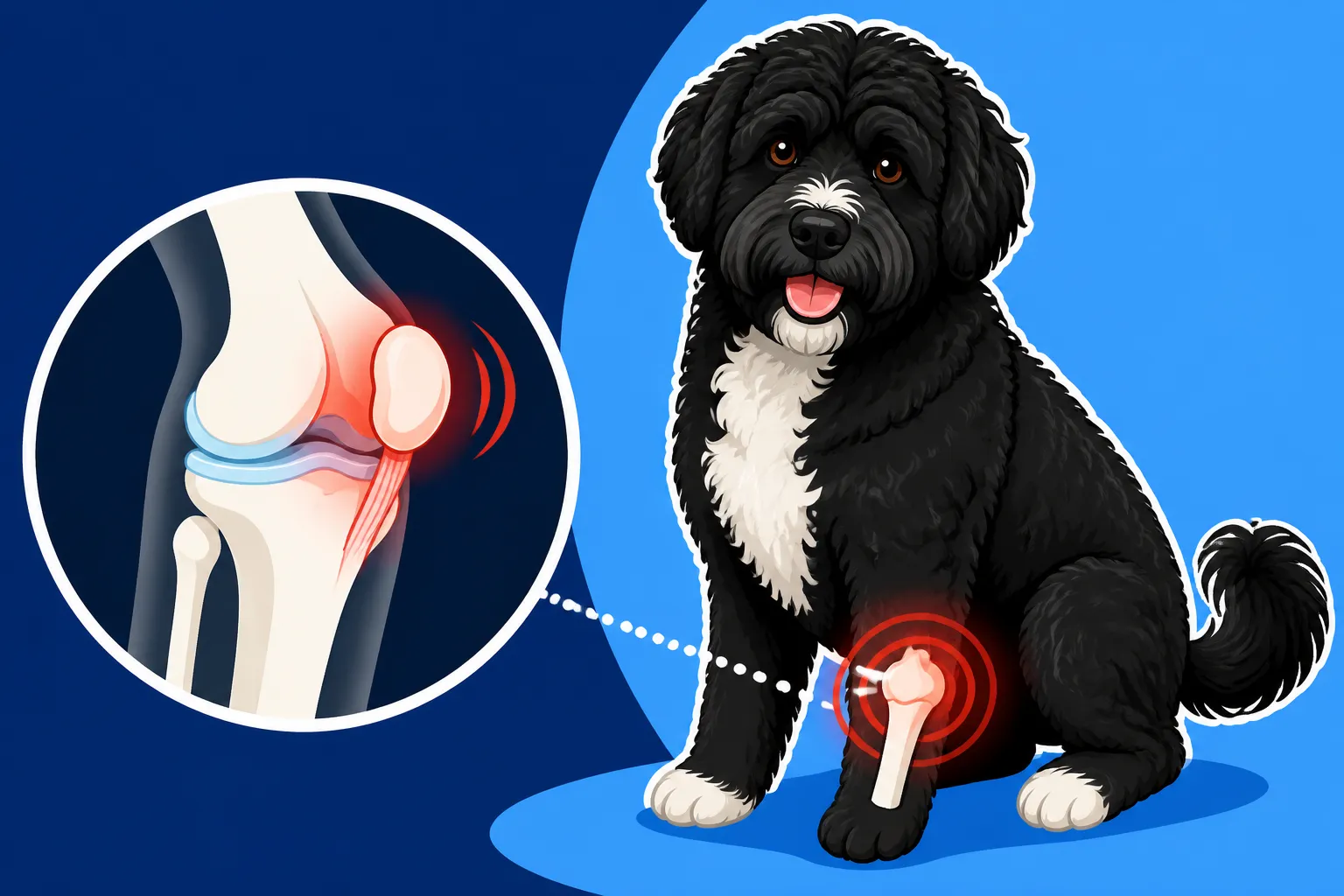
Patellar luxation sounds like a mouthful, but it simply means a dislocated kneecap. The patella, or kneecap, is a small bone that sits in a groove on the end of the femur (thigh bone), called the trochlear groove. It's held in place by tendons and ligaments and acts as a pulley for the quadriceps muscle, allowing the knee to straighten. When this kneecap slips out of its normal position, it's called luxation. For Portuguese Water Dogs, this is a relatively common orthopedic issue, often seen in smaller or medium-sized breeds, though PWDs can certainly be affected. It's a condition that can cause significant discomfort and impact your dog's quality of life if left unaddressed.
The Anatomy of the Canine Stifle Joint
To really grasp patellar luxation, it helps to visualize the knee joint, often called the stifle joint in dogs. Imagine the thigh bone (femur) meeting the shin bone (tibia). Nestled right at the front, where these two bones connect, is the patella. This little bone is crucial; it slides up and down within the trochlear groove, a specific track on the femur. Think of it like a train running on a rail. When everything is working correctly, the patella glides smoothly, ensuring efficient movement and extension of the leg. It's a complex interplay of bones, ligaments, and muscles designed for powerful, fluid motion, which is something our active Portuguese Water Dogs rely on every single day for their swims, runs, and endless games of fetch.
The stability of this system is maintained by the patellar ligament, which connects the patella to the tibia, and the quadriceps muscle group, which connects to the top of the patella. Any misalignment in the bones of the leg – whether the femur, tibia, or the trochlear groove itself – can predispose a dog to patellar luxation. This anatomical quirk can be hereditary, meaning it's something passed down through generations, which is why it's so important for breeders to be aware of the condition in their lines.
Grades of Luxation: From Mild to Severe
Patellar luxation isn't a one-size-fits-all condition; it's graded on a scale of 1 to 4, with each grade indicating increasing severity. Understanding these grades is key to understanding the potential impact on your Portuguese Water Dog and the recommended course of action. A dog might have a mild luxation that rarely causes problems, or a severe one that makes walking incredibly difficult.
Grade 1 is the mildest form. The kneecap can be manually displaced from its groove but pops back into place on its own with little to no intervention. Dogs with Grade 1 luxation might show very subtle signs, perhaps an occasional skip or limp that quickly resolves. They might not seem bothered by it at all, and it can often go unnoticed by owners, only to be discovered during a routine vet check-up.
Grade 2 means the kneecap frequently luxates, either manually or spontaneously, but it can still be manually put back into place, or sometimes it corrects itself when the dog extends its leg. Dogs with Grade 2 luxation will often exhibit the classic "skip" or "bunny hop" gait, where they momentarily hold up their leg before putting weight back on it. This is typically when owners start to become concerned and seek veterinary advice.
Grade 3 indicates that the kneecap is luxated most of the time. While it can still be manually reduced (put back into place), it immediately luxates again once the pressure is released. Dogs at this stage will show persistent lameness, difficulty extending their leg, and may even refuse to use the affected limb. The constant dislocation can lead to further damage to the joint over time.
Grade 4 is the most severe. The kneecap is permanently luxated and cannot be manually returned to its normal position in the trochlear groove. The groove itself might be very shallow or even flat, and the bones of the leg may be twisted and deformed. Dogs with Grade 4 luxation often walk with a crouched, bow-legged stance and experience significant pain and mobility issues. In these severe cases, it's clear that the anatomy is significantly compromised, and the impact on the dog's movement is profound.
Here's a quick summary table:
| Grade | Description | Clinical Signs | Intervention |
|---|---|---|---|
| Grade 1 | Patella can be manually luxated but reduces spontaneously. | Occasional skip, often asymptomatic. | Conservative management, monitoring. |
| Grade 2 | Patella luxates frequently, can be manually reduced or self-reduces. | Intermittent lameness, skipping, "bunny hop." | Conservative management, surgery considered if symptomatic. |
| Grade 3 | Patella is luxated most of the time, can be manually reduced but reluxates immediately. | Persistent lameness, difficulty extending leg, pain. | Surgical correction strongly recommended. |
| Grade 4 | Patella is permanently luxated, cannot be manually reduced. | Severe lameness, crouching/bow-legged stance, significant pain. | Surgical correction necessary, often complex. |
Why Portuguese Water Dogs are Susceptible
It's a tough pill to swallow when you realize your beloved PWD might be predisposed to certain health conditions. When it comes to Hips and Joints in a Portuguese Water Dog, patellar luxation can sadly be part of the picture. This predisposition is largely genetic, meaning the structural abnormalities that lead to the kneecap slipping out of place are inherited. It's not necessarily a fault of the owner or anything you did wrong; it's simply how your dog was built, often due to a combination of factors.
The issue often stems from a shallow trochlear groove on the femur, which doesn't provide enough of a "track" for the kneecap to stay in. Imagine a train track that's almost flat – the train would easily derail. Additionally, malformation of the femur or tibia, where the bones are slightly rotated or bowed, can also pull the patellar ligament off-center, making luxation more likely. Because these are structural, bony issues, they can't be "fixed" with exercise or diet alone, though those can certainly help manage symptoms.
This is why responsible breeding practices are so incredibly important. Breeders who are dedicated to the health of the Portuguese Water Dog breed will meticulously screen their breeding stock for orthopedic issues, including patellar luxation. They aim to breed dogs with sound structure to reduce the incidence of such inherited conditions in future generations. Asking a breeder about their dogs' orthopedic clearances, beyond just hips and elbows, is crucial when you're looking for a puppy.
Recognizing the Signs: Is Your Portuguese Water Dog Showing Symptoms?
One of the challenges with patellar luxation, especially in its earlier stages, is that our resilient Portuguese Water Dogs can be incredibly stoic. They're bred to work, to endure, and they often try to push through discomfort. This means you, as their owner, need to be extra vigilant and pay close attention to subtle changes in their gait or behavior. You know your PWD best, and noticing small differences can make all the difference in early detection and intervention. Sometimes, a PWD might even try to How a Portuguese Water Dog Hides Pain, making it even more vital for owners to be observant.
The Intermittent Skip: A Common Early Sign
The most classic and often first noticed symptom of patellar luxation in a Portuguese Water Dog is an intermittent skip or hop in their gait. You might be out on a walk, or they might be chasing a ball, and suddenly, they'll pick up one hind leg for a few steps, then place it back down as if nothing happened. It's often described as a "bunny hop" or a brief moment of three-legged movement. This happens when the kneecap slips out of its groove, causing a momentary locking of the joint. When it slips back into place, the dog can use the leg normally again, often shaking it out as if to "reset" it.
This intermittent nature is what makes it tricky to spot, and sometimes, owners might dismiss it as a momentary stumble or quirk. However, if you see this happening repeatedly, even if it's brief, it's a strong indicator that something is going on with their knee. The frequency of these skips can vary greatly, from once in a blue moon to several times during a single play session, depending on the grade of luxation. Your PWD might show this more after intense exercise, or perhaps after getting up from a rest, as the muscles might be less engaged to hold the kneecap in place. Keeping a mental note or even a small journal of when and how often you see these skips can be very helpful information for your vet.
Pain, Swelling, and Reluctance to Move
While the skip is a hallmark, as patellar luxation progresses or if it's more severe (Grade 3 or 4), you'll likely notice more pronounced signs of discomfort and impaired mobility. Your Portuguese Water Dog might start showing obvious signs of pain, perhaps yelping or whining when the leg is manipulated, or becoming reluctant to put weight on the affected limb at all. You might observe swelling around the knee joint, which indicates inflammation, a natural response to the chronic irritation and damage caused by the dislocating kneecap.
Beyond the visible signs, pay attention to behavioral changes. Is your once eager-to-swim PWD suddenly hesitant to jump into the water or get off the couch? Are they shying away from being touched around their knee? Are they struggling to climb stairs or jump into the car, activities they once performed with ease? These are all red flags that your dog is experiencing significant pain and trying to protect the affected leg. They might also develop an altered stance, holding the leg slightly out to the side or walking with a stiff, unnatural gait to avoid bending the knee in a way that causes the kneecap to slip. This kind of chronic discomfort can really impact their overall well-being and happiness.
When to See Your Veterinarian
If you observe any of the signs mentioned above – whether it's an occasional skip or persistent lameness and pain – it's absolutely time to schedule an appointment with your veterinarian. Don't delay, hoping it will just go away. Early diagnosis and intervention can often prevent the condition from worsening and can help manage pain more effectively. Even if you're not entirely sure, a quick check-up is always better than letting your dog suffer in silence.
During your visit, be prepared to describe exactly what you've noticed: when the symptoms started, how often they occur, what activities seem to trigger them, and whether your dog appears to be in pain. Your vet will perform a thorough physical examination, specifically manipulating the knee joint to check for patellar movement and stability. They can usually feel if the kneecap is luxating and assess the grade of luxation right there in the exam room. This hands-on assessment is crucial for an initial diagnosis. It's often followed up with imaging to confirm and evaluate the extent of the issue.
Diagnosing and Treating Patellar Luxation in Portuguese Water Dogs
Once you've noticed the signs and taken your Portuguese Water Dog to the vet, the next step is getting a definitive diagnosis and discussing treatment options. This can feel overwhelming, but your vet will guide you through the process, explaining the findings and what the best course of action is for your specific dog. Remember, every dog is an individual, and treatment plans need to be tailored to their needs, their activity level, and the severity of their luxation.
The Veterinary Examination and Imaging
As mentioned, the initial diagnosis of patellar luxation typically begins with a thorough orthopedic examination by your veterinarian. They will gently palpate your Portuguese Water Dog's knee joint, flexing and extending the leg, and attempting to manually move the patella to determine if it luxates and to what degree. This hands-on assessment helps them determine the grade of luxation (Grade 1 through 4). They'll also check for any associated pain, swelling, or instability in other parts of the joint.
Following the physical exam, X-rays are usually recommended. While patellar luxation itself isn't always directly visible on an X-ray (as the kneecap might be in place when the image is taken), X-rays are invaluable for assessing the overall bone structure of the leg. They can reveal shallow trochlear grooves, deformities in the femur or tibia, and signs of arthritis or other joint damage that may have developed due to the chronic luxation. For instance, X-rays can show if the tibial crest (the bony prominence where the patellar ligament attaches) is misaligned. This comprehensive imaging helps confirm the diagnosis, determine the underlying anatomical issues, and rule out other potential causes of lameness, such as a cranial cruciate ligament tear. This is also why it's a good idea to ensure your vet knows When a Portuguese Water Dog Should Be X Rayed for other conditions, as regular joint checks are key.
Conservative Management Options
For Portuguese Water Dogs with mild cases of patellar luxation (typically Grade 1 or sometimes Grade 2 with minimal symptoms), conservative management may be recommended. The goal here is to reduce pain and inflammation, strengthen supporting muscles, and minimize the risk of further joint damage, without resorting to surgery. It's about supporting the joint and managing the symptoms.
Conservative approaches often include anti-inflammatory medications to control pain and swelling, especially during flare-ups. Joint supplements containing ingredients like glucosamine, chondroitin, and MSM can help support cartilage health and joint lubrication, though it's important to remember these are supportive, not curative. Weight management is also crucial; keeping your Portuguese Water Dog at a healthy weight reduces stress on their joints, including the knee. Overweight dogs put significantly more strain on their stifles, exacerbating any existing luxation.
Controlled exercise is also part of conservative management. While high-impact activities might be restricted, low-impact exercises like swimming can be incredibly beneficial. Swimming provides excellent muscle conditioning without the concussive forces on the joints. This is a huge advantage for Portuguese Water Dogs, who naturally love the water. Your vet or a certified canine physical therapist might also recommend specific exercises to strengthen the quadriceps muscles, which help to stabilize the kneecap. It's about building strong support around the joint to keep the patella in its groove as much as possible.
Surgical Interventions and Recovery
When conservative management isn't enough, or for more severe cases of patellar luxation (typically Grade 2 with persistent lameness, Grade 3, or Grade 4), surgical correction is often the best option to alleviate pain and restore proper knee function. The specific surgical procedure will depend on the underlying anatomical abnormalities in your Portuguese Water Dog.
One common surgical technique is trochlear wedge recession or trochlear chondroplasty, where the trochlear groove is deepened to create a better track for the kneecap. Imagine carving a deeper groove into that flat train track so the train stays on. Another procedure is tibial crest transposition, where the bony attachment of the patellar ligament on the tibia is cut and re-anchored in a position that better aligns the kneecap. Sometimes, the soft tissues surrounding the joint (joint capsule) are also released or tightened to help hold the patella in place. In very complex cases, bone realignment procedures (osteotomies) may be necessary to correct severe deformities of the femur or tibia.
Recovery from patellar luxation surgery involves a significant period of rest and rehabilitation. Your PWD will need strict activity restriction for several weeks, often confined to a crate or small space, with only short, leashed potty breaks. Pain management medication will be prescribed, and cold compresses might be used to reduce swelling. Physical rehabilitation, often involving passive range of motion exercises, gentle massage, and eventually controlled walks and specific strengthening exercises, is critical for a successful outcome. This can be a long road, but with dedication, most Portuguese Water Dogs recover well and regain excellent use of their leg. Many pet insurance plans, like those offered by Healthy Paws, can be incredibly helpful in offsetting the substantial costs associated with such surgeries and extended rehabilitation.
Living with and Preventing Patellar Luxation
Living with a Portuguese Water Dog, especially one prone to joint issues, means being proactive about their health. While patellar luxation can be a serious condition, understanding how to manage it, and how to minimize its occurrence in the first place, empowers you to provide the best possible life for your furry family member. It’s all about consistency, informed choices, and sometimes, a little help from modern veterinary care.
Long-term Management and Physical Therapy
Even after surgery, or if you're managing a mild luxation conservatively, long-term management and ongoing physical therapy are crucial for your Portuguese Water Dog's joint health. This isn't a "one and done" situation; it's a commitment to supporting their mobility throughout their life, especially as they get older and may be prone to The Age a Portuguese Water Dog Gets Arthritis.
Physical therapy, or "rehab," plays a vital role in strengthening the muscles around the knee, improving range of motion, and reducing the risk of re-injury. A certified canine physical therapist can design a tailored program that might include exercises like controlled leash walks, gentle stretching, balance exercises, and hydrotherapy (swimming or underwater treadmill work). As discussed, Why Swimming Protects a Portuguese Water Dog's Joints makes it an ideal activity for PWDs in rehab. These exercises aren't just for post-op recovery; they can be excellent for any dog with a luxating patella, helping to build the muscular support needed to keep the kneecap stable.
Beyond formal therapy, daily routines contribute significantly. Maintaining a healthy weight, providing a high-quality diet, and supplementing with joint-supporting nutrients can all help. Regular, moderate exercise that avoids extreme twisting or sudden stops is often recommended. Think steady walks, light jogging, and of course, swimming. Close monitoring for any recurrence of limping or pain is also key, allowing for prompt veterinary attention if symptoms return.
The Importance of Responsible Breeding
For future Portuguese Water Dog owners, one of the most powerful prevention tools lies in choosing a responsible breeder. Since patellar luxation has a significant genetic component, the health clearances of the parents can drastically reduce the risk in puppies. This ties directly into What a Portuguese Water Dog Breeder Should Have Tested.
A reputable breeder will meticulously screen their breeding stock for patellar luxation and other common orthopedic issues. This usually involves veterinary examinations where the patellas are manually checked and graded, often by an orthopedic specialist, and recorded in a public database. They should be transparent about these results and be able to show you documentation for both parents, not just verbal assurances. They understand that a healthy lineage means a healthier future for the breed as a whole.
Avoid breeders who don't perform these health checks, or who can't provide verifiable results. While a health guarantee is nice, it’s even better to invest in a puppy from parents with excellent health clearances from the start. This proactive approach by breeders is the best defense against inherited conditions like patellar luxation and speaks volumes about their commitment to the welfare of their dogs and the breed.
Supporting Your Dog with Joint Health and Insurance
Regardless of whether your Portuguese Water Dog has a diagnosed case of patellar luxation or not, supporting their joint health throughout their life is a cornerstone of responsible ownership. These active, athletic dogs rely heavily on their joints for their characteristic energy and love of water.
Joint supplements are a popular choice for many owners. While not a cure, products containing glucosamine, chondroitin, MSM, and omega-3 fatty acids can help support cartilage integrity, reduce inflammation, and improve joint lubrication. Discuss with your vet if When a Portuguese Water Dog Needs Joint Supplements and which specific formulations they recommend for your dog's age and activity level. Maintaining an ideal body weight is paramount; every extra pound puts undue stress on vulnerable joints. A balanced, high-quality diet appropriate for their activity level is also essential.
Finally, considering pet insurance, especially from providers like Healthy Paws, can be a game-changer when facing orthopedic issues. Patellar luxation surgery and subsequent rehabilitation can be incredibly expensive. A good pet insurance policy can help cover a significant portion of these costs, easing the financial burden and allowing you to make medical decisions based on what's best for your Portuguese Water Dog, rather than what you can afford out-of-pocket. It’s a peace of mind investment that can literally save your dog's quality of life, covering everything from diagnostics to surgery and ongoing physical therapy, provided the condition isn't pre-existing when you enroll.
Disclaimer
This article is for general informational purposes only and does not constitute professional advice. Laws, prices and regulations vary by location and change over time. Consult a qualified professional for guidance on your specific situation.