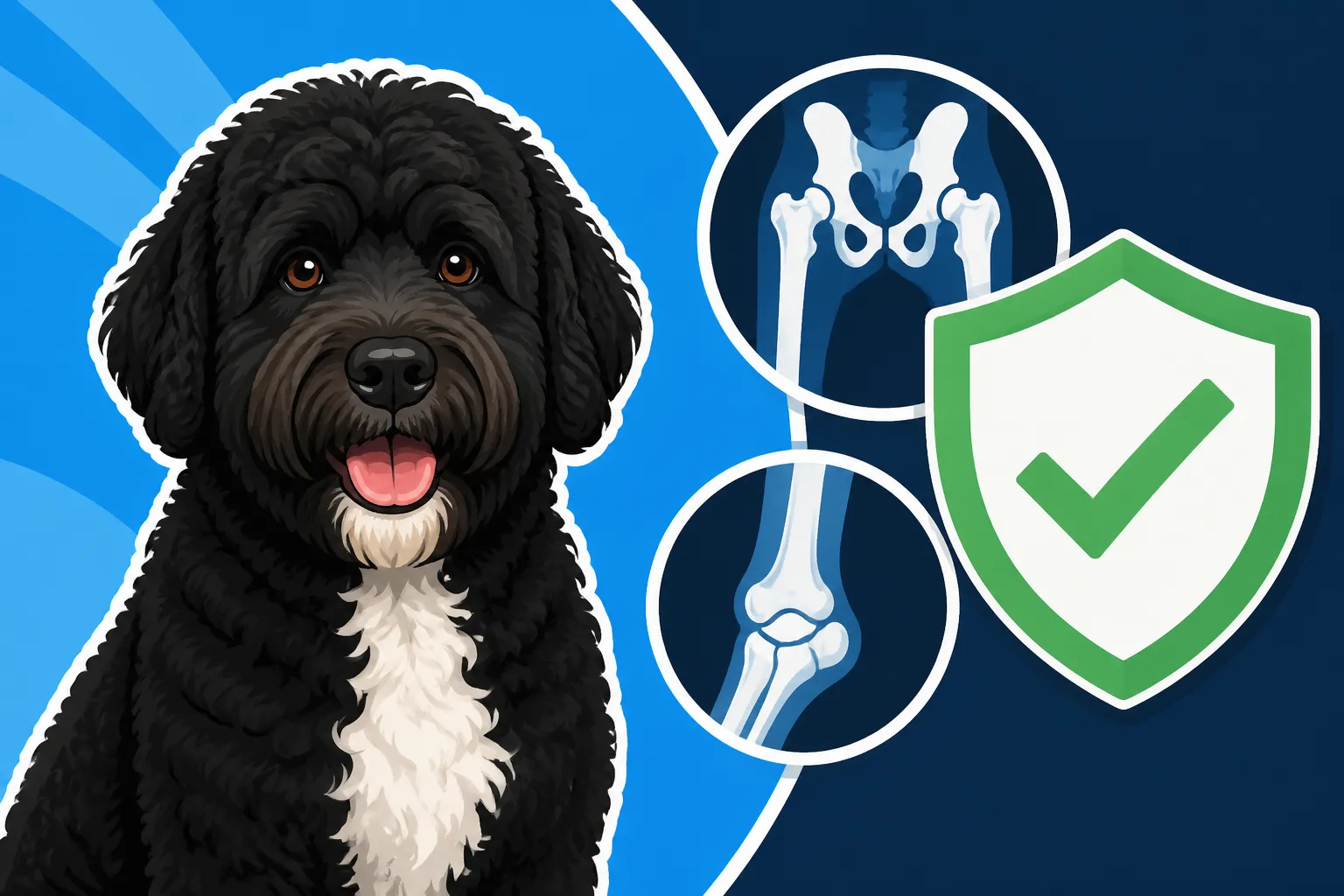
Whether a Portuguese Water Dog Breeder Certifies Hips and Elbows
Bringing a Portuguese Water Dog into your life is a huge decision, filled with dreams of playful swims and loyal companionship. But beneath that excitement often lies a gnawing worry: how do you ensure the puppy you choose is truly healthy and won't face debilitating genetic conditions later on? Among the most serious concerns are hip and elbow dysplasia, which can lead to a lifetime of pain and costly veterinary care. This guide will walk you through what reputable Portuguese Water Dog breeders do to certify their breeding dogs' hips and elbows, empowering you to make an informed and confident choice.
The Absolute Necessity of Hip and Elbow Certifications
When you're looking at Portuguese Water Dog puppies, it's easy to get swept up in the adorable faces and wagging tails. But a truly responsible breeder understands that health starts long before puppies arrive, with the parents. Hip and elbow certifications aren't just fancy pieces of paper; they are fundamental screening tools designed to reduce the incidence of painful and often crippling genetic joint diseases within the breed. These certifications speak volumes about a breeder's commitment to the long-term health and well-being of the puppies they produce, and by extension, the families who will love them.
Why Joint Health is Paramount for a Portuguese Water Dog
Portuguese Water Dogs are renowned for their athleticism, their love of water, and their robust working heritage. They are built for activity – jumping, running, swimming, and retrieving. Every single one of these activities places stress on their joints, particularly their hips and elbows. A dog afflicted with hip or elbow dysplasia might not be able to enjoy the very activities that make the breed so special. Imagine your energetic PWD being unable to leap into the lake, retrieve a buoy, or even play a vigorous game of fetch without pain. It's a heartbreaking reality for many owners whose dogs were bred without proper health screening. These conditions aren't just about discomfort; they can lead to severe arthritis, chronic pain, and a dramatically reduced quality of life. Owners are often faced with expensive management, including medication, physical therapy, and potentially multiple surgeries.
Understanding Hip Dysplasia
Hip dysplasia is a malformation of the hip joint, where the ball (femoral head) doesn't fit snugly into the socket (acetabulum). Instead, it can be loose or shallow, leading to grinding, instability, and eventually, degenerative joint disease or osteoarthritis. It's largely genetic, but environmental factors like rapid growth, excessive exercise in puppies, and diet can influence its severity. For a breed as active as the Portuguese Water Dog, sound hips are absolutely non-negotiable. Even a dog with mild dysplasia can experience significant pain and mobility issues over time. Hip Dysplasia in a Portuguese Water Dog is a detailed read on this.
Understanding Elbow Dysplasia
Elbow dysplasia is a more complex condition encompassing several developmental abnormalities of the elbow joint, including ununited anconeal process, fragmented coronoid process, osteochondrosis dissecans (OCD), and elbow incongruity. All of these lead to abnormal bone growth and joint deterioration, resulting in pain, lameness, and secondary arthritis. Like hip dysplasia, it has a strong genetic component. Because dogs bear a significant amount of weight on their front limbs, elbow problems can be incredibly debilitating. A Portuguese Water Dog with painful elbows will struggle with everyday movements, making their active lifestyle impossible. You can learn more about this in Elbow Dysplasia in a Portuguese Water Dog.
How Reputable Breeders Certify Hips and Elbows
Certifying hips and elbows isn't something a breeder does on a whim; it's a structured, often expensive, and long-term commitment. It involves specific veterinary procedures and submissions to recognized canine health registries. For Portuguese Water Dogs, the primary organization for these certifications in North America is the Orthopedic Foundation for Animals (OFA). Some breeders may also use PennHIP, which offers a different assessment method for hips.
The Orthopedic Foundation for Animals OFA Process
The OFA operates a public database of canine health information, making it a cornerstone for responsible breeders. For hip and elbow certifications, dogs must be at least 24 months old – two years – to receive a final OFA rating. This age is crucial because it ensures the joints are fully developed, giving an accurate picture of their health. The process involves:
- Radiographs (X-rays): The dog is sedated or anesthetized to ensure proper positioning, which is critical for accurate imaging. Specific views are taken of both hips and elbows.
- Submission to OFA: These X-rays are sent to the OFA, where they are reviewed by a panel of three independent, board-certified veterinary radiologists.
- Grading and Certification:
- Hips: Radiologists evaluate hip conformation and stability, assigning one of seven grades: Excellent, Good, Fair (all considered "passing" or "normal"), Borderline, Mild Dysplasia, Moderate Dysplasia, or Severe Dysplasia. Only dogs receiving an Excellent, Good, or Fair rating receive an OFA certification number and are considered suitable for breeding regarding hips.
- Elbows: Elbows are graded on a scale of Normal (no evidence of dysplasia) or Grades I, II, or III (indicating increasing severity of dysplasia). Only "Normal" elbows are considered clear for breeding.
- Public Database: Once certified, the results (including the dog's name, breed, date of birth, and OFA number) are typically publicly accessible on the OFA website, unless the owner specifically opts out. This transparency is a hallmark of responsible breeding.
A breeder dedicated to the health of their Portuguese Water Dogs will proudly provide you with the OFA certification numbers for both parents, allowing you to verify the results yourself online. The results are clearly documented, showing that the dog was evaluated after reaching the mature age of two years. Which Health Tests a Portuguese Water Dog Breeder Should Run offers further insight into comprehensive testing.
The PennHIP Alternative for Hips
While OFA is widely used, some breeders choose PennHIP for hip evaluations. PennHIP stands for "University of Pennsylvania Hip Improvement Program." It's another objective method to evaluate hip joint laxity, which is a major factor in the development of hip dysplasia. Unlike OFA, PennHIP can be performed on dogs as young as 16 weeks, though many breeders still do it closer to maturity.
- Specific Radiographs: PennHIP requires three distinct X-ray views: a distraction view, a compression view, and a standard extended view. The distraction view is unique to PennHIP and measures hip laxity by gently pushing the femoral heads out of the hip sockets.
- Quantitative Measurement: The X-rays are analyzed to produce a "distraction index" (DI), which is a quantitative measure of hip joint laxity. A lower DI indicates tighter hips.
- Breed-Specific Comparison: Results are presented as a percentile ranking, comparing the dog's DI to other dogs of the same breed. For example, a dog in the 70th percentile has tighter hips than 70% of Portuguese Water Dogs in the database.
- Interpretation: Breeders look for dogs with a DI in the tighter half of the breed's distribution (e.g., above the 50th percentile) and avoid breeding dogs with significantly loose hips.
While PennHIP provides valuable data on hip laxity, it doesn't grade elbows. Therefore, breeders using PennHIP for hips will still need to use OFA or another recognized method for elbow certification.
What a Responsible Breeder Should Provide You
When you're speaking with a Portuguese Water Dog breeder, asking about hip and elbow certifications isn't just a good idea – it's your right as a prospective owner. A truly ethical breeder will not only understand your concerns but will welcome your questions and be eager to show you proof of their health testing. If a breeder hedges, dismisses your questions, or claims their dogs are "just healthy" without documentation, consider it a significant red flag.
The Documentation You Need to See
Don't settle for a breeder simply telling you their dogs are certified. You need to see the verifiable proof. This typically comes in a few forms:
- OFA Certificates: These are official certificates issued by the Orthopedic Foundation for Animals, clearly stating the dog's registered name, breed, date of birth, and the specific OFA numbers and grades for hips (Excellent, Good, Fair) and elbows (Normal). Reputable breeders will have these readily available, often as printed copies or digital files.
- Public Database Verification: Most breeders will direct you to the OFA website where you can search by the dog's registered name or OFA number. This allows you to independently verify the results directly from the source. It’s a transparent and trustworthy method.
- PennHIP Reports: If a breeder uses PennHIP for hips, they should provide the official report from the University of Pennsylvania, which details the distraction index and percentile ranking for the dog. Again, they should be comfortable with you verifying this information.
- Pedigree Records: A well-maintained pedigree will often list the OFA or PennHIP numbers for ancestors, demonstrating a multi-generational commitment to healthy joints.
Always ensure the certifications belong to the actual parents of the litter you are considering. Sometimes breeders will show you certifications for other dogs in their kennel, or dogs from previous generations, which isn't sufficient. The focus should be on the sire and dam of your potential puppy. What a Portuguese Water Dog Breeder Should Have Tested provides a comprehensive checklist.
Questions to Ask the Breeder
Beyond just seeing the paperwork, engage the breeder in a conversation about their health testing philosophy. This helps you gauge their understanding and commitment.
- "At what age were the parents of this litter certified for hips and elbows?" (The answer should be 24 months or older for OFA final ratings).
- "Can I see the OFA/PennHIP certificates for both the sire and dam?"
- "Are the results public on the OFA website, and can you show me how to look them up?"
- "Have there been any instances of hip or elbow dysplasia in previous litters from these parents or their close relatives?" (A truly honest breeder might acknowledge if a relative had an issue, and explain how they’re working to mitigate risk).
- "What is your philosophy on breeding dogs with 'Fair' hips or 'Borderline' hips?" (While 'Fair' is technically passing, many top breeders strive for 'Good' or 'Excellent' to further reduce risk.)
A breeder who takes the time to patiently answer these questions and educate you is a breeder who prioritizes the health of their dogs and is confident in their program. Remember, the cost of a well-bred, health-tested Portuguese Water Dog might seem higher upfront, but it pales in comparison to the potential expenses and heartache of managing severe joint issues. While pet insurance from providers like Healthy Paws can be a lifesaver for unexpected illnesses or accidents, many policies have limitations or exclusions for pre-existing conditions, which can sometimes include genetic issues if not properly documented or if symptoms appear before coverage.
The Long-Term Impact of Uncertified Breeding
Choosing a Portuguese Water Dog from parents who haven't undergone hip and elbow certification is a gamble, and unfortunately, it's a gamble where the puppy often pays the highest price. While no certification guarantees a dog will never develop an issue, it significantly reduces the likelihood, especially when paired with responsible rearing practices.
The Costs of Hip and Elbow Dysplasia
The financial burden of caring for a dog with hip or elbow dysplasia can be astronomical. Initial diagnosis involves veterinary exams, X-rays, and potentially advanced imaging like CT scans, which can run into significant costs. Treatment options vary based on severity:
- Conservative Management: This often includes pain medications (NSAIDs), joint supplements (many of which are readily available through retailers like Chewy), physical therapy, and strict weight management. This is a lifelong commitment with ongoing costs. High-quality, portion-controlled fresh food, like that offered by Ollie, can play a significant role in maintaining an ideal weight crucial for joint health.
- Surgical Interventions: For severe cases, surgery might be the only option to provide comfort and improve mobility. Procedures like Femoral Head Ostectomy (FHO), Triple Pelvic Osteotomy (TPO), or Total Hip Replacement (THR) for hips, and various osteotomies for elbows, are highly specialized and can involve extensive recovery periods. The cost of such surgeries, per joint, is substantial, often requiring multiple procedures over a dog's lifetime.
Beyond the financial aspect, there's the emotional toll. Watching your beloved Portuguese Water Dog suffer from chronic pain, struggle with everyday activities, or face multiple invasive surgeries is incredibly difficult for any owner. It undermines the very joy and companionship you envisioned when bringing them home.
The Broader Breed Health Picture
When breeders skip certifications, they aren't just taking a risk with their own puppies; they are potentially harming the entire Portuguese Water Dog breed. Each dog bred without proper health screening can pass on undesirable genes, perpetuating genetic diseases within the gene pool. Reputable breeders work diligently to improve breed health through selective breeding, and their commitment to certifications is a key part of this effort. They aren't just selling a puppy; they're contributing to the future health and vitality of the breed they love.
Understanding and demanding proof of hip and elbow certifications is one of the most powerful tools you have as a prospective Portuguese Water Dog owner. It helps you find a healthy companion and supports the ethical breeders who are striving to maintain and improve the breed's health.
| Certification Body | Condition Covered | Minimum Age for Final Certification | Evaluation Method | Public Database | Notes |
|---|---|---|---|---|---|
| OFA | Hips & Elbows | 24 Months | Radiograph Panel Review | Yes | Graded as Excellent, Good, Fair (Hips); Normal (Elbows) for passing |
| PennHIP | Hips Only | 16 Weeks | Quantitative Laxity Index | Yes | Distraction Index (DI), compared to breed population |
Ensuring a Future of Happy, Healthy Swims
The journey to finding your perfect Portuguese Water Dog companion should be exciting, but it also requires diligence and an unwavering commitment to health. By understanding the critical role of hip and elbow certifications, you're not just protecting your future puppy; you're supporting the integrity and health of the entire breed. Don't hesitate to ask those tough questions, demand to see the documentation, and verify the results. A responsible breeder will appreciate your thoroughness, knowing that you're just as invested in the health of your future family member as they are. The promise of years of joyful, pain-free swims and active adventures with your Portuguese Water Dog is well worth the upfront effort in choosing a puppy from certified parents.
How Common Hip Dysplasia Is in Portuguese Water Dogs
What a Portuguese Water Dog Breeder Contract Requires
When a Portuguese Water Dog Should Be X Rayed
What a Portuguese Water Dog Costs to Buy in 2026
What Most Portuguese Water Dogs Die Of
Whether a Portuguese Water Dog Is a Healthy Breed
Whether a Portuguese Water Dog Needs Its Teeth Cleaned
What a Portuguese Water Dog's Yearly Bloodwork Should Cover
Disclaimer
This article is for general informational purposes only and does not constitute professional advice. Laws, prices and regulations vary by location and change over time. Consult a qualified professional for guidance on your specific situation.