What the Novice Water Trial Asks a Portuguese Water Dog to Do
You've decided to explore water trials with your Portuguese Water Dog, and that's fantastic! Many new owners, and even some seasoned ones, can feel a bit overwhelmed trying to figure out where to start. It's not always obvious what's involved beyond "my dog needs to like water." This guide is here to break down exactly what the Novice Water Dog (NWD) title asks of your amazing companion, helping you prepare for a truly rewarding experience rooted in their ancestral instincts.
Understanding the Foundation: What Are Water Trials, Anyway?
Before we dive into the specifics of the Novice level, let's take a moment to appreciate what water trials represent. These events aren't just about having a dog that can swim; they're a celebration of the Portuguese Water Dog's historical role and natural abilities, designed to test their working aptitude, intelligence, and bond with their handler in a challenging, water-based environment. It's a fantastic way to engage their bodies and minds in a way that truly speaks to their heritage.
More Than Just Splashing Around: The History and Purpose
Think back to the origins of the Portuguese Water Dog. They weren't bred to be pampered pets, although they certainly excel at being wonderful companions. These dogs were integral members of fishing crews along the coasts of Portugal, performing a myriad of tasks that were essential for the fishermen's livelihood. They would retrieve broken nets, herd fish into nets, and even carry messages between boats. Their webbed feet, powerful swimming ability, and incredible retrieve drive were not mere accidents; they were honed over centuries of selective breeding for a specific, demanding job.
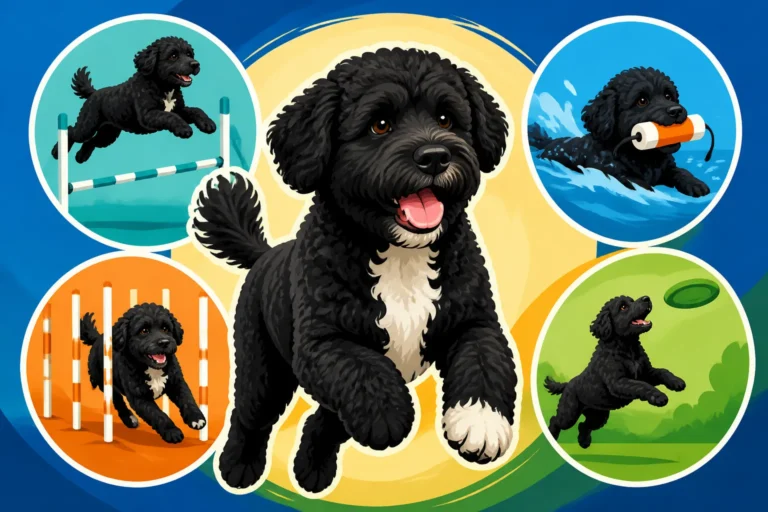
Water trials, particularly those sponsored by the Portuguese Water Dog Club of America (PWDCA), seek to preserve and honor these working instincts. They are designed to simulate the types of tasks these dogs would have performed, albeit in a structured, sporting context. It's a chance for your dog to be a "real" Portuguese Water Dog, to tap into those deep-seated drives that are often just waiting to be unleashed. For an owner, it's an incredible opportunity to deepen your connection with your dog, understanding and appreciating their innate capabilities. You'll see their focus, their drive, and their sheer joy in doing what they were born to do. If you've ever wondered What a Portuguese Water Dog Was Bred to Do on a Boat, water trials offer a direct, hands-on answer.
The Different Levels: Why "Novice" Matters
Just like in obedience or agility, water trials have different levels of titles, each progressively building on the skills learned in the previous one. The Novice Water Dog (NWD) title is the entry-level qualification, the first rung on the ladder. It’s designed to be achievable for dogs and handlers who have a solid foundation in basic obedience and a genuine enjoyment of water work. It's not about perfection at this stage, but about demonstrating willingness, aptitude, and basic control.
Starting at Novice is crucial because it sets the stage for future success. It introduces both you and your dog to the trial environment, the procedures, and the expectations in a supportive setting. Think of it as kindergarten for water work – you're learning the rules, building confidence, and getting a taste of what's to come. Dogs that successfully earn their NWD title typically show enthusiasm, good retrieving skills, and a reasonable degree of handler control around and in the water. It’s the perfect place to begin your journey into this exciting sport and see if your dog truly embodies the spirit of their working ancestors. It can be incredibly fulfilling to see your dog thrive in this environment, often much more so than a simple walk around the block, although both are important for a balanced dog. You might even find yourself pondering Whether a Portuguese Water Dog Would Rather Swim Than Run after a few successful training sessions!
Breaking Down the Novice Water Dog NWD Title Requirements
So, what exactly does a Portuguese Water Dog need to do to earn that coveted NWD title? The exercises are designed to showcase fundamental water-based retrieving and handler control, echoing their historical tasks of retrieving items from the water and remaining steady in a working environment. It's a combination of physical ability and mental discipline, all performed with enthusiasm.
The Basic Retrieves: Land and Water
The core of the Novice Water Dog trial revolves around retrieving. Your dog will be asked to perform two types of retrieves: a land retrieve and a water retrieve. Both require your dog to go out, find a designated article (often a bumper or a marked buoy), pick it up, and bring it back to you. The key here isn't just bringing the item back, but doing so willingly and delivering it to hand. For the land retrieve, the dog starts at your side, is sent to retrieve the article from a distance on land, and returns. This tests their basic understanding of "fetch" and "come" in a distracting environment.
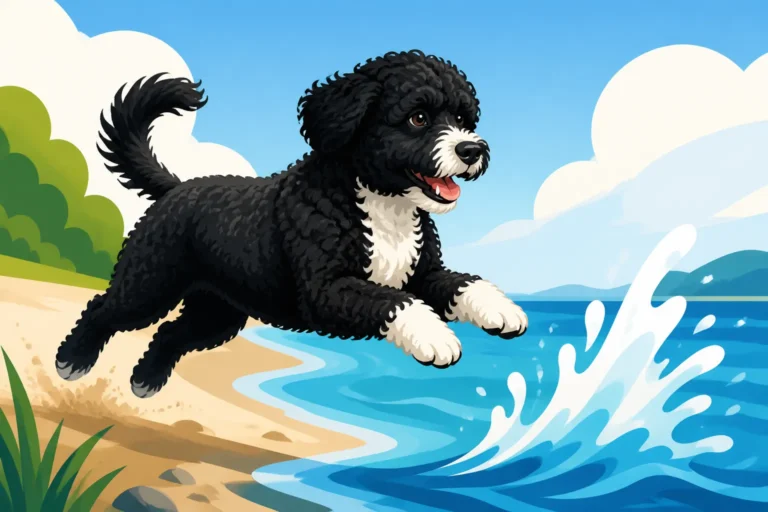
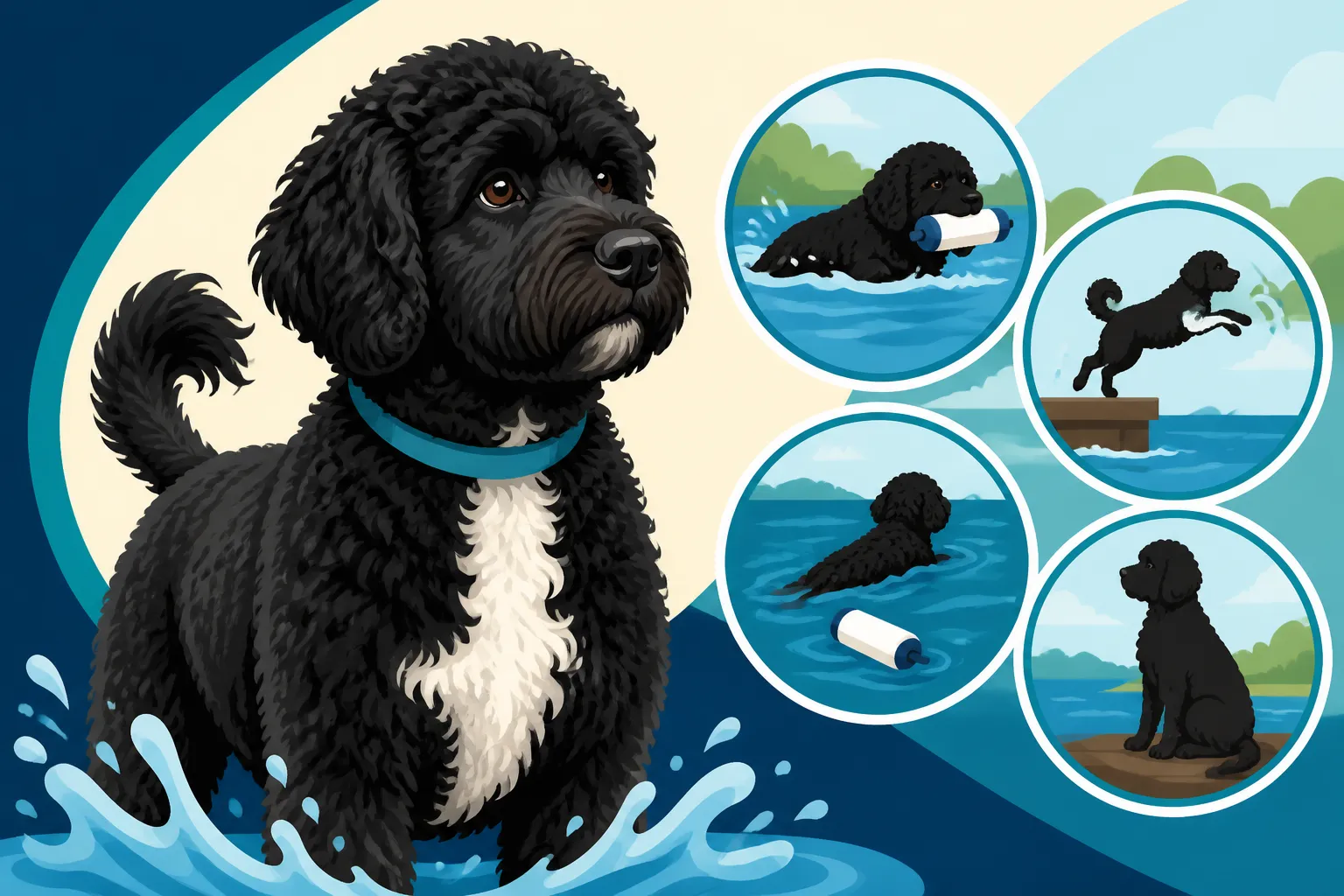
The water retrieve is where the breed truly shines. The dog will be sent from the shore to retrieve an article floating in the water. This requires them to enter the water confidently, swim out to the object, grasp it, and swim back to the handler on shore. This isn't just a casual dip; it's a directed retrieve, demonstrating their natural swimming ability and strong retrieve drive. The article won't be thrown; it will be placed in the water, adding a layer of expectation and focus for the dog. This exercise is directly tied to their heritage of retrieving lines and lost items from the ocean. How a Portuguese Water Dog Can Learn to Dive for Objects isn't required at this level, but the retrieve instinct is certainly foundational.
Steadiness and Control: Building Blocks for Success
Beyond just retrieving, the Novice Water Dog trial places a significant emphasis on steadiness and handler control. This isn't a free-for-all; a working dog needs to be under command. One key component is the "Stay" or "Wait" command, often performed while the handler is at a distance or while the judge is placing articles. Your dog needs to be able to remain calmly in position, demonstrating their patience and trust in you. This mimics the need for a working dog to stay on a boat, or by a fishing net, until given a specific command.
Another vital element is the "Heel" command, where your dog walks politely at your side. This might seem simple, but in a busy trial environment with other dogs, people, and exciting water, maintaining a perfect heel can be challenging. It shows that your dog is attentive to you even with distractions. The handler's ability to communicate clearly and the dog's willingness to respond are paramount. This isn't about being a robot; it's about a partnership where your dog looks to you for direction and responds reliably. A reliable recall is also crucial, especially after a water retrieve, ensuring your dog comes directly back to you and not on a detour for a quick swim. Having a good foundation in obedience, perhaps from a reputable online course like those offered by BAXTER & Bella, can make a huge difference in achieving this level of control.
The "Boat" Work: A Nod to Their Heritage
One of the most unique and historically significant components of Portuguese Water Dog water trials, even at the Novice level, involves some form of "boat" work. While not typically a full-sized boat at the NWD level, it usually involves the dog confidently entering and exiting a small craft, often a canoe, kayak, or small dinghy. This might include retrieving an article from the "boat" or from the water while the handler is in the boat. This exercise directly references the breed's historical role of working on and around fishing vessels.
The goal is to demonstrate that the dog is comfortable and steady in a boat, and can perform tasks from it without hesitation or fear. This isn't about perfectly balancing on a rocking dinghy in rough seas at the Novice level, but about showing basic comfort and compliance. They might be asked to retrieve an article from the water while the handler remains in the boat, or to simply jump in and out on command. It’s a wonderful way to honor their roots and prove they still possess that intrinsic comfort with watercraft. It’s often one of the most charming elements of the trial, watching these dogs perform tasks that their ancestors did centuries ago. Knowing Whether a Portuguese Water Dog Carried Messages Between Boats makes this section even more meaningful.
Here's a simplified look at the typical NWD exercises:
| Exercise | Description | Key Skill Tested |
|---|---|---|
| Land Retrieve | Dog retrieves a placed article from land, returns to handler. | Retrieve drive, recall, delivery to hand, focus. |
| Water Retrieve | Dog retrieves a placed article from water, returns to handler on shore. | Swimming ability, water confidence, retrieve drive. |
| Boat Steadiness | Dog enters/exits small boat, remains steady, potentially retrieves from boat. | Comfort with boats, handler control, patience. |
| Handler Control | Dog performs heeling, stays, and sits in specific situations. | Obedience, focus on handler, steadiness. |
Preparing Your Portuguese Water Dog for Novice Water Trials
Getting ready for water trials is a journey, not a sprint. It involves consistent training, building confidence, and making sure both you and your dog are enjoying the process. It's about laying a solid foundation that will serve you well, not just in trials but in your everyday life together.
Foundational Training: Obedience and Confidence
Before your Portuguese Water Dog even dips a paw into a water trial scenario, a strong foundation in basic obedience is absolutely non-negotiable. Think about it: you're asking your dog to perform specific tasks in a new, exciting, and potentially distracting environment. Commands like "sit," "stay," "come," and "heel" need to be rock-solid, even when there are other dogs, new people, and the irresistible pull of the water. Without this basic control, you'll be constantly struggling to guide them through the exercises. This isn't just for the trial itself, but for the safety of your dog and everyone around. A strong recall, for instance, is paramount when working near water.
Beyond commands, building your dog's general confidence is key. A confident dog is more likely to try new things, recover quickly from mistakes, and handle the pressure of a trial environment. This comes from consistent positive reinforcement, clear communication, and ensuring your dog feels secure in their relationship with you. Exposure to different environments, sounds, and people can also help them become more resilient. Regular training, even just 10-15 minutes a day, reinforces these skills and strengthens your bond. Consider investing in a good quality long line (easily found on Amazon) for practicing recalls in open spaces near water, giving your dog freedom while still ensuring their safety.
Introducing the Water: Making it Fun and Safe
For a Portuguese Water Dog, water is usually an innate love, but that doesn't mean they're born ready for trials. Introducing them to various types of water environments and making the experience overwhelmingly positive is crucial. Start with calm, shallow water where they can easily walk in and out, like a kiddie pool or a gently sloping lake shore. Use toys and praise to encourage them. Never force a dog into the water, as this can create a lifelong aversion. The goal is to build enthusiasm and confidence.
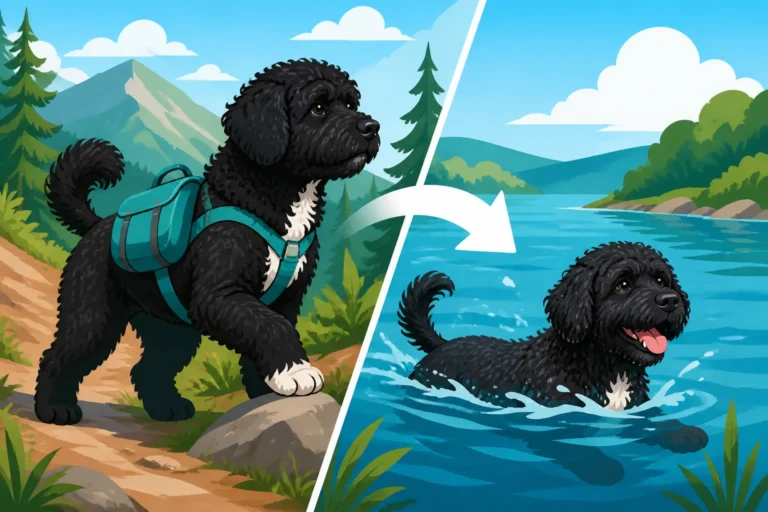
Gradually introduce deeper water, teaching them to swim comfortably. Supervised swimming is important, especially when they are young. Some owners introduce life jackets early on, not because the PWD can't swim, but because it can build confidence for longer swims and in choppier water, and it gives you a handle to easily guide them. Focus on making water play a joyful activity. This early, positive exposure will make them much more willing to perform specific water retrieves when the time comes. Remember, The Age a Portuguese Water Dog Can Start Swimming is typically quite young, but structured training should be introduced thoughtfully.
Specific Skill Building: Practice Makes Perfect
Once your dog has solid obedience and loves the water, you can start breaking down the individual components of the Novice Water Dog exercises into smaller, manageable training steps. For retrieves, begin with short-distance land retrieves, gradually increasing the distance and introducing different types of retrieve articles. Move to water retrieves in a similar fashion. Don't rush it; celebrate every successful step.
For boat work, introduce your dog to the small boat on land first. Let them investigate it, jump in and out, and get comfortable with its feel. Then, introduce it in very calm, shallow water. Practice having them sit or lie down in the boat. For "stays" and "heeling" in a trial context, practice in progressively more distracting environments. Use high-value treats and enthusiastic praise to reward their efforts. Consistency is more important than intensity. Regular, short training sessions are far more effective than infrequent, long ones. Programs like BAXTER & Bella can offer structured guidance for breaking down these complex tasks into simple steps, making the entire training process more approachable for both you and your dog.
Trial Day Expectations and Common Challenges
You’ve put in all the work, your dog is ready, and trial day is approaching! It’s normal to feel a mix of excitement and nerves. Knowing what to expect can help ease some of that anxiety and allow you to focus on supporting your Portuguese Water Dog.
What to Expect at the Event
On trial day, you'll arrive at a designated location, often a property with access to a lake or pond, and check in. There will be other handlers and dogs, all in various stages of preparation. You'll likely receive a schedule and a map of the trial area. Take the time to quietly observe the setup and let your dog acclimate to the new surroundings. Keep your dog leashed and under control at all times, being mindful of other competitors and their dogs.
Judges will be present, evaluating each dog's performance against the PWDCA’s specific criteria for the Novice Water Dog title. They are looking for willingness, enthusiasm, and reasonable compliance with commands, not absolute perfection. The atmosphere at water trials is generally very supportive among Portuguese Water Dog enthusiasts, and you'll find plenty of camaraderie. Remember to bring plenty of water for yourself and your dog, towels, a crate for downtime, and any specific training equipment you might need, like your dog’s favorite retrieve bumper. Consider having a specific place to dry your dog after the water work, as Whether a Wet Portuguese Water Dog Rides Home in the Car is a common question, and you'll want to be prepared.
Navigating Nerves and Distractions
Trial day can be a lot for both you and your dog. New environments, strange smells, other dogs barking, and the general hubbub can easily lead to distractions. It’s important to manage your own nerves, as dogs are incredibly attuned to their handlers' emotions. Try to stay calm and confident; your dog will pick up on that. Give them clear, concise commands and consistent praise.
For your dog, distractions are inevitable. They might be more interested in sniffing a new bush or greeting another dog than focusing on the retrieve. This is where your foundational training pays off. Practice in increasingly distracting environments leading up to the trial. On trial day, try to manage their environment as much as possible. Keep them quietly crated or leashed away from the busiest areas until it's your turn. Use high-value treats or their favorite toy as rewards to help them maintain focus. Remember, the judges understand that dogs are not machines, and they are looking for a working dog's spirit more than flawless execution. Patience and encouragement will go a long way.
When Things Don't Go as Planned: Learning and Moving Forward
It's entirely possible that your first water trial, or even your second or third, won't go exactly as you envisioned. Perhaps your dog got distracted, or missed a retrieve, or decided the boat was a little too wobbly. This is completely normal! Every single person who has achieved a water title with their dog has experienced moments when things didn't go perfectly. The key is to view these experiences as learning opportunities, not failures.
Take notes on what happened, what went well, and what you can improve. Talk to more experienced handlers or the judges (if appropriate) for feedback. Maybe your dog needs more confidence with the boat, or perhaps your recall needs to be even stronger around other dogs. Go back to basics if necessary, breaking down the challenging elements into smaller steps. The beauty of water trials, and really any dog sport, is the journey you share with your dog. It's about building a partnership, overcoming challenges together, and celebrating the unique abilities of your Portuguese Water Dog. Every trial is a chance to learn and grow, bringing you closer to earning that well-deserved Novice Water Dog title and perhaps even more advanced titles, like those mentioned in What a Water Trial Asks of a Portuguese Water Dog. Keep having fun, and your dog will too!
Disclaimer
This article is for general informational purposes only and does not constitute professional advice. Laws, prices and regulations vary by location and change over time. Consult a qualified professional for guidance on your specific situation.