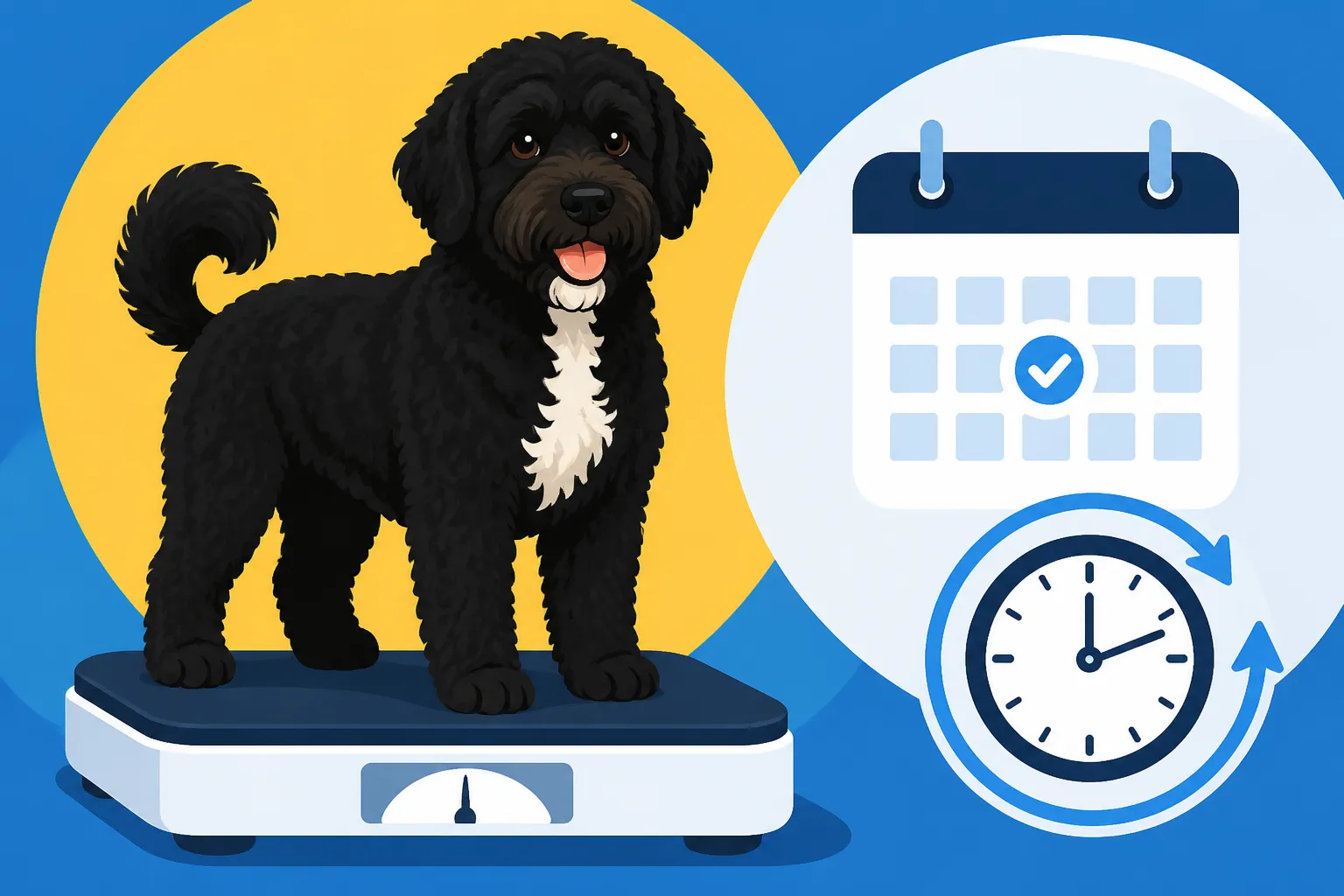
How Often a Portuguese Water Dog Should Be Weighed
It can be incredibly challenging to know if your robust, curly-coated Portuguese Water Dog is carrying a healthy weight. Their dense, water-repellent coat can be a master of disguise, hiding subtle changes in their body condition until they become more pronounced. This guide is here to walk you through exactly how often you should be weighing your beloved PWD, and why keeping a close eye on those numbers is one of the most proactive steps you can take for their long-term health and happiness.
Why Monitoring Your Portuguese Water Dog's Weight is Crucial
You might think a quick glance at your Portuguese Water Dog is enough to tell if they're looking fit, but their unique coat can be incredibly deceptive. What looks like a healthy, sturdy build could actually be masking a few extra pounds, or even a concerning loss of muscle mass. Regular weight monitoring isn't just about fitting into a breed standard; it's a fundamental aspect of preventative care that offers a window into their overall well-being.
Early Detection of Health Issues
Think of your Portuguese Water Dog's weight as a vital sign, just like temperature or heart rate. Sudden, unexplained weight loss or gain can be one of the first indicators that something isn't quite right internally. For example, a dog losing weight despite eating normally might be struggling with a metabolic issue, dental pain that makes eating uncomfortable, or even an underlying illness that requires more calories than they're consuming. Conversely, a rapid weight gain could point to hormonal imbalances like Signs a Portuguese Water Dog's Thyroid Is Low, fluid retention, or simply an overindulgence that needs to be addressed before it leads to obesity. These aren't always obvious to the naked eye, especially with that magnificent coat. By catching these changes early, you and your vet can investigate the cause and intervene before it becomes a more serious problem. It’s about being proactive rather than reactive, giving your PWD the best chance at a quick recovery.
Informing Dietary Adjustments and Portions
A Portuguese Water Dog's dietary needs aren't static; they change throughout their life, with their activity levels, and even with the seasons. A dog that is actively involved in Dock Diving and Water Trials With a Portuguese Water Dog will naturally burn more calories than a companion dog enjoying more leisurely strolls. If you're weighing your PWD regularly, you'll have solid data to guide their feeding. Are they creeping up in weight? Perhaps it's time to slightly reduce their portion size or switch to a lower-calorie food. Are they looking a little too lean? Maybe they need a bit more fuel for their energetic lifestyle.
Many high-quality dog food brands, like those found on Chewy or even specialized services like Ollie, provide feeding guidelines based on weight, but these are just starting points. Your dog's individual metabolism, activity, and even genetic predisposition to gaining or losing weight will dictate the exact amount they need. Without knowing their current weight, you're essentially guessing, and that can lead to unintended consequences, whether it's an Signs a Portuguese Water Dog Is Overweight or not getting enough nutrition.
Guiding Exercise Regimen
A healthy weight is intrinsically linked to a Portuguese Water Dog's ability to engage in the activities they love and were bred for. Their powerful swimming ability and tireless energy require a lean, muscular physique. If your PWD is carrying too much weight, it puts undue strain on their joints, especially their hips and elbows, which can be prone to issues like Hip Dysplasia in a Portuguese Water Dog and Elbow Dysplasia in a Portuguese Water Dog. It can also make them less enthusiastic about exercise, creating a vicious cycle where less activity leads to more weight gain.
Regular weighing helps you assess if their current exercise routine is adequate for maintaining their ideal body condition. If the scale starts to tick upwards, it's a clear signal that you might need to increase the intensity or duration of their daily swims, runs, or retrieving games. On the other hand, if they're looking a bit underweight, it might be a sign to scale back intense exercise slightly, or simply ensure they're getting enough calories to support their activity. It’s all about finding that perfect balance to keep them agile, strong, and ready for adventure, whether it's a romp in the park or a dive into the lake.
The Ideal Weighing Schedule for Different Life Stages
Just like with people, a Portuguese Water Dog's weighing schedule needs to adapt as they journey through life. What's appropriate for a rapidly growing puppy won't be the same for a mature adult or a mellow senior. Understanding these different phases helps you tailor your monitoring efforts, ensuring you catch changes when they matter most.
Puppyhood: Rapid Growth and Frequent Checks
The first year of a Portuguese Water Dog's life is a whirlwind of growth and development. They go from tiny, helpless bundles to rambunctious, energetic adolescents in what feels like the blink of an eye. During this critical period, weekly weighing is absolutely essential. Puppies are particularly vulnerable to sudden changes in their health, and weight fluctuations can be an early warning sign.
You'll want to watch for steady, consistent weight gain, which indicates proper nutrition and development. If your puppy isn't gaining weight, or worse, losing it, it's a red flag that warrants immediate veterinary attention. This could be due to parasites, digestive issues, or more serious conditions that need prompt diagnosis. Signs a Portuguese Water Dog Puppy Is Not Thriving might include a lack of weight gain. Your vet will often provide a growth chart or advise you on the expected weight range for your puppy's age, allowing you to compare your PWD's progress. As they approach their adolescent growth spurt, around 4-6 months, they'll really start packing on the pounds and growing taller, but it should still be a steady, healthy progression, not a sudden surge that puts strain on their developing bones and joints. Many breeders and vets recommend using a kitchen scale for very young puppies, then moving to a bathroom scale (weigh yourself, then weigh yourself holding the puppy, and subtract the difference) as they get bigger.
Adolescence and Adulthood: Stable Weight, Regular Monitoring
Once your Portuguese Water Dog hits their full growth, typically around 12-18 months, their weight should stabilize. For adult PWDs, a monthly or bi-monthly weighing schedule is generally sufficient. At this stage, you're not looking for rapid changes, but rather for subtle creeping up or down that indicates a need for adjustment in diet or exercise.
An adult Portuguese Water Dog, especially those participating in regular water work or other strenuous activities, needs to maintain a lean, athletic build. Carrying even a few extra pounds can diminish their stamina and agility, and over time, contribute to joint problems. By stepping on the scale every 4-8 weeks, you're creating a consistent record. This allows you to spot trends. Did they gain a pound after a particularly sedentary month? Time to up the walks or retrieve sessions. Did they lose a bit after an intense weekend of training? Perhaps a slight increase in their food portion is in order. It's about maintaining that sweet spot where they are healthy, energetic, and optimally conditioned for their active lifestyle. Remember that What an Adult Portuguese Water Dog Should Weigh can vary slightly depending on their build and sex, so always consult with your veterinarian for their ideal target range.
Senior Years: Weight Fluctuations and Health Concerns
As your Portuguese Water Dog transitions into their senior years, typically around age 7 or 8, their metabolism often slows down, and their activity levels may decrease. This makes them more prone to weight gain. However, paradoxically, some senior dogs can also experience unexplained weight loss due to age-related health issues or decreased appetite. For these reasons, maintaining a monthly weighing schedule is crucial for senior PWDs.
Weight gain in senior dogs can exacerbate arthritis, make it harder for them to move comfortably, and put additional stress on their organs. Adjusting their diet to a senior-specific formula or reducing caloric intake is often necessary. On the flip side, unintended weight loss could be a sign of dental disease, kidney issues, heart problems, or even cancer. A regular weigh-in can prompt your vet to investigate these potential concerns early. For instance, What Changes in an Aging Portuguese Water Dog's Coat can also be an indicator of health changes, but weight often tells a more immediate story. Observing these changes and discussing them with your vet ensures that your aging PWD receives the appropriate care and nutritional support to maintain their quality of life for as long as possible.
Practical Tips for Weighing Your Portuguese Water Dog at Home
Weighing a large, active dog like a Portuguese Water Dog at home might sound like a wrestling match waiting to happen, but with a few clever strategies, it's entirely doable. Having a good understanding of your PWD's weight between vet visits gives you valuable insight into their ongoing health.
Using a Home Scale: Methods for Larger Dogs
Since most Portuguese Water Dogs will quickly outgrow a standard kitchen scale, you'll likely rely on your bathroom scale. The trick here is called the "human-plus-dog" method.
- Weigh Yourself Alone: Step onto your bathroom scale and record your weight. Make sure it's on a hard, flat surface for accuracy, not carpet.
- Weigh Yourself Holding Your PWD: Pick up your Portuguese Water Dog (if safely possible) and step back onto the scale. Record this combined weight.
- Subtract to Find Dog's Weight: Subtract your weight (from step 1) from the combined weight (from step 2). The result is your Portuguese Water Dog's weight.
For PWDs that are too large to comfortably lift, you have a couple of other options:
- Veterinary Scales: Many pet supply stores, like those from Chewy or even some local feed stores, have large, walk-on veterinary scales available for public use. You can call ahead to see if they offer this, sometimes even for free.
- Designated Dog Scales: You can invest in a sturdy, low-profile digital dog scale designed for larger breeds. These are typically more accurate than the human-plus-dog method and can be a worthwhile investment for consistent monitoring, particularly for breeders or multi-dog households. You can find a range of options on Amazon. These often come with a larger platform and higher weight capacity, specifically designed for pets.
- Training for the Scale: Make the scale a positive experience! Use treats and praise to encourage your PWD to step on and stand still, even for a few seconds. Start by rewarding them for just approaching the scale, then for placing one paw on it, and gradually build up to them standing calmly. This makes future weigh-ins much smoother.
Vet Visits: The Most Accurate Option
While home weighing is excellent for regular monitoring, your veterinarian's office offers the most accurate and reliable weight measurements. They have professional, calibrated veterinary scales specifically designed for animals of all sizes.
During your Portuguese Water Dog's annual wellness exam, or any other vet visit, their weight will be taken as a routine part of the check-up. This provides a crucial baseline measurement and allows your vet to track trends over time in their official records. It's also an opportunity for them to assess your dog's body condition score, which is a more nuanced evaluation than just the number on the scale. For example, your vet can compare your dog's current weight to their previous visits, noting any significant changes that might require further investigation. This is especially important for How Often a Portuguese Water Dog Needs a Wellness Exam. If you're concerned about your PWD's weight between routine appointments, don't hesitate to call your vet; many clinics are happy to let you pop in for a quick weigh-in free of charge.
Recognizing Body Condition: Beyond Just the Number
The scale provides a number, but your Portuguese Water Dog's body condition tells the full story. A healthy PWD should have a lean, athletic build. Here's what to look for, and how your vet will often assess it:
- Ribs: You should be able to easily feel your dog's ribs when you run your hands along their sides, much like feeling the knuckles on the back of your hand. You shouldn't be able to see them protruding, but you definitely shouldn't have to press hard to locate them through the muscle and fat. How to Feel a Portuguese Water Dog's Ribs Under the Coat can be tricky with their dense hair, but it's a vital skill to learn.
- Waistline: When viewed from above, your PWD should have a noticeable tuck or "waist" behind their ribs. It shouldn't be a straight line from their ribcage to their hips, nor should it bulge outwards.
- Abdominal Tuck: When viewed from the side, their abdomen should tuck up slightly from their ribcage to their hind legs, not hang low or be flat.
- Muscle Mass: Your PWD should have well-developed muscles, particularly over their hindquarters and shoulders. Loss of muscle mass can sometimes be a sign of illness, even if the overall weight hasn't dramatically changed.
Understanding body condition allows you to interpret the numbers from the scale more effectively. A dog might be within the "normal" weight range, but if they're carrying too much fat and not enough muscle, their body condition might still be suboptimal. This comprehensive approach ensures you're looking at your Portuguese Water Dog's health from all angles.
Factors That Influence a Portuguese Water Dog's Weight
A Portuguese Water Dog's weight isn't just a simple calculation of food in versus energy out. It's a complex interplay of several factors, some within your control, and others influenced by their biology. Understanding these can help you manage their weight more effectively and keep them in peak condition.
Activity Level: The Energy Equation
Portuguese Water Dogs are a highly energetic, working breed, bred to spend their days assisting fishermen, which meant a lot of swimming, retrieving, and running. If your PWD isn't getting adequate exercise, it's incredibly easy for them to gain weight. How Much Exercise a Portuguese Water Dog Needs is substantial; we're talking about multiple hours of vigorous activity daily, ideally including swimming.
Consider a PWD who lives in a suburban home, gets two brisk walks a day, and maybe some backyard play. While this might be enough for many breeds, for a Portuguese Water Dog, it's often not. Their metabolism is geared for a more active lifestyle, and if they're consuming a diet formulated for a highly active dog but only getting moderate exercise, those extra calories quickly turn into fat. Conversely, a PWD that's a dock diving champion or regularly participates in Water Work Classes Cost a Portuguese Water Dog Owner will have a much higher caloric need and will naturally stay leaner, even with substantial food intake. Regular weighing helps you calibrate their caloric input with their energy output, ensuring they burn off what they consume.
Diet Quality and Quantity: Fueling the Athlete
What and how much your Portuguese Water Dog eats plays the most direct role in their weight. Not all dog foods are created equal, and even high-quality food can lead to weight gain if fed in excessive quantities.
- Caloric Density: Different dog foods have varying caloric densities. A working dog formula will be much higher in calories than a weight management formula. Always check the calorie content on the bag.
- Portion Control: It’s easy to eyeball a cup of kibble, but slight overestimations daily add up over time. Using a dedicated measuring cup or even a kitchen scale to portion out their meals precisely can make a huge difference. For those using fresh food services like Ollie, their portions are typically pre-measured, taking some of the guesswork out of it.
- Treats and Chews: Those delicious training treats and long-lasting chews can contribute significantly to your PWD's daily caloric intake. Don't forget to factor them in. A handful of treats might seem insignificant, but for a dog, it can be the equivalent of a human eating an extra snack or two every day. Getting Weight Off a Portuguese Water Dog often starts with an honest assessment of all caloric sources, not just their main meals.
- Table Scraps: While tempting to share, human food is often too rich, salty, or fatty for dogs and can quickly lead to weight gain and digestive upset. It's best avoided.
Genetics and Health Conditions: Underlying Influences
While diet and exercise are largely within your control, some factors influencing your Portuguese Water Dog's weight are not.
- Genetic Predisposition: Just like people, some dogs are genetically predisposed to being leaner, while others tend to hold onto weight more easily. If your PWD comes from a line of robust, heavier-boned dogs, their ideal weight range might naturally be on the higher end, but still lean. It's about finding their individual healthy weight, not forcing them into a mold.
- Age: As mentioned earlier, senior Portuguese Water Dogs often experience a slowdown in metabolism, making weight gain more likely. On the flip side, some health conditions common in older dogs can cause weight loss.
- Hormonal Imbalances: Conditions such as hypothyroidism can significantly affect a dog's metabolism, often leading to unexplained weight gain and lethargy. What Addisons Disease Does to a Portuguese Water Dog can also cause weight fluctuations, though it's often associated with loss due to gastrointestinal upset. An annual vet check-up with bloodwork can help detect these conditions early.
- Medications: Certain medications can impact appetite or metabolism, leading to changes in weight. If your PWD is on long-term medication, discuss potential weight implications with your vet.
By being aware of these influencing factors, you can work more effectively with your veterinarian and adjust your PWD's lifestyle to maintain their ideal weight, ensuring they remain the vibrant, active companion you know and love.
| Life Stage | Recommended Weighing Frequency | Key Considerations |
|---|---|---|
| Puppy (8 weeks – 1 year) | Weekly | Rapid growth, consistent gain crucial, vet consult for loss |
| Adult (1 – 7 years) | Monthly to Bi-monthly | Stable weight, adjust diet/exercise for trends |
| Senior (7+ years) | Monthly | Metabolism changes, watch for gain or unexplained loss |
This article is for general informational purposes only and does not constitute professional advice. Laws, prices and regulations vary by location and change over time. Consult a qualified professional for guidance on your specific situation.