Whether a Portuguese Water Dog Tolerates a Dryer
One of the biggest questions I get from new Portuguese Water Dog owners, and even some seasoned ones, is about drying their furry, water-loving companions. Their unique, dense, and often curly or wavy coats are a double-edged sword: they’re wonderfully hypoallergenic and shed minimally, but they also hold water like nobody's business, and if not dried properly, can become a matted mess. This guide will dive deep into whether your Portuguese Water Dog will tolerate a dryer, and more importantly, how you can make it a comfortable, even enjoyable, part of their routine.
The Critical Importance of Proper Portuguese Water Dog Drying
Let's be real, a Portuguese Water Dog (PWD) and water go together like peanut butter and jelly. They were bred for it! But that incredible, water-resistant coat that helps them in the waves can be a real challenge on land if not managed correctly. Many owners dream of their PWD air-drying naturally, especially after a quick dip, but that's a recipe for disaster.
The Double-Edged Sword of Their Non-Shedding Coat
You love that your Portuguese Water Dog doesn't leave tumbleweeds of hair all over your house, right? That's because their single coat doesn't shed in the traditional sense; instead, the dead hair gets trapped within the living coat. This is fantastic for allergy sufferers, but it means that any moisture trapped in that dense coat, combined with friction from movement, will quickly lead to mats. And not just little tangles – we're talking about dense, painful mats that can pull on their skin and cause discomfort, or worse, skin infections. It's truly a critical part of their well-being, not just aesthetics. A matted coat doesn't just look bad; it can restrict movement, hide skin problems, and even lead to severe skin infections underneath. It's a prime reason why regular grooming, including thorough drying, is non-negotiable for these fantastic dogs. This dense coat is also why you'll want to be familiar with How Long a Portuguese Water Dog Takes to Dry.
Why Air Drying Just Doesn't Cut It
I often hear owners say, "Oh, Fido just air-dries after his swim." While it sounds lovely and natural, it's rarely sufficient for a Portuguese Water Dog. Their coat is designed to be water-repellent, yes, but also insulating. It traps moisture deep down, close to the skin. If that moisture isn't removed quickly and thoroughly, it creates the perfect breeding ground for bacteria and yeast, leading to hot spots and other skin irritations. Imagine walking around in damp clothes all day; it's uncomfortable, right? It's the same for your PWD, but amplified by their thick coat.
Beyond the health aspect, air drying just takes forever. We're not talking an hour or two; a PWD can stay damp for many hours, sometimes even overnight, depending on the humidity and coat density. This dampness isn't just uncomfortable for them; it also leaves that distinctive "wet dog" smell permeating your home and car. A quick towel dry might get the surface moisture, but it won't penetrate to the undercoat and skin, which is exactly where the problems start. That's why understanding Drying a Portuguese Water Dog After Every Swim is crucial, and it almost always involves more than just a towel.
Understanding Dryer Types and Their Impact on Your PWD
When it comes to drying your Portuguese Water Dog, not all dryers are created equal. In fact, using the wrong type can actually be detrimental to their health and comfort.
The Power of the Force Dryer: A Game Changer
If you own a Portuguese Water Dog, a force dryer is not a luxury; it's practically a necessity. These aren't like your human hair dryer. Force dryers (also known as high-velocity dryers or blaster dryers) use a strong stream of unheated or low-heat air to literally blast water off and out of the coat. The sheer force of the air is what dries the dog, not high temperatures, which makes them incredibly safe.
Here's why they're a game-changer for PWDs:
- Efficiency: They drastically reduce drying time, often cutting it down to 30-60 minutes for a full-sized PWD, depending on coat type (curly vs. wavy) and length. This means less time wrestling a wet dog and less opportunity for mats to form. You can also explore What a Force Dryer Does for a Portuguese Water Dog for more detail.
- Mat Prevention: By forcing air through the coat, a force dryer helps separate the individual hairs, preventing them from clumping and matting as they dry. It also helps to blow out loose undercoat that would otherwise contribute to matting.
- Skin Health: Because they dry down to the skin, force dryers prevent that lingering dampness that leads to hot spots and fungal infections.
- Safety: The lack of high heat means no risk of burning your dog's skin, which is a very real danger with human hair dryers.
- Deshedding: While PWDs are minimal shedders, force dryers help release any trapped dead hair, keeping their coat healthier and cleaner.
Many PWD owners purchase their force dryers from online retailers like Amazon or Chewy, which offer a wide range of models suitable for home use. When choosing one, look for adjustable speed settings, multiple nozzle attachments, and a durable hose.
Why Human Hair Dryers Are a No-Go
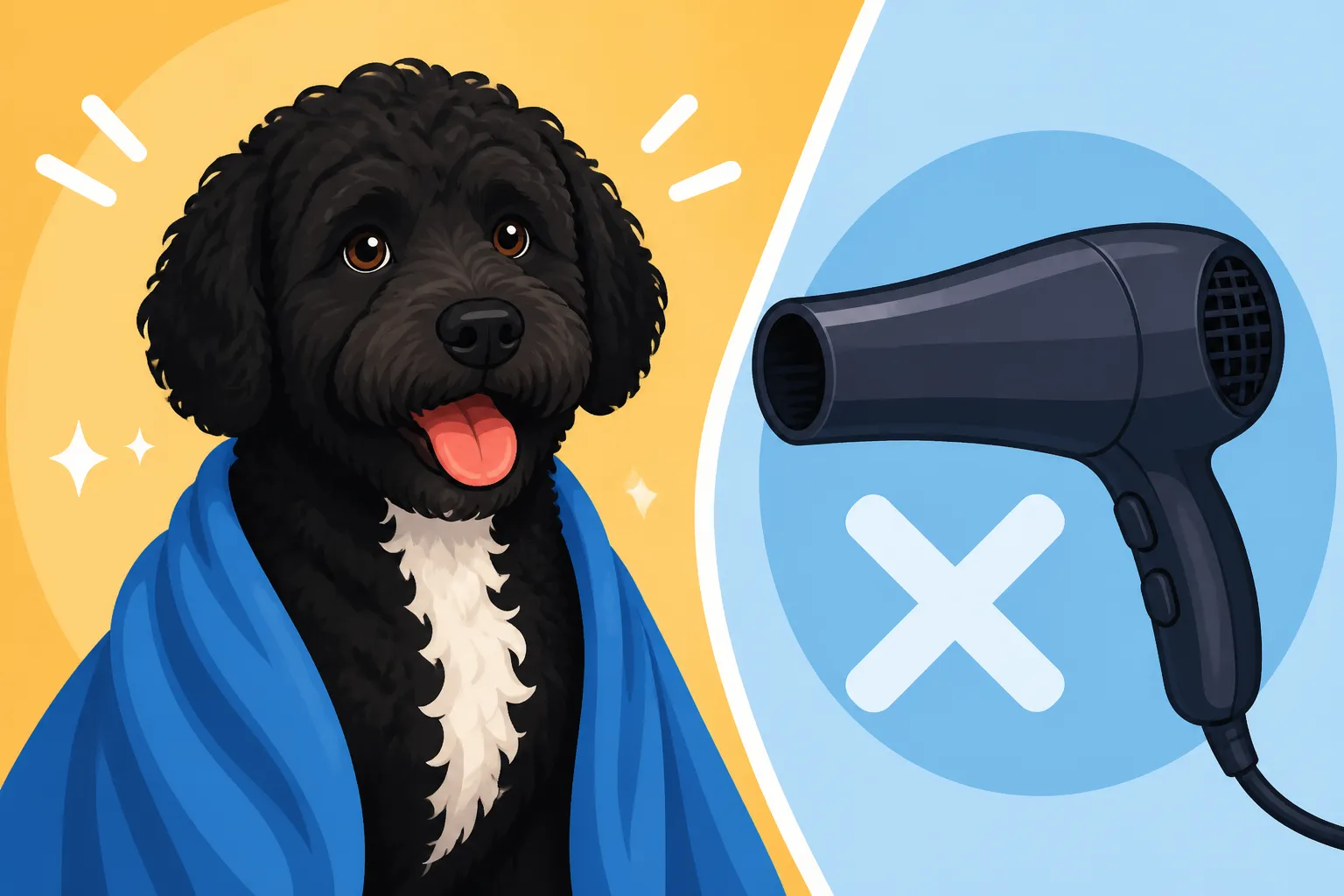
Please, for the love of all that is good and fluffy, do not use a human hair dryer on your Portuguese Water Dog. I know it might seem convenient, but it poses several serious risks:
- Overheating and Burns: Human hair dryers get much hotter than what is safe for a dog's sensitive skin. Dogs can't sweat like we do, and their dense coats trap heat, making them susceptible to heatstroke and skin burns. These burns can be severe and may not be immediately obvious under their thick coat.
- Inefficiency: The airflow from a human hair dryer is simply not strong enough to penetrate a PWD's dense, water-retaining coat. You'll end up just drying the top layer, leaving the undercoat damp and prone to matting and skin issues. You'd spend hours and still not get them truly dry.
- Noise and Fear: Many human hair dryers are quite loud, which can be terrifying for a dog, especially a puppy. This can create a negative association with grooming, making future sessions much harder.
It really goes back to Whether a Portuguese Water Dog Must Be Force Dried. For their health and your sanity, a force dryer is the way to go.
Other Drying Alternatives
While not primary drying methods, these can complement force drying:
- Absorbent Towels: High-quality microfibre towels are excellent for removing initial surface moisture after a bath or swim. They speed up the process before you bring out the force dryer. You can find a good selection of these on Chewy or Amazon.
- Drying Coats/Robes: These are designed to wick moisture away from the coat. They can be helpful for the initial stages of drying or for keeping a damp dog contained and warmer after a quick splash, but they won't fully dry a PWD down to the skin. They are a good interim step, especially if your PWD has been Whether an Aging Portuguese Water Dog Still Wants to Swim.
- Air Drying (with caution): Only consider air drying for very minor dampness, like if your PWD just walked through wet grass. Even then, ensure you brush them out thoroughly to prevent potential matting. Never rely on it after a full bath or swim.
Cultivating Dryer Tolerance: A Step-by-Step Training Approach
The good news is that most Portuguese Water Dogs can absolutely learn to tolerate, and even enjoy, the dryer! It just takes patience, positive reinforcement, and a structured approach. Think of it as another training opportunity, just like teaching them to sit or stay.
Starting Early: Puppyhood and Positive Associations
The earlier you start, the better. Puppyhood is a prime time for socialization and habituation to new experiences.
- Introduce the Dryer Unplugged: Let your puppy sniff the dryer, lick it (if safe), and just be near it. Praise and offer high-value treats (even something like a dab of peanut butter on a spoon from a brand like Ollie can work wonders).
- Turn it On Briefly, Far Away: Start with the dryer on the lowest setting, far away from your puppy, perhaps in another room. Let them hear the sound. Keep sessions very short – just a few seconds – and immediately reward calm behavior.
- Gradual Approach: Over several days or weeks, slowly bring the dryer closer. Keep the air directed away from them at first. Always use the lowest speed setting and direct the air to less sensitive areas like their back or hindquarters before moving to the head or ears.
- Pair with Positive Reinforcement: Every time the dryer is on, even for a moment, give treats, praise, or a favorite toy. The goal is for them to associate the sound and sensation of the dryer with good things. Make it a game!
- Handling Practice: While doing this, practice Teaching a Portuguese Water Dog to Stand for Grooming. Get them used to being handled, their paws touched, and their ears inspected, as these are all parts of the grooming process.
Desensitization and Counter-Conditioning for Adult Dogs
If you have an older PWD who is already fearful of the dryer, don't despair! Desensitization and counter-conditioning can help. This process means gradually exposing them to the fear-inducing stimulus (the dryer) while simultaneously creating a positive association.
- Identify Triggers: Is it the sound? The vibration? The air blowing? Knowing this helps you tailor your approach.
- Start from Scratch: Go back to square one, as if they were a puppy. Dryer unplugged, treats, praise. Then, lowest setting, far away.
- Short, Positive Sessions: Keep sessions very short – 30 seconds to a minute initially. The moment your dog shows any signs of stress, stop. You want to end on a positive note.
- High-Value Rewards: Use truly irresistible treats. These aren't just for good behavior; they're to change their emotional response to the dryer.
- Grooming Table: A sturdy grooming table can make a huge difference. It elevates the dog, making it easier for you to reach all areas and gives them a defined space for grooming. You can often find decent, foldable grooming tables on Amazon. A non-slip mat on the table is a must for safety.
| Drying Method | Pros | Cons | PWD Suitability |
|---|---|---|---|
| Force Dryer | Fast, prevents mats, promotes skin health, safe heat | Can be loud, initial investment, requires training | Essential |
| Human Hair Dryer | Convenient (if you already own one) | High heat risk, burns skin, inefficient, loud, causes matting | NEVER USE |
| Microfibre Towels | Absorbent, quick initial dry | Not a full dry, doesn't prevent matting deep down | Complementary |
| Drying Coat/Robe | Wicks moisture, keeps dog contained | Not a full dry, can still leave dampness underneath | Complementary |
| Air Drying | No equipment needed | Very slow, major matting risk, hot spots, damp odor, poor hygiene | Almost Never |
Common Challenges and Troubleshooting Dryer Aversion
Even with the best intentions, you might hit some bumps in the road. Here's how to navigate common issues.
Addressing Noise Sensitivity and Vibration Fears
The noise of a force dryer can be intimidating, and some dogs also dislike the vibration.
- Ear Protection: Invest in dog-specific ear muffs (like Mutt Muffs) or cotton balls to dampen the sound. This can make a huge difference, especially for sensitive dogs.
- White Noise: Play calming music or white noise in the background during sessions to help mask the dryer sound.
- Vibration Management: If the vibration is an issue, try standing your PWD on a thick mat on your grooming table, or even on the floor if they prefer. Avoid directing the air directly at sensitive areas like the ears or face until they are fully comfortable. You'll want to avoid anything that could lead to Whether a Portuguese Water Dog Gets Ear Infections, so make sure their ears are clean and dry.
- Gradual Increase: Always start with the lowest speed setting and slowly, incrementally increase it over many sessions as your dog's comfort grows. Don't rush it.
Dealing with Overheating and Discomfort
While force dryers are designed to use minimal heat, continuous airflow on one spot can still cause discomfort.
- Keep the Air Moving: Never hold the dryer nozzle in one spot. Keep it constantly moving over their body, ensuring even airflow.
- Check Skin Temperature: Regularly touch your dog's skin, especially in thicker areas, to ensure it's not getting too warm. If it feels hot, take a break.
- Cool Down Breaks: Build in short breaks during drying sessions. Let your dog get a drink, stretch, and relax for a minute or two before resuming.
- Proper Ventilation: Ensure your grooming area is well-ventilated, especially in warmer weather, to prevent overall overheating.
When Professional Help Might Be Necessary
Sometimes, despite your best efforts, a PWD might have deeply ingrained fears or anxieties about the dryer. This isn't a failure on your part; some dogs are just more sensitive.
- Professional Groomer: A professional groomer often has specialized equipment and experience with fearful dogs. They can sometimes achieve what an owner cannot, or at least provide valuable tips and techniques tailored to your dog. They also know exactly How Often a Portuguese Water Dog Needs Clipping.
- Veterinary Behaviorist: If the fear is severe and impacting your dog's overall well-being or your ability to keep them healthy, consulting a veterinary behaviorist can be incredibly helpful. They can assess the root cause of the anxiety and develop a comprehensive plan, which might include medication or specific behavior modification techniques.
- Combining Efforts: You might find a combination works best: regular professional grooms to keep their coat healthy, while you continue desensitization at home with shorter, less intense sessions to gradually build confidence. Remember, a professional groomer is also adept at spotting How a Portuguese Water Dog's Coat Hides Weight Loss or other health issues during their handling.
Ultimately, tolerating a dryer is a vital skill for any Portuguese Water Dog. It ensures their health, prevents painful matting, and makes living with their beautiful, dense coat a much more enjoyable experience for everyone involved. With patience, the right tools, and a whole lot of positive reinforcement, your PWD can absolutely become a pro at drying time!
Disclaimer
This article is for general informational purposes only and does not constitute professional advice. Laws, prices and regulations vary by location and change over time. Consult a qualified professional for guidance on your specific situation.