What Temperature Water Is Too Cold for a Portuguese Water Dog
It's a common question, and a completely valid concern, for anyone sharing their life with a magnificent Portuguese Water Dog: just how cold is too cold for them to be in the water? You see their webbed feet, their eager eyes, their boundless love for a good splash, but you also know that even the most water-loving dog isn't invincible against the chill. This guide aims to clear up the confusion, providing practical advice on understanding your PWD's cold tolerance, recognizing the signs of trouble, and ensuring their aquatic adventures remain safe and joyful.
Understanding Your Portuguese Water Dog's Natural Adaptations to Water
Portuguese Water Dogs are, as their name suggests, born for the water. They were originally bred to work alongside fishermen on the coasts of Portugal, herding fish into nets, retrieving lost tackle, and even carrying messages between boats. This isn't just a hobby for them; it's ingrained in their very DNA. However, "bred for water" doesn't mean "immune to cold," and understanding their natural adaptations helps us gauge their limits.
The Double-Edged Sword of Their Coat
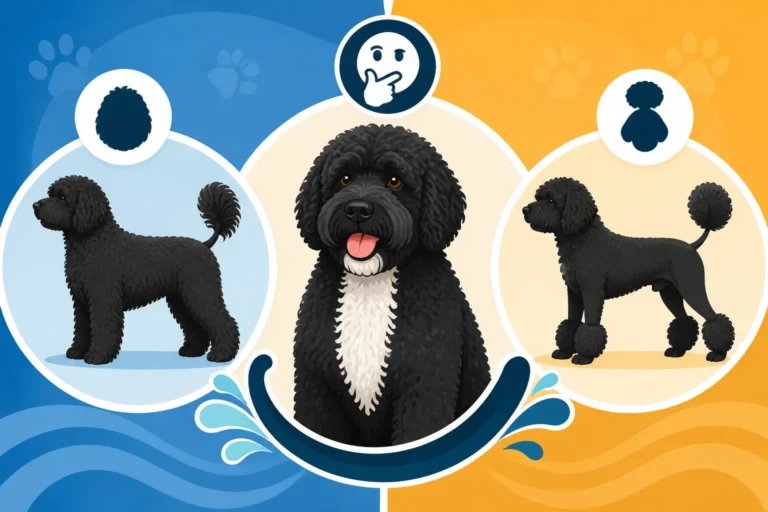
One of the most distinctive features of a Portuguese Water Dog is their incredible coat, which can be either curly or wavy. This isn't just for looks; it’s a highly functional piece of natural insulation. Unlike many breeds that have a double coat with a soft underlayer and a coarser outer coat, the PWD has a single coat. This unique texture, dense and water-resistant, acts like a natural wetsuit, offering some protection against cold water by trapping a layer of warmth against their skin. It prevents rapid heat loss, allowing them to remain comfortable in chilly conditions for a reasonable period.
However, this amazing coat can also be a double-edged sword when it comes to cold water. While it initially repels water and provides insulation, if it becomes completely saturated and the dog isn't actively moving, it can become heavy and lose its insulating properties. A soaking wet coat on a still dog in cold air or water can actually accelerate heat loss once the initial protective layer is compromised. This is why thorough drying after a swim, especially in cooler weather, is absolutely critical. You can learn more about Why a Portuguese Water Dog's Coat Holds Water in another post.
Webbed Feet and Tail as a Rudder – Built for the Job
Beyond their coat, a Portuguese Water Dog's physical structure is a testament to their aquatic heritage. Their broad, webbed feet are like built-in paddles, giving them incredible propulsion and agility in the water. This webbing isn't just for show; it's a powerful tool that allows them to swim with strength and efficiency, an adaptation that's key to their historical role. This means they expend less energy to move through water compared to a dog without such pronounced webbing, which can indirectly help them maintain body heat during activity.
Their strong, thick tail, often described as a "rudder," is another vital asset. Carried high in a distinctive curve while swimming, it helps them navigate and steer with precision, allowing for quick turns and effective pursuit of objects in the water. This efficient movement means they can keep their core temperature up through physical exertion. When a dog is truly engaged and working in the water, their body naturally generates heat, which can offset some of the cold. Their inherent desire to retrieve and work in the water, as explored in What a Portuguese Water Dog Was Bred to Do on a Boat, means they often push themselves, but we, as their guardians, need to know when to call it a day.
Their Drive to Work, Even in Challenging Conditions
Portuguese Water Dogs possess an incredible work ethic and a deep-seated desire to please their people, especially when it involves water. This drive means they might push themselves past their comfort zone, or even ignore signs of cold, if they're having fun or perceive they're doing a "job." They are not easily deterred by a bit of chill if there's a ball to fetch or a person to splash with. This mental fortitude, while admirable, places the responsibility firmly on the owner to monitor conditions and their dog's well-being.
It’s easy to get caught up in their enthusiasm, but remember that their instinct to continue playing or working can mask the early signs of becoming too cold. They are not always going to tell you with a whine or a shiver that they're getting uncomfortable. Instead, you might see subtle behavioral shifts. Understanding their keen desire to participate in activities like Dock Diving and Water Trials With a Portuguese Water Dog makes it even more important for us to be the responsible party, ensuring their passion doesn't lead to a dangerous situation.
Factors Influencing a PWD's Tolerance to Cold Water
While PWDs are inherently water dogs, their individual tolerance to cold water isn't a one-size-fits-all equation. Several factors can influence how well your specific dog handles chilly dips. Ignoring these variables can turn a fun swim into a health risk.
Age and Health Status
A dog's age plays a significant role in their ability to tolerate cold water. Puppies and very young Portuguese Water Dogs have less developed thermoregulation systems and a smaller body mass, making them more susceptible to rapid heat loss. They simply don't have the same robust internal mechanisms or the fat reserves an adult dog might have to keep warm. It's crucial to introduce them to water gradually and in appropriate temperatures. On the other end of the spectrum, senior Portuguese Water Dogs, particularly those Caring for a Portuguese Water Dog Past Nine, may also be more sensitive to cold. They might have underlying health conditions like arthritis, heart issues, or a slower metabolism that impact their ability to generate and retain heat.
Any existing health conditions, regardless of age, can severely compromise a PWD's cold tolerance. Dogs with conditions like Addison's disease, hypothyroidism, or even just a general illness or weakened immune system, will have a harder time regulating their body temperature. Even subtle health issues, which might be detected through What a Portuguese Water Dog's Yearly Bloodwork Should Cover, can make them more vulnerable. If your dog is recuperating from an injury or illness, or is on certain medications, their ability to handle cold water should be discussed with your veterinarian before any aquatic activity. Always err on the side of caution with puppies, seniors, and any dog with known health concerns.
Acclimation and Activity Level
Just like humans, dogs can acclimate to certain conditions over time. A Portuguese Water Dog that regularly swims in cooler water, perhaps even year-round in an appropriate climate, will likely have a higher tolerance than a dog whose only water exposure is a few dips in a warm summer lake. Gradual exposure allows their body to adapt and build a better tolerance. However, "acclimation" doesn't mean "invincible." There's always a limit.
The intensity and duration of activity are also critical. A Portuguese Water Dog actively swimming and retrieving a toy will generate more body heat than one standing idly in shallow water or just wading. The more vigorous the exercise, the more heat they produce internally, which helps ward off the cold. However, this also means they can quickly become exhausted, especially in cold water, leading to a sudden drop in activity and, consequently, body temperature. It's a fine balance, and you need to watch their energy levels closely. Think about a jogger on a cold day; as long as they're running, they're warm, but stop, and the chill sets in fast. The same applies to your PWD.
Duration of Exposure
This is perhaps one of the most straightforward, yet often overlooked, factors. The longer a Portuguese Water Dog remains in cold water, the greater the risk of hypothermia. Even if the water isn't acutely frigid, prolonged exposure will eventually lead to a drop in core body temperature. What might be perfectly safe for a quick 10-minute dip could be dangerous for an hour-long session.
It’s not just about the water temperature itself, but the combination of water and air temperature, especially after they exit the water. A PWD might be fine in 55°F (13°C) water for a short swim if the air temperature is sunny and mild. However, if the air is also cold and windy, and they're standing around soaking wet, the risk of chilling increases dramatically. This is why having a plan for immediate drying, like with absorbent towels readily available on Amazon or Chewy, is crucial. For guidance on appropriate lengths of time, you can reference How Long a Portuguese Water Dog Can Stay in Cold Water.
Identifying "Too Cold" – Practical Temperature Guidelines
So, how do you actually put numbers to "too cold"? While there's no single magic number that applies to every dog in every situation, we can establish some practical guidelines to help you make informed decisions about your Portuguese Water Dog's water playtime. Remember, these are general rules, and your individual dog's health and enthusiasm should always be the ultimate guide.
The "Swim Safely" Zone: Ideal Temperatures
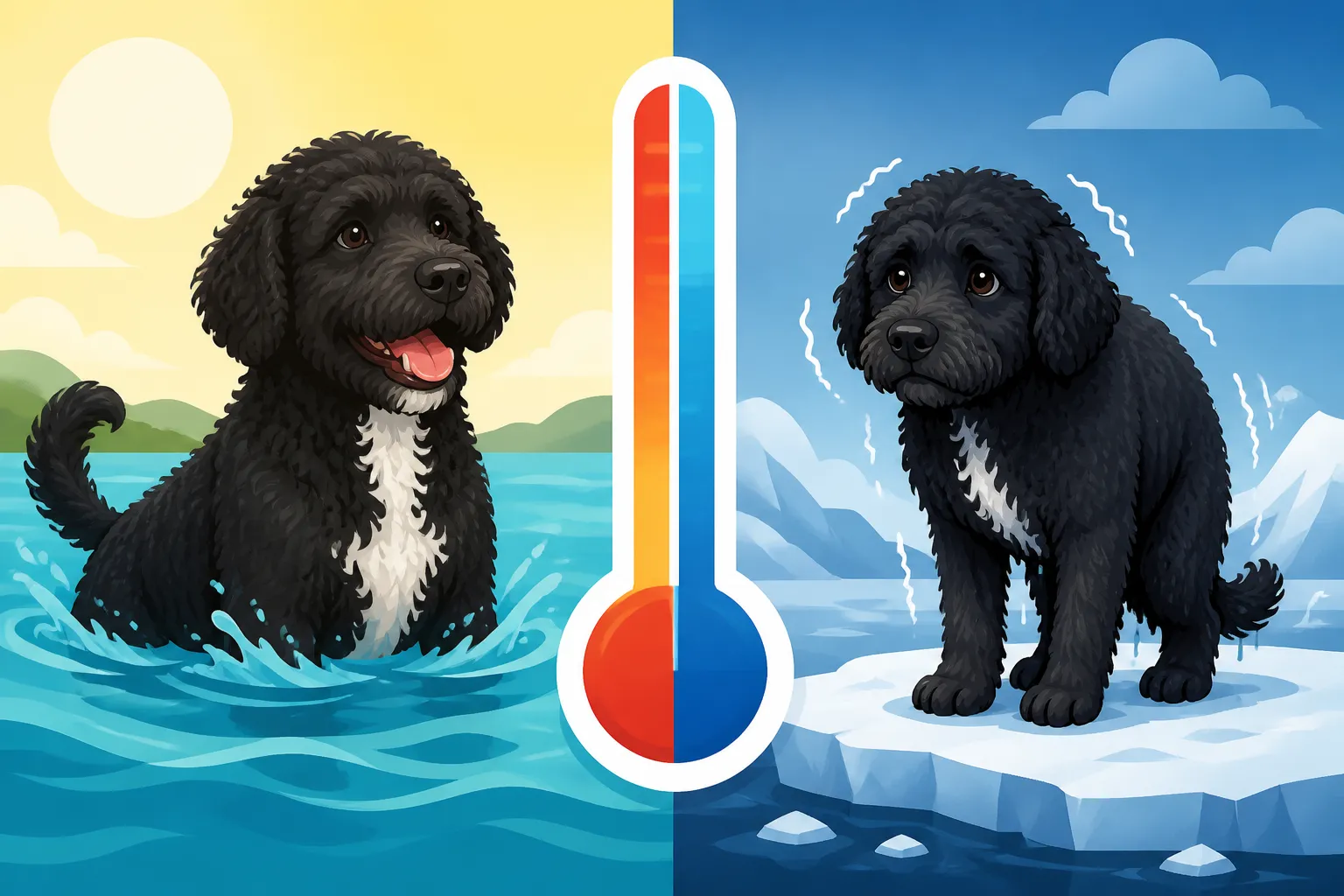
Generally, for a healthy, adult Portuguese Water Dog that is accustomed to swimming, water temperatures ranging from 65°F (18°C) to 80°F (27°C) are considered the "swim safely" zone. In this range, your PWD can enjoy extended periods in the water without excessive risk of chilling, assuming they are actively swimming and not just passively standing. This is where you'll see them truly thrive, happily fetching, diving, and splashing with their characteristic joy.
Even within this ideal range, always consider the air temperature, wind chill, and sun exposure. A warm day with no wind makes a 65°F water temperature feel quite comfortable. However, a cloudy, windy day with the same water temperature might require shorter sessions and quicker drying afterward. This zone allows for the most carefree enjoyment, but vigilance is still key. It's important to differentiate between simply being wet and truly drying off, as discussed in Drying a Portuguese Water Dog After Every Swim.
The "Proceed with Caution" Zone: Monitoring for Signs
When water temperatures dip into the 50°F (10°C) to 65°F (18°C) range, you enter the "proceed with caution" zone. In these temperatures, short, vigorous swims are generally okay for healthy, acclimated adult PWDs, but the risks of hypothermia increase significantly with prolonged exposure or inactivity. This is not the time for a leisurely float or for letting them stand around wet on the shore. These swims should be purposeful and followed by immediate, thorough drying.
It's absolutely vital to be extra observant of your dog in this temperature range. Look for any subtle changes in their behavior: Are they less enthusiastic than usual? Do they seem stiffer? Is their swimming slower? Are they trying to get out of the water more frequently? These are all cues that they might be getting too cold. This is also the temperature range where pre-emptive measures like having towels, a warm blanket, or even a dog-specific drying coat on hand become essential immediately upon exiting the water.
The "Absolutely Avoid" Zone: Dangerous Temperatures
Water temperatures below 50°F (10°C) should be considered the "absolutely avoid" zone for Portuguese Water Dogs. While some highly conditioned working dogs might briefly tolerate colder temperatures for very short, intense tasks, for the average pet PWD, this level of cold poses a serious risk of hypothermia, even for short periods. At these temperatures, the body loses heat much faster than it can generate it, and even their natural "wetsuit" coat isn't enough protection.
This includes icy ponds, lakes, or ocean waters in winter. Not only is the water temperature dangerous, but falling through ice poses additional, immediate hazards. The danger compounds if the air temperature is also well below freezing. Freezing temperatures can lead to frostbite on paws, ears, or tail in addition to hypothermia. Even the hardiest Portuguese Water Dog should be kept out of water in this range. Remember, it's not worth the risk for a quick splash. Their health and safety come first, even if they're begging for a swim. Even if your PWD seems to feel the cold less acutely on land, as detailed in Whether a Portuguese Water Dog Feels the Cold on Land, water is an entirely different beast.
| Water Temperature Range | Risk Level | Recommended Action for PWDs |
|---|---|---|
| > 80°F (27°C) | Heat Stress | Monitor for overheating; ensure access to shade and fresh drinking water; short swims only, avoid strenuous activity. |
| 65°F – 80°F (18°C – 27°C) | Low Risk | Ideal for extended, active swimming for healthy, adult PWDs; always monitor for fatigue; dry thoroughly afterward. |
| 50°F – 65°F (10°C – 18°C) | Moderate Risk | Proceed with caution; restrict to short, vigorous swims for healthy, acclimated adults; immediate and thorough drying is critical. |
| < 50°F (10°C) | High Risk | Absolutely avoid; high risk of hypothermia and frostbite; keep PWDs out of the water. |
| Icy/Freezing | Extreme Danger | Absolutely no water entry; risk of falling through ice, severe hypothermia, and frostbite; extremely dangerous for all dogs. |
Recognizing and Preventing Hypothermia in Your Portuguese Water Dog
Even with the best intentions and adherence to temperature guidelines, situations can arise where your Portuguese Water Dog might get too cold. Knowing the signs of hypothermia and how to react promptly can be lifesaving. Prevention, of course, is always the best approach.
Signs Your PWD is Getting Too Cold
Your Portuguese Water Dog might not immediately tell you they're cold, especially if they’re still having fun. Therefore, you need to be a keen observer of their behavior and physical state. One of the first signs is often excessive shivering, which is their body's attempt to generate heat. However, a very cold dog might stop shivering as their body conserves energy, which is a dangerous sign of worsening hypothermia. They might also become lethargic, moving slower or seeming less interested in play, which is a departure from their usual energetic selves.
Other physical signs include pale or bluish gums, cold ears and paws (though their feet are often wet, feeling the actual skin temperature is key), and a hunched posture. They might appear stiff, uncoordinated, or stumble. In severe cases, they can become unresponsive, collapse, or even lose consciousness. If you notice any of these signs, especially a combination, it's critical to act immediately. Don't second-guess yourself; a quick response can make all the difference. Remember, knowing How a Portuguese Water Dog Hides Pain means you need to be extra vigilant for these subtle cues.
Immediate Actions for a Cold Dog
If you suspect your Portuguese Water Dog is getting too cold, the first step is to get them out of the water immediately and into a warmer environment. Wrap them in dry towels, ideally warm ones if you have access to them. Rub vigorously to help stimulate circulation and dry their coat. You can even use a hair dryer on a low, cool setting, keeping it moving constantly to avoid burns, though a force dryer designed for dogs is much more effective and safer if available. Many Portuguese Water Dog owners consider them a necessity.
Once dried, wrap them in blankets, sweaters, or a warm dog coat. Place them in a warm, draft-free area, perhaps next to a gentle heat source like a fireplace (but not too close to cause burns). Offer warm, not hot, water to drink. If their condition doesn't improve quickly, or if they seem disoriented, weak, or unresponsive, contact your veterinarian immediately. Severe hypothermia is a medical emergency that requires professional intervention. Many high-quality towels and drying gear can be found on Chewy or Amazon.
Precautionary Measures for Water Play
Prevention truly is the best medicine when it comes to cold water. Before heading out, always check both the water and air temperatures. Consider investing in a simple water thermometer if you're frequently at a lake or beach. If you're going to be swimming in cooler conditions, make sure your PWD is actively engaged and not just standing around. Shorter, more intense play sessions are better than long, lingering ones. And remember to adjust expectations for puppies or older dogs, as discussed in The Age a Portuguese Water Dog Is Considered Senior.
Always have plenty of dry towels ready and accessible, even if it's a sunny day. A dog-specific drying coat can also be a fantastic investment, helping to wick away moisture and provide warmth. For PWDs who are prone to ear infections due to their love of water, drying their ears thoroughly after a swim is also paramount, as detailed in Why a Portuguese Water Dog's Ear Canal Traps Water. Offering a high-quality, energy-rich diet, like those from Ollie, can also help ensure your active PWD has the necessary fuel to generate body heat. Lastly, if you’re heading out to the water during colder months, always have a plan for a quick exit and a warm, dry retreat.
Disclaimer
This article is for general informational purposes only and does not constitute professional advice. Laws, prices and regulations vary by location and change over time. Consult a qualified professional for guidance on your specific situation.