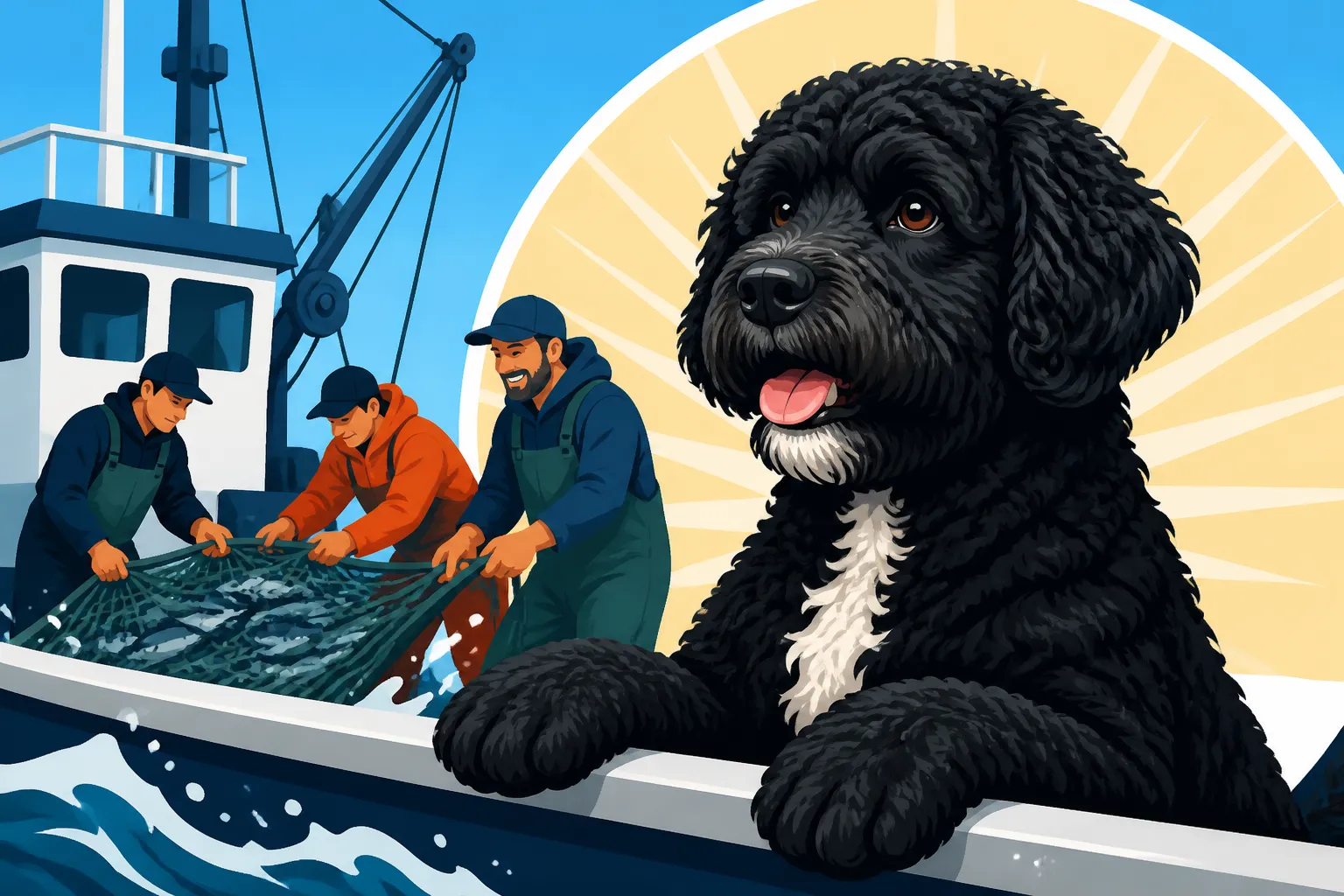
What a Portuguese Water Dog Did for a Fishing Crew
For anyone who has ever owned or admired a Portuguese Water Dog, it’s easy to imagine them as joyful, water-loving companions. But their history is far more rugged than backyard fetch or dock diving competitions. These intelligent, robust dogs were once indispensable members of the Portuguese fishing fleet, performing tasks critical to the livelihood—and sometimes survival—of their human partners. This guide delves into the challenging and specialized work these incredible dogs performed, shedding light on their historical importance.
Life Aboard the Fishing Boats of Portugal
Before the advent of modern technology, fishing was a truly grueling profession, fraught with danger and demanding incredible ingenuity. The fishing crews along Portugal’s rugged coast, particularly in regions like the Algarve, relied on every tool and every member of their team to make a living from the unforgiving sea. For centuries, the Portuguese Water Dog wasn't just a pet; it was an essential piece of equipment, a furry, four-legged deckhand vital to the daily operations.
The Harsh Realities of the Algarve Coast
Imagine the scene: small, wooden fishing vessels tossing on the waves of the Atlantic, their crews battling unpredictable weather, strong currents, and often meager catches. Life at sea was cold, wet, and relentlessly physical. There was no room for passengers on these boats; every creature, human or canine, had to pull their weight. The dogs weren't there for comfort or companionship in the modern sense, though they undoubtedly formed deep bonds with their masters. Their presence was purely utilitarian, driven by the stark necessity of survival and sustenance in a demanding environment. This wasn't a casual dip in a lake; this was a workday, every day, often for long stretches at sea.
A Dog Integral to the Crew's Survival
The Portuguese Water Dog's role was woven into the very fabric of the fishing community. They were often considered family, but a working family member. Their intelligence, strength, and innate love for water were perfectly suited to the tasks at hand. They lived, ate, and slept on the boats, becoming accustomed to the rocking motion and the constant spray. Their presence meant the difference between lost income and a full catch, between a successful day and a dangerous mishap. They were literally an extra set of paws and a keen mind, helping fishermen navigate the daily challenges of the high seas. Many owners today might marvel at their PWD's ability to retrieve a toy from the deepest end of the pool, but their ancestors were doing this for their very existence, day in and day out, demonstrating just How a Portuguese Water Dog Worked a Net.
Essential Roles: Retrieving and Communication
The core of the Portuguese Water Dog's job description centered around its incredible retrieving skills and its capacity for intelligent, independent action. They were problem-solvers on four legs, often responding to subtle cues from their handlers, or even taking initiative when a situation demanded it.
The Master Retriever of Lost Gear
Picture a fisherman losing his hat in a sudden gust of wind, or a critical piece of fishing tackle — a rope, a hook, a gaff — slipping overboard into the murky depths. In a world where every tool was precious and hard-earned, losing equipment wasn't just an inconvenience; it was a financial hit, potentially delaying the catch or even forcing an early return to shore. This is where the Portuguese Water Dog shone. With a keen eye and a powerful swim, they would plunge into the water, locate the lost item, and bring it back to the boat. Their dedication and ability to retrieve objects, even those submerged, were legendary. They were literally lifesavers for valuable equipment, saving time and money for the hardworking crews. This ingrained retrieving drive is still present in our modern PWDs, whether they're fetching a dummy from a field or a floating toy from a lake. It’s part of What a Portuguese Water Dog Was Bred to Do on a Boat.
Carrying Messages Between Vessels
In an age before radios and advanced navigation, communication between fishing boats, especially those working in close proximity but out of earshot, was a significant challenge. The Portuguese Water Dogs were often tasked with a unique and crucial role: acting as maritime messengers. They would carry messages, often tucked into a special pouch or collar, from one boat to another. Imagine the scene: a fisherman on one boat would point to another, give his dog a command, and the dog would launch itself into the waves, swim to the designated vessel, deliver its payload, and often return. This required not just exceptional swimming ability but also an incredible understanding of direction, distance, and the intent of their human partners. It highlights their intelligence and independent thinking, proving Whether a Portuguese Water Dog Carried Messages Between Boats was a real and vital part of their job. This communication role underscores their strategic value beyond mere brute strength or endurance.
The Myth and Reality of Herding Fish
One of the most intriguing and often misunderstood aspects of the Portuguese Water Dog's historical role is the idea of them "herding fish." While the image of a dog actively rounding up schools of fish like a Border Collie with sheep is compelling, the reality was a bit more nuanced and perhaps even more impressive.
What "Herding Fish" Actually Entailed
The term "herding fish" might conjure up a vision of dogs creating a literal wall in the water to direct schools of sardines or cod into nets. While they were incredibly effective at manipulating fish, it wasn't quite such a direct, physical herding. Instead, their presence and movement in the water served as a deterrent and a strategic advantage. Imagine a school of fish already caught or being directed into a net; a dog swimming around the perimeter, splashing and creating disturbances, would prevent the fish from escaping. Their activity kept the fish contained, guiding them subtly but effectively towards the waiting nets. This wasn't about driving fish from open water, but about managing them once they were already in a confined or semi-confined space, maximizing the catch for the struggling fishermen. This strategic use of their presence in the water was a testament to their intelligence and the fishermen's ingenuity.
Driving Fish Towards the Nets
In practice, the dogs' interaction with the fish was more about driving them into the net once it was deployed. When the nets were set, the dogs would enter the water on the side opposite the boat and swim towards it, creating ripples, splashes, and a general commotion. This disturbance would naturally push the fish away from the active dog and deeper into the net. This method was particularly effective with certain types of fish that reacted to movement and sound by trying to flee in the opposite direction. So, while they weren't exactly nipping at fins like a sheepdog, they were absolutely critical in the process of guiding the catch to its final destination. It was a sophisticated technique that demonstrates How a Portuguese Water Dog Drove Fish Into a Net, proving their essential role in increasing the yield of a fishing trip. Their agility in the water, combined with their understanding of the task, made them invaluable assets.
Built for the Water: Physical Adaptations
It's clear that the Portuguese Water Dog wasn't just trained for its tasks; it was built for them. Every aspect of their physical makeup speaks to a history deeply intertwined with water, an enduring legacy evident in the breed today.
The Unique Coat and Webbed Feet
The most striking physical adaptation of the Portuguese Water Dog is, without a doubt, its distinctive coat. Unlike many breeds, the PWD has a single coat, meaning no insulating undercoat that typical water dogs like Labradors possess. This might seem counterintuitive for a dog constantly in cold ocean water, but its tightly curled or wavy texture, as discussed in What a Portuguese Water Dog's Coat Is Made Of, offers incredible water resistance. This dense, non-shedding coat would become saturated on the outer layer, but its tightly packed nature created a natural barrier, preventing water from penetrating to the skin, thus offering insulation and helping to prevent hypothermia during long hours in the chilly Atlantic.
Equally crucial are their famously webbed feet. These aren't just slightly connected toes; they are distinct, strong webbing between their pads, acting like natural flippers. This adaptation provides them with exceptional propulsion in the water, allowing them to swim with remarkable speed and endurance. When you watch a PWD power through the water, you can truly appreciate How Much a Portuguese Water Dog's Webbing Adds to Its Speed. These feet are perfectly designed for explosive starts and sustained swimming, making them tireless workers in the waves.
The Tail: A Rudder in the Waves
Observe a Portuguese Water Dog swimming, and you'll quickly notice their tail. It's not just for balance on land; in the water, it becomes a dynamic tool. Carried high and often curled over their back like a question mark, their strong, muscular tail acts as a powerful rudder. This allows them to make quick, precise turns, change direction rapidly, and maintain stability even in choppy seas. Imagine trying to navigate a small boat without a rudder; it would be nearly impossible to maintain a straight course or make sharp adjustments. Similarly, the PWD's tail was essential for maneuverability when chasing a lost object, delivering a message, or driving fish. This is why Why a Portuguese Water Dog's Tail Works as a Rudder is so crucial to their effectiveness as water workers. Their entire body, from nose to the tip of their tail, is a finely tuned instrument for aquatic performance.
The End of an Era: Modernization and Decline
As with many working breeds, advancements in technology inevitably changed the landscape of their traditional roles. For the Portuguese Water Dog, the mid-20th century brought significant shifts that led to a dramatic decline in their numbers and a change in their purpose.
When Engines Replaced Canine Companions
The biggest catalyst for the decline of the working Portuguese Water Dog was the widespread adoption of modern fishing technology. Diesel engines replaced sails and oars, allowing boats to travel further and faster. Radios enabled instant communication between vessels, negating the need for canine messengers. Sonar and advanced netting techniques reduced the reliance on dogs to locate or herd fish. Cranes and mechanized winches made retrieving heavy nets and lost gear less physically demanding for humans, removing another key canine task. Slowly but surely, the specialized skills of the Portuguese Water Dog became obsolete in the evolving fishing industry. The transition was gradual, but inexorable, marking How Engines Ended the Portuguese Water Dog's Job. The hardworking dogs, once vital to the success of a fishing trip, found themselves with less and less to do. This profound shift is a crucial part of the historical narrative of The Portuguese Water Dog Worked the Algarve Fishing Fleet.
Transitioning from Worker to Companion
The changing role had a devastating impact on the breed's population. By the 1930s, the Portuguese Water Dog was on the brink of extinction, with only a handful of dedicated fanciers and breeders keeping the breed alive. It's a stark reminder of how quickly a highly specialized working breed can diminish once its purpose is gone. Fortunately, thanks to the efforts of people like Dr. Vasco Bensaude, the breed was saved and slowly transitioned from a solely working animal to a beloved companion dog.
Today, while the majority of Portuguese Water Dogs are cherished family pets, their inherent drive and love for water remain strong. Many thrive in modern dog sports like dock diving, agility, and obedience, channeling their ancestral talents into new, exciting outlets. Owners who recognize this deep-seated working heritage often find that providing their PWD with a "job" – whether it's competitive water work, scent detection, or even complex puzzle toys found at retailers like Chewy – leads to a happier, more fulfilled dog. Even without fishing nets, the spirit of the working PWD lives on, eager to engage its keen mind and athletic body.
The Enduring Legacy of the Working PWD
Even though Portuguese Water Dogs no longer regularly work the fishing boats, their rich history continues to define them. Every characteristic, from their dense, curly coat to their webbed feet and intelligent eyes, whispers tales of the sea and the demanding lives they once led alongside their human partners. Understanding their past helps us appreciate the breed's unique traits and responsibilities today.
Modern-Day Expressions of Their Ancestral Traits
The traits that made them invaluable on a fishing boat are precisely what make them such dynamic and engaging companions today. Their boundless energy and intelligence, once channeled into retrieving tackle and guiding fish, now find expression in a myriad of activities. A Portuguese Water Dog thrives on having a purpose, whether it’s learning complex tricks, participating in dog sports, or being a dedicated hiking partner. Their eagerness to please, combined with a fiercely independent streak, means they need consistent training and mental stimulation. Many PWD owners report their dogs' uncanny ability to problem-solve or even "improvise" solutions, a direct echo of their ancestors who had to think on their feet (or paws!) at sea. This intelligence also means that a bored PWD can quickly become a mischievous PWD, making it vital for owners to provide ample engagement, perhaps with durable chew toys or interactive feeders often found on Chewy's extensive catalog.
Why They Still Love the Water
It's no accident that the Portuguese Water Dog retains an almost primal attraction to water. It's in their DNA. For generations, water wasn't just a place to play; it was their office, their livelihood, and their playground. Today's PWDs will often seek out any opportunity to splash, swim, or dive, whether it’s a muddy puddle, a garden hose, a lake, or a swimming pool. This strong drive is a direct link to their heritage and a testament to their breeding as true aquatic workers. For families looking for a water-loving companion, the Portuguese Water Dog is often a perfect fit. They aren't just dogs who tolerate water; they are dogs who embrace it with a passion. This deep connection to water is part of Why a Swimming Dog Gets Ear Infections sometimes, as their ear canals are designed to protect but also need regular care after frequent dips. This historical context enriches our understanding of this truly exceptional breed.
| Role on Fishing Boats | Modern Day Analogue / Trait | Importance |
|---|---|---|
| Retrieving lost gear | Fetch, dock diving | Keeps objects safe, provides mental & physical exercise |
| Carrying messages | Obedience, advanced training | Demonstrates intelligence, independent problem-solving |
| Driving fish into nets | Agility, herding games | Shows responsiveness to direction, strategic thinking |
| Swimming for hours | Endurance, love for water | Requires significant exercise, ideal for active families |
| Living aboard | Adaptability, companionship | Forms strong bonds, needs to be part of family activities |
Ultimately, the Portuguese Water Dog is a living, breathing piece of history. While their fishing days are largely behind them, the legacy of their ancestors is evident in every splash, every retrieve, and every intelligent gaze. They are a testament to the powerful bond between humans and animals, a partnership forged in the challenging waters of the Atlantic.
Disclaimer
This article is for general informational purposes only and does not constitute professional advice. Laws, prices and regulations vary by location and change over time. Consult a qualified professional for guidance on your specific situation.