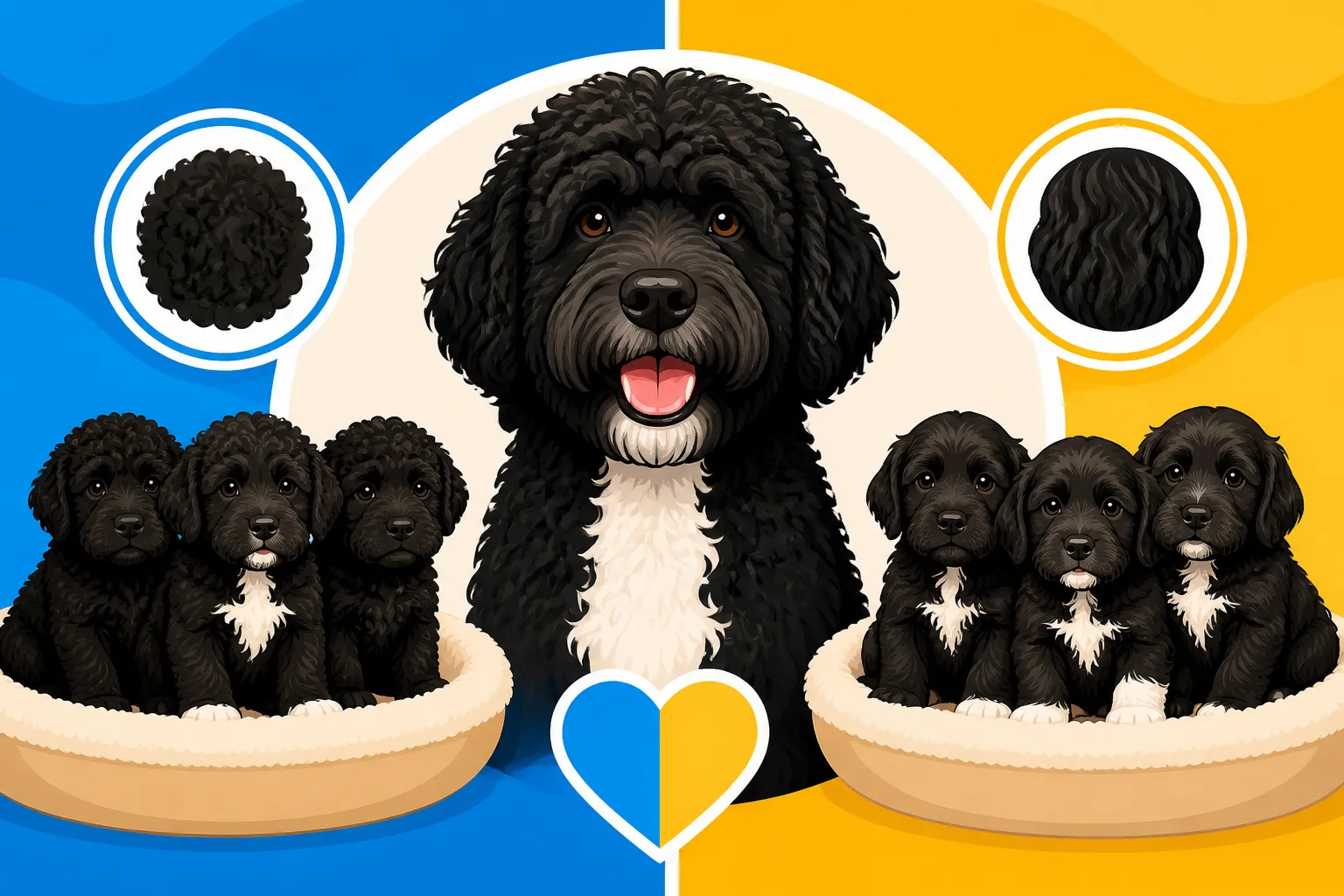
Whether Curly and Wavy Portuguese Water Dogs Share a Litter
Yes, curly and wavy Portuguese Water Dogs can be born in the same litter. Coat texture is an inherited trait, but puppies from the same parents may not all look alike, and a young puppy’s coat can be difficult to judge with confidence. This guide explains what the two coat types look like, why littermates differ, and what to ask a breeder.
Can curly and wavy Portuguese Water Dogs come from one litter
Why littermates can have different coat textures
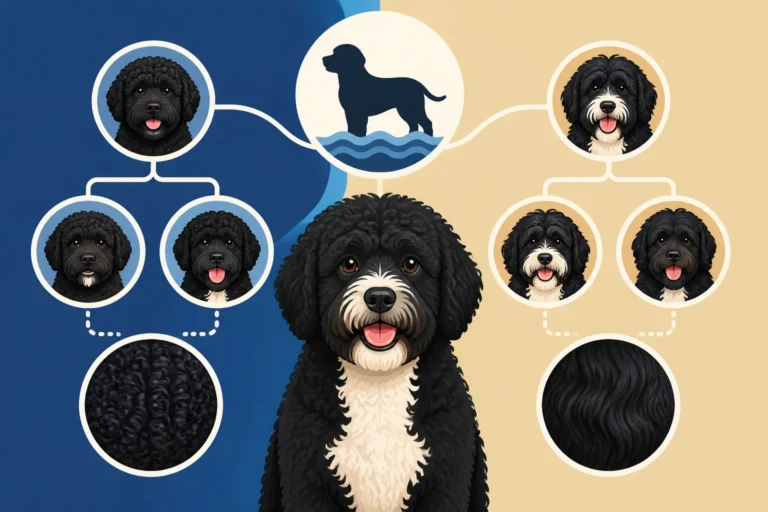
A litter shares the same parents, but each puppy inherits its own combination of genes. That is why siblings can differ in coat texture, color, markings, size, and temperament. One puppy may develop tight, compact curls while a littermate grows a looser, more open coat with waves.
The curly and wavy coats are both accepted coat types for the Portuguese Water Dog. They are not separate varieties or different breeds, and one is not inherently more authentic than the other. A curly puppy and a wavy puppy can grow up in the same home, share the same parents, and still have noticeably different coats. For a broader look at the breed’s coat options, see Which Coat Types a Portuguese Water Dog Comes In.
People sometimes expect a litter to look uniform because the puppies have the same mother and father. In practice, a shared pedigree does not mean every puppy inherits an identical set of traits. Even when both parents have similar-looking coats, their puppies may show a range of textures. Appearance alone also does not tell you everything about the genes a dog carries.
What curly and wavy coats look like
A curly Portuguese Water Dog typically has dense, compact curls that form a fairly even texture over the body. A wavy coat has a softer, looser pattern, with hair falling in waves rather than tight curls. Individual dogs can vary in how pronounced their texture appears, so the difference is not always as dramatic as two textbook descriptions suggest.
The coat may also look different depending on its length, grooming, and condition. A freshly clipped wavy coat can appear less obviously wavy, while a longer coat may show more movement. Curls can look less defined when the hair is wet or stretched out. Coat texture is easier to compare when the dogs are at similar lengths and their coats are clean and dry.
It helps to think of curly and wavy as two recognizable patterns, not two perfectly standardized looks. A puppy’s coat may sit somewhere between an obvious curl and a loose wave, especially during growth. For a closer visual comparison, How a Curly Coat Differs From a Wavy Coat explains the features owners and breeders look for.
Why puppies may not look like their adult coat yet
The coat changes as a puppy grows
A Portuguese Water Dog puppy’s coat can change in length, density, and texture as the dog matures. The coat you see when a puppy is very young may not be a reliable preview of the adult appearance. Hair grows, gets trimmed, and goes through developmental changes, so a puppy that looks soft and lightly waved at first may look quite different later.
This is one reason a breeder may be cautious about promising a precise adult coat based on a very young puppy. The breeder can describe the puppy’s current coat and the coat types seen in its relatives, but early appearance is not a guarantee. Ask how old the puppy was when the breeder made a coat assessment, and whether that assessment is based on more than a quick look at a photograph.
Coat development can be a particularly confusing time for owners because the hair may change unevenly. Some areas seem to grow faster, and the coat may become harder to brush as it lengthens. If you want a fuller explanation of these changes, read Whether a Portuguese Water Dog's Puppy Coat Changes and How Long a Portuguese Water Dog's Coat Change Runs.
A puppy’s coat and an adult’s coat are not always easy to compare
When comparing littermates, remember that a haircut can hide texture. A short clip may make curls and waves look more alike, while a longer coat can exaggerate differences. A wet coat is also a poor basis for comparison: water weighs hair down and can loosen the visible curl pattern until the coat is fully dry.
Photography adds another wrinkle. Lighting, grooming, camera angle, and the puppy’s posture can all affect how the coat appears. A breeder’s description is useful, but if coat texture matters to you, ask to see the puppy in person or request clear photos of the coat when it is dry and not freshly clipped. It is reasonable to ask about both parents’ coats and the range of coat textures in previous litters, while understanding that relatives do not make a particular puppy’s adult coat certain.
A puppy’s coat texture should also be considered separately from coat health. Texture describes how the hair lies; it does not, by itself, tell you whether a dog is healthy. A different-looking coat is not automatically a medical problem. For context on coat conditions that are distinct from ordinary curl or wave, see What Improper Coat Means in a Portuguese Water Dog.
What coat type means for grooming
Both textures need regular coat care
Neither a curly nor a wavy coat is a no-maintenance coat. Portuguese Water Dogs have hair that continues to grow, and tangles can tighten into mats if brushing is skipped. Areas that rub or collect moisture—such as behind the ears, under a collar or harness, and around the legs—deserve regular attention.
Texture can affect how the coat feels to work through, but the individual dog matters too. A dense coat may take longer to brush than a lighter one, and a long coat usually needs more careful maintenance than a short trim. Rather than assuming that one texture will always be easier, ask a breeder or experienced groomer to show you how to check down to the skin and how to use a comb without pulling.
For a practical overview of brushing and common trouble spots, Which Portuguese Water Dog Coat Mats More is a useful companion. If you are putting together grooming supplies, look for tools suited to the dog’s coat length and density. Retailers such as Chewy carry a range of brushes and combs, but the important thing is choosing a tool you can use gently and consistently. A comb should pass through the coat without snagging against hidden mats.
Grooming routines should fit the dog, not just the label
A curly coat does not automatically require one exact routine, and a wavy coat does not mean you can brush less often. Start with frequent, calm coat checks and adjust the routine according to how quickly your dog tangles. If the coat is kept short, brushing may be quicker; if it is left longer, plan for more time and closer attention to friction points.
A simple routine might include checking the coat after walks or swimming, brushing small sections rather than rushing through the whole dog, and using a comb to confirm that the hair is clear down to the skin. If you encounter a tight mat, do not yank at it. Pulling can hurt and make grooming stressful. A professional groomer can advise whether it can be safely worked out or whether clipping is kinder.
For home grooming, supplies available through pet retailers such as Chewy can include combs, slicker brushes, and coat-care products. Choose based on your groomer’s advice and your dog’s needs, rather than buying a tool simply because it is marketed for a particular coat type. A calm puppy introduction—brief handling, rewards, and breaks—often matters more than having an elaborate kit. Chewy is one place owners may browse for basic grooming equipment, but your groomer can help you decide what is genuinely useful for your dog.
| Coat feature | Curly coat | Wavy coat |
|---|---|---|
| General appearance | Compact curls | Looser waves |
| Can occur in the same litter as the other type | Yes | Yes |
| Coat appearance in a young puppy | May be difficult to assess | May be difficult to assess |
| Grooming considerations | Check dense areas carefully for tangles | Check longer or friction-prone areas for tangles |
| What predicts adult appearance | Inheritance and individual development | Inheritance and individual development |
What to ask a breeder about coat type
Ask about the puppy and its relatives
If coat texture is important to your choice, ask the breeder to describe the puppy’s current coat and explain how confident they are in that description. Ask whether the puppy’s coat has been assessed dry and at a comparable length to the parents’ coats. It is also helpful to ask what coat types the puppy’s parents and close relatives have, and whether the breeder has seen both textures in related litters.
These questions are not a demand for a guarantee. They help you understand what the breeder has observed and what remains uncertain while the puppy is growing. A responsible breeder should be comfortable explaining the limits of predicting a mature dog’s appearance, rather than presenting a young puppy’s texture as a certainty.
You can also ask whether the breeder expects the puppy to need a particular grooming approach. The answer should focus on practical care—brushing, clipping, and coat checks—not on the idea that curly or wavy is automatically superior. If you are comparing puppies, consider temperament, health information, and fit with your household alongside coat type. The coat is visible and easy to focus on, but it is only one part of living with the dog.
Separate coat preference from health and suitability
Some families have a preferred look, and that is understandable. But a curly or wavy coat should not be treated as a shortcut for judging health, temperament, or how well a dog will fit into your life. Ask about health screening and the breeder’s approach to raising puppies, and make sure you understand the ordinary grooming commitment either way.
If someone describes a puppy as a particular coat type, ask what they mean by that label and how they reached the conclusion. A short haircut, damp hair, or a puppy’s age can make the texture less obvious. It is also sensible to learn what adult coat care involves before bringing any Portuguese Water Dog home. The coat may look low-shedding, but it still needs regular upkeep, and missed brushing can turn into a frustrating tangle of mats.
The key answer is straightforward: curly and wavy Portuguese Water Dogs can absolutely share a litter. Their coats may differ because siblings inherit different combinations of traits, and a puppy’s appearance can evolve as it grows. Ask thoughtful questions, treat early coat descriptions as informed estimates rather than promises, and be ready to care for the coat your dog develops.
Disclaimer
This article is for general informational purposes only and does not constitute professional advice. Laws, prices and regulations vary by location and change over time. Consult a qualified professional for guidance on your specific situation.