Whether a Portuguese Water Dog Dives Under Water
One of the most common questions I get from new Portuguese Water Dog owners, or those just dreaming of welcoming one into their lives, is about their relationship with water. Everyone knows these dogs are called "water dogs" for a reason, but what does that really mean? Does it mean they just love to splash, or are we talking about true underwater diving, like a seal or a duck? It’s a valid question, because while their name evokes images of aquatic prowess, the reality of what your Portuguese Water Dog might do can vary. This guide will clarify the nuances of a Portuguese Water Dog's interaction with water, specifically addressing whether they dive underwater, what prompts this behavior, and how you can safely encourage or manage it.
Understanding the Portuguese Water Dog's Natural Affinity for Water
Let's get one thing straight: the Portuguese Water Dog was absolutely bred for a life intertwined with the sea. They weren't just passengers on fishing boats; they were active, indispensable members of the crew. This isn't just a quaint historical fact; it profoundly shaped their physical attributes, their instincts, and their very nature.
What "Working the Water" Truly Meant for the Breed
Imagine the rugged coast of Portugal, with fishermen heading out in their traditional boats. These dogs weren't just fetching sticks from the shallows. Their historical role was far more demanding and specialized. They were tasked with retrieving lost fishing tackle that had fallen overboard, herding fish into nets, and even carrying messages between boats. This wasn't a game; it was their job, crucial for the livelihood of their human companions. How a Portuguese Water Dog Worked a Net explains some of these historical duties in fascinating detail. They needed to be agile, strong swimmers, and intelligent problem-solvers. This "work" required them to be comfortable in varying depths of water, from the choppy surface to reaching down to retrieve objects that might have sunk a bit. They learned to use their powerful bodies and keen senses to locate and bring back whatever was needed. It wasn't about deep, prolonged dives like a diving bird, but about efficient, purposeful underwater forays when necessary.
The Physical Adaptations for a Life Aquatic
When you look at a Portuguese Water Dog, you're looking at a canine athlete built for the water. Every part of them, from their coat to their feet, tells a story of generations spent in and around the ocean.
First, consider their unique coat. Whether curly or wavy, it's a single coat, meaning no insulating undercoat. This might seem counterintuitive for a water dog, but it actually helps them dry faster and prevents them from becoming waterlogged and chilled, especially in the cold Atlantic waters they traditionally worked in. This non-shedding, dense coat also provides excellent insulation when wet, acting like a wetsuit to retain body heat. Why a Portuguese Water Dog Has a Single Coat delves deeper into this unique characteristic.
Then there are those distinctive webbed feet. These aren't just slightly joined toes; they're fully webbed, like a duck's, creating powerful paddles that propel them through the water with incredible efficiency. This webbing significantly increases their surface area in the water, allowing them to move with a speed and grace that non-webbed breeds can only dream of. Their strong, muscular bodies and powerful hindquarters act like a natural motor, while their thick, rudder-like tail helps them steer and balance in currents. All these physical traits combine to make them exceptional swimmers, perfectly equipped for quick descents and ascents in the water.
| Physical Adaptation | Function for Water Work | Implication for Diving |
|---|---|---|
| Dense, Single Coat | Water-resistant, insulating, dries relatively quickly | Prevents waterlogging, maintains body temperature during dips |
| Webbed Feet | Powerful propulsion, increased efficiency | Essential for quick, agile movement in water, including pushing off for dives |
| Muscular Build | Strength and endurance for swimming, retrieving | Enables powerful bursts of speed and effort to reach submerged items |
| Rudder-like Tail | Steering and balance in water | Helps maintain direction and control during underwater maneuvers |
| Strong Lungs | Enables holding breath for short periods | Supports brief underwater exploration and retrieval |
Exploring the "Dive" in a Portuguese Water Dog's Repertoire
So, with all these incredible adaptations, does it mean they actually dive underwater? The answer is a nuanced "yes," but it's important to understand what kind of "diving" we're talking about.
Distinguishing Surface Dives from Submerged Diving
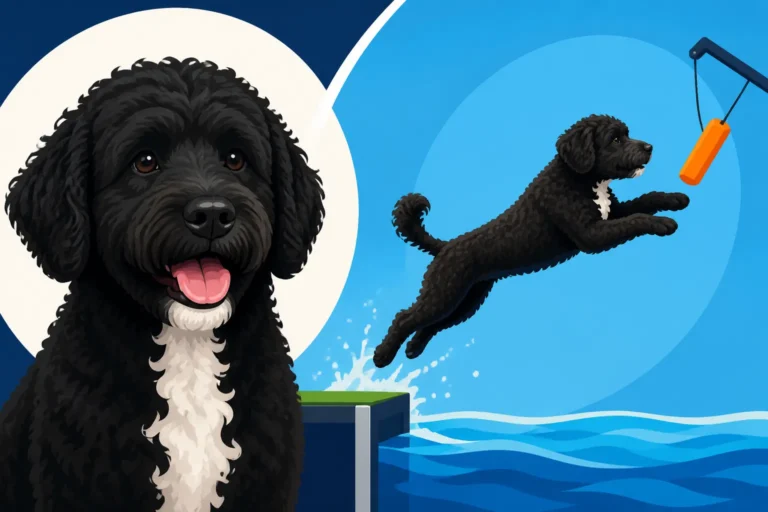
When most people think of a dog "diving," they often picture a labrador retriever enthusiastically leaping into a lake to fetch a bumper. A Portuguese Water Dog certainly excels at this kind of surface dive, launching themselves into the water with gusto to retrieve floating toys or just to swim for fun. They'll often disappear briefly under the splash and then resurface, shaking it all off.
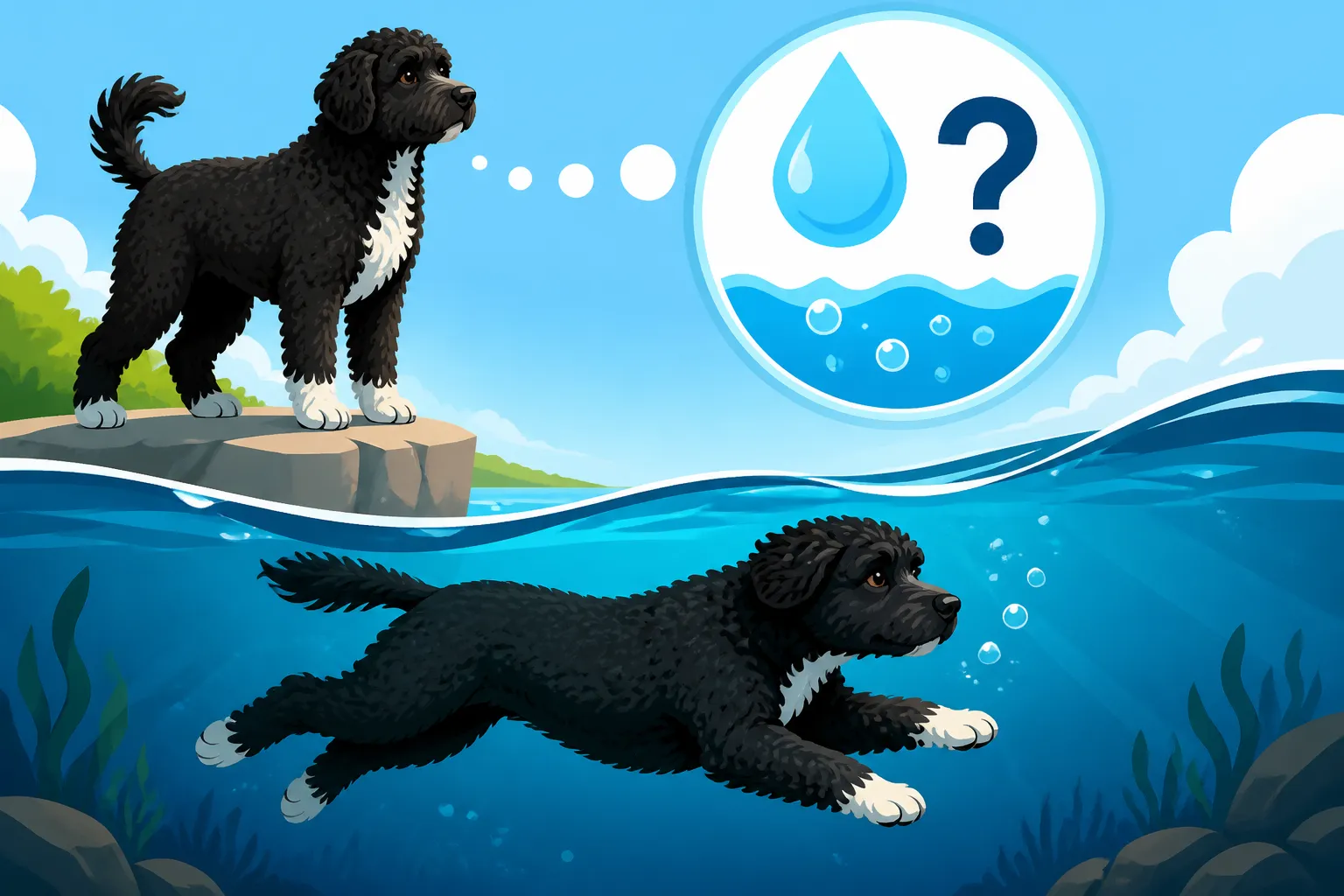
However, a Portuguese Water Dog can and often will perform what I'd call a "purposeful submerged dive." This isn't typically a deep-sea dive to the ocean floor, but rather a short, targeted descent to retrieve an object just below the surface or lying on the bottom in shallow to moderate depths. Think of them pushing off the bottom of a pool or lake and using their powerful webbed feet to propel themselves down a few feet, snatching a sunken toy, and then popping back up. I've seen my own dogs do this countless times, especially when a favorite bumper or rock sinks unexpectedly. It's less about exploring the underwater world and more about accomplishing a task – getting that retrieve!
Factors Influencing a PWD's Diving Behavior
Several factors play a role in whether your PWD will embrace these submerged adventures:
- Training and Encouragement: While they have the natural inclination and physical tools, many PWDs benefit from encouragement. If you regularly throw toys that sink in clear, shallow water, they'll often start to experiment. You might begin with toys that barely sink, and then gradually introduce ones that settle a bit deeper.
- The Lure of the Retrieve: Their strong retrieving drive is a massive motivator. If there's something they really want, especially a favored toy, they're far more likely to go after it, even if it means dipping their head and shoulders, or their entire body, underwater. This is where their working heritage truly shines through – they're driven to complete the task. Whether a Portuguese Water Dog Still Retrieves is a great read on this aspect of their personality.
- Water Clarity and Depth: A PWD is more likely to dive if they can see the object they're after. Clear water in a pool or a calm lake makes it much easier for them to spot their target. In murky water, they might hesitate or rely more on touch and scent, which can make diving less efficient or appealing. Shallow to moderate depths (a few feet) are usually where you'll see them perform these submerged retrievals.
- Individual Personality: Just like people, every PWD is an individual. Some are incredibly bold and will dive headfirst for anything, while others might be a bit more cautious. My first PWD, Skipper, would plunge fearlessly. My current boy, Finn, is a little more deliberate, taking a moment to assess before making his move. Don't force it if your dog isn't keen.
Encouraging and Managing Underwater Exploration
If you have a Portuguese Water Dog and want to foster their natural diving abilities, or if you simply want to ensure they're safe around water, there are definitely steps you can take.
Introducing Your PWD to Deeper Water and Submerged Objects
The key here is positive reinforcement and gradual introduction. Never push your dog into the water or force them to dive. That can create fear and aversion.
- Start Shallow and Clear: Begin in a shallow area where your dog can easily stand, like a kiddie pool, a gentle lake shore, or the steps of a swimming pool.
- Make it Fun: Toss floating toys they love. Once they're confidently retrieving these, introduce toys that slowly sink or rest just on the bottom in very shallow water. Think soft silicone toys or weighted rubber dummies that are easily gripped. Many dog-specific water toys are available on Amazon that are designed to sink at different rates.
- Encourage with Enthusiasm: When they retrieve something from just under the surface, praise them heavily! Make it a huge celebration. This positive association is crucial.
- Gradual Depth Increase: As your dog gets more comfortable, you can move to slightly deeper water, where the toy might be a foot or two down. You might even demonstrate by reaching down yourself (if safe and appropriate) to show them the object, or by using a long-handled scoop to help them.
- Build Confidence: For puppies, early, positive exposure is key. Teaching a Portuguese Water Dog Puppy to Enter Water provides excellent guidance on building this foundation. Make every interaction with water a happy, low-pressure experience.
- Use Training Principles: The core principles of dog training apply here. Brands like BAXTER & Bella offer online resources that can help structure your training, even for niche behaviors like retrieving from underwater. Their approach focuses on positive methods that build a strong bond and willing participation.
Safety Considerations for Underwater Play
While PWDs are built for water, safety should always be your top priority, especially when they are exploring below the surface.
- Supervision is Non-Negotiable: Never, ever leave your PWD unsupervised around water, particularly if they are diving or swimming in deeper areas. Accidents can happen quickly.
- Clear Water is Safer: As mentioned, clear water allows them to see what they're diving for. In murky ponds or lakes, they might bump into submerged obstacles or accidentally ingest dirty water.
- Avoid Strong Currents: Rivers with strong currents or ocean areas with powerful undertows are not places for a dog to be diving or even casually swimming, as they can quickly become exhausted or swept away.
- Check Water Temperature: Even with their insulating coat, very cold water can pose a risk of hypothermia, especially during prolonged activity or repeated dives. How Long a Portuguese Water Dog Can Stay in Cold Water offers more insights into this.
- Listen to Your Dog: Watch for signs of fatigue or discomfort. If your dog seems hesitant, tired, or keeps shaking their head excessively after a dive, it's time for a break.
- Ear Care: Their ears, while protected by coat, are still prone to moisture trapping. After any extensive water play, particularly diving, make sure to dry their ears thoroughly and consider using an ear-drying solution recommended by your vet. This helps prevent painful ear infections. Why a Portuguese Water Dog's Ears Need Checking Every Week is a must-read for all PWD owners.
Common Misconceptions About PWDs and Deep Water
Despite their name and aquatic heritage, there are some misunderstandings about how Portuguese Water Dogs interact with water, especially when it comes to "diving."
The Difference Between Instinct and Learned Behavior
It's tempting to think that because they're "water dogs," all PWDs will naturally plunge into the deepest part of a lake and retrieve sunken treasures without a second thought. While they have a strong instinctive affinity for water and are physically predisposed to swim beautifully, true submerged diving for objects is often a learned behavior built on their natural drives.
A puppy might splash in a puddle, but it often takes encouragement and positive experiences to teach them to purposefully dip their head underwater, let alone dive a few feet down for a toy. Their instinct tells them water is good, fetching is fun, and retrieving is rewarding. Combining these instincts with structured play and clear rewards helps them develop the confidence and technique to dive. So, if your PWD isn't immediately diving like a seasoned pro, don't worry! It's perfectly normal and gives you a wonderful opportunity to bond through training.
Why Some PWDs Might Hesitate
You might encounter a Portuguese Water Dog that, despite all their breed's historical glory, seems hesitant about getting their head wet or diving. This isn't a flaw in their "Portuguese Water Dog-ness"; it's usually due to a few common reasons:
- Lack of Early Positive Exposure: A puppy that didn't have positive, safe introductions to water in their formative months might develop a reservation. If their first experiences were scary, forced, or with water that was too cold or turbulent, they might be wary. When a Portuguese Water Dog Puppy Should Meet Water provides advice on how to introduce water properly.
- Previous Negative Experiences: An older rescue PWD might have had a frightening incident involving water, leading to a fear response. Patience and gentle reintroduction are vital in these cases.
- Water Type/Clarity: As we discussed, murky water can be intimidating. If they can't see what's below, they're less likely to commit to a dive. Unknown environments, especially those with strong smells or unfamiliar textures, can also make a dog hesitant.
- Individual Temperament: Some dogs are simply more cautious than others. They might love to swim on the surface but draw the line at going fully underwater. Respect their boundaries. Your goal is for them to enjoy water safely, not necessarily to become an Olympic diver.
If your PWD is a reluctant diver, focus on making water a positive, fun experience on their terms. Try throwing buoyant toys, running alongside them in shallow water, or simply sitting by the water's edge and offering treats. Never force the issue, and you'll likely see their confidence grow over time.
Equipping Your Portuguese Water Dog for Aquatic Adventures
Whether your PWD is a champion diver or just a casual paddler, having the right gear can make their water experiences safer and more enjoyable for both of you.
Essential Gear for Water-Loving PWDs
Just like any specialized activity, water work with a Portuguese Water Dog benefits from some specific equipment.
- High-Visibility Floating Toys: These are a game-changer. Forget sticks that splinter or tennis balls that get waterlogged and sink. Look for durable, brightly colored floating toys made of rubber or foam. Think brands like KONG or Chuckit! that offer options designed for water play. If you're specifically training for submerged retrieval, you'll want some toys that are designed to sink slowly, like a weighted dummy or specific diving toys available on Amazon.
- Quick-Drying Towels: This is non-negotiable. PWDs love water, which means they're often wet. Having several absorbent, quick-drying towels is essential for drying them off after a swim, especially before they get back in the car or come inside. Microfiber towels are particularly effective. What a Portuguese Water Dog's Towels and Drying Kit Cost might be useful if you're outfitting your home.
- Force Dryer: For serious water dogs, especially those swimming frequently, a force dryer can be a lifesaver. It quickly removes excess water from their dense coat, drastically reducing drying time and helping to prevent skin issues like hot spots that can arise from prolonged dampness. It's an investment, but many PWD owners swear by them. What a Force Dryer Does for a Portuguese Water Dog offers more details on this essential grooming tool.
- Ear Cleaner and Drying Solution: As mentioned, PWD ears are prone to infections due to their floppy nature and love of water. A veterinary-approved ear cleaner and a drying solution (often containing alcohol or witch hazel) are crucial for post-swim care. Consistent ear hygiene can save you a lot of heartache and vet bills. You can find these at pet supply stores or through your vet. What a Portuguese Water Dog's Ear Cleaner Costs a Year gives you an idea of recurring costs.
- Life Vest: While PWDs are excellent swimmers, a life vest offers an extra layer of safety, especially in open water, strong currents, or for older dogs. Look for one with a strong handle on the back, which makes it easier to lift your dog out of the water or guide them. Brands like Ruffwear offer excellent, durable options. When a Portuguese Water Dog Needs a Life Jacket provides more context.
Training Tools and Techniques for Water Work
Beyond the physical gear, certain training tools and techniques can significantly enhance your PWD's water skills, including diving.
- Long Line/Leash: For early training, especially around new or open water, a long line (15-30 feet) can be invaluable. It allows your dog freedom to explore and swim while giving you control and the ability to safely recall them if needed. This is particularly useful when teaching a dog to retrieve from the water, as you can guide them back to shore.
- Whistle Training: A whistle can be a fantastic tool for recall, especially when your dog is far out in the water or focused on a retrieve. The sound carries well over distance and water noise, and it's less affected by your emotional state than your voice might be. Consistent training with a whistle can create a reliable recall, which is paramount for safety during water activities.
- Positive Reinforcement: This cannot be stressed enough. High-value treats, enthusiastic verbal praise, and favorite toys should be used to reward every successful interaction with water, every retrieve, and every attempted dive. Make it the most fun thing your dog does. Never punish or scold a dog for being hesitant in water; it will only create negative associations.
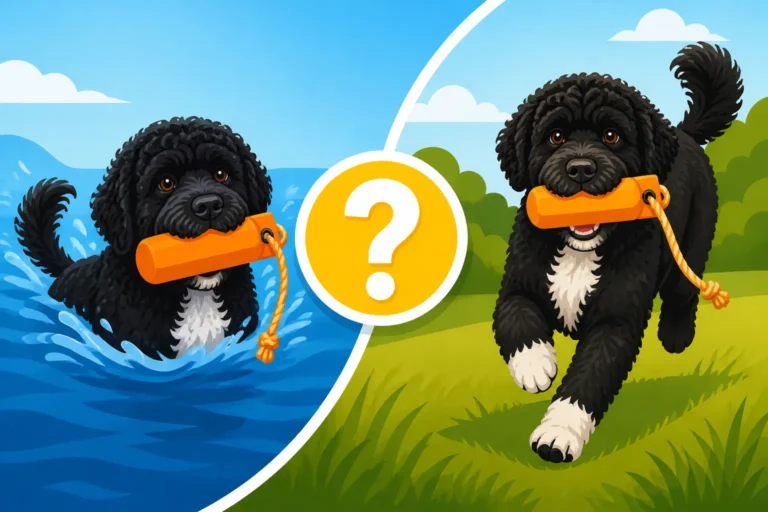
- Mock Retrievals on Land: Before asking your dog to dive for a toy, practice retrieves on land with the same type of toy. Build their drive and desire for the specific object. This makes the transition to water much smoother.
- "Go Find It" Game: This game, where you hide an object and encourage your dog to find it, can be adapted to water. Start by tossing the sinking toy in clear, shallow water and encouraging them to "go find it!" This taps into their natural scent and seeking abilities.
By combining the right equipment with consistent, positive training methods, you can help your Portuguese Water Dog develop into a confident and safe water companion, whether they're gracefully paddling or making a purposeful dive for a favorite toy.
Disclaimer
This article is for general informational purposes only and does not constitute professional advice. Laws, prices and regulations vary by location and change over time. Consult a qualified professional for guidance on your specific situation.