What a Portuguese Water Dog Carries Off When Bored
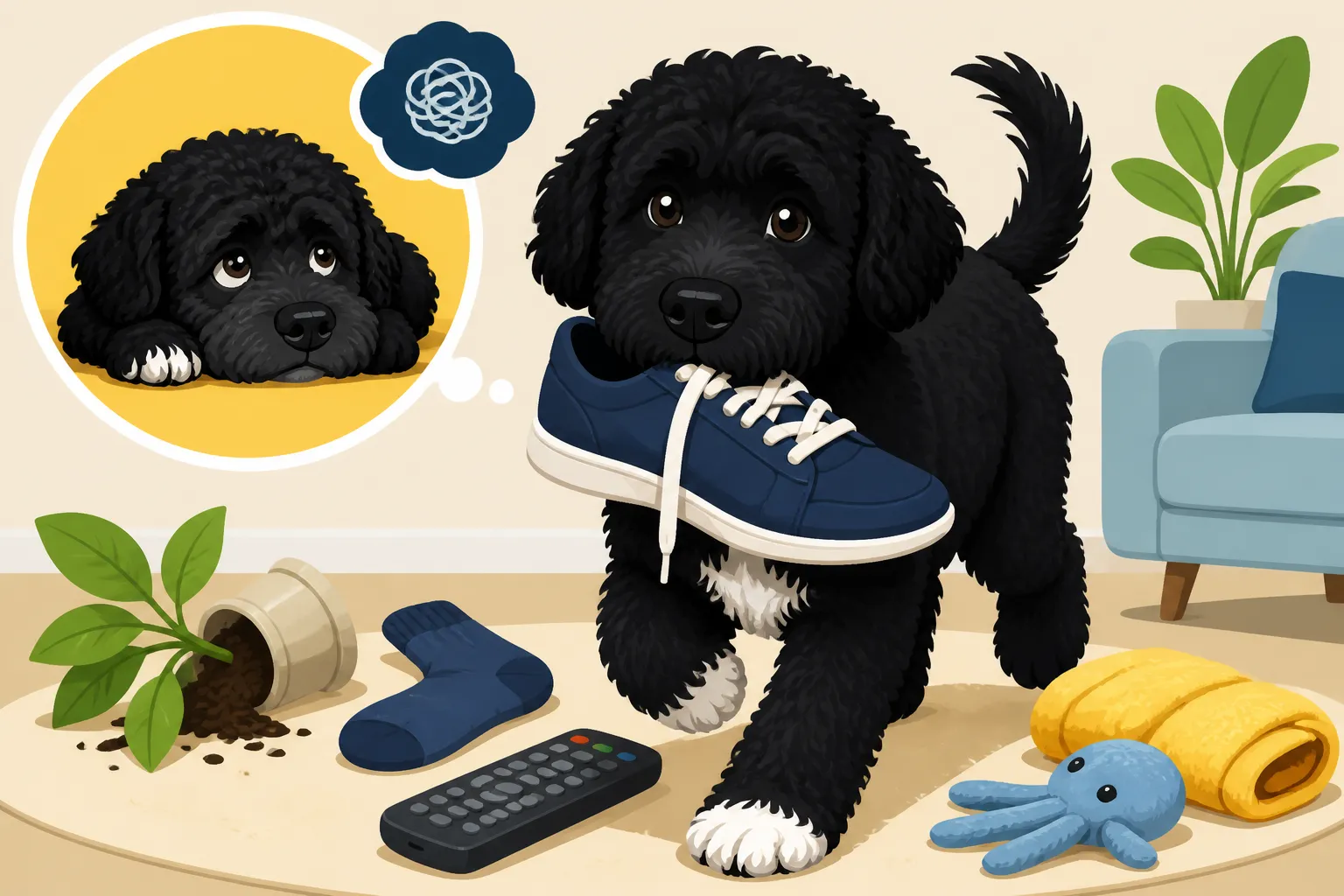
It’s a scenario many Portuguese Water Dog owners know all too well: you turn your back for a moment, and suddenly your favorite sock, the remote control, or even a perfectly good roll of paper towels has vanished. Your clever, water-loving companion, with a twinkle in their eye, has "borrowed" it, often prancing away as if they've won the lottery. This isn't just mischievousness; it’s a clear sign that your highly intelligent and active PWD might be under-stimulated and looking for a job to do, even if that job involves redecorating your living room with your personal belongings. This guide will help you understand why your PWD carries things off when bored and, more importantly, how to redirect that brilliant mind toward more appropriate, and safer, activities.
The "Why" Behind the Pilfering: Understanding Your PWD's Instincts
It’s easy to get frustrated when your treasured possessions start disappearing, but understanding the root cause of this behavior in your Portuguese Water Dog is the first step toward managing it. These dogs aren't being spiteful; they're simply acting on instincts that have been hardwired into their breed for centuries.
A Working Dog's Mind
Let's be real, your Portuguese Water Dog wasn't bred to be a couch potato. These are working dogs, through and through, with a history rooted in the bustling fishing fleets of Portugal. Their ancestors spent their days actively assisting fishermen, retrieving lost tackle, herding fish into nets, and even carrying messages between boats. This demanding historical role required a dog with keen intelligence, immense stamina, and an independent problem-solving nature. They were expected to think on their feet, make decisions, and engage physically and mentally for hours on end.
When you bring a PWD into your home, you're not just getting a pet; you're adopting a descendant of these highly capable working companions. If their day-to-day life doesn't offer enough mental puzzles, physical exertion, or a "job" to do, their innate drives don't just vanish. Instead, they find their own employment, and often, that job involves exploring their environment, manipulating objects, and, yes, carrying things from one place to another. It's their way of staying engaged and preventing boredom. For a deeper dive into their original purpose, check out A Portuguese Water Dog Was Bred to Work a Boat, Not a Yard.
Oral Fixation and Exploration
Beyond their working heritage, Portuguese Water Dogs also tend to be very "mouthy" dogs. For many breeds, especially during puppyhood, the mouth is a primary tool for exploring the world. Everything new gets sniffed, licked, and often, gently (or not so gently!) mouthed. For PWDs, this oral exploration often continues well past typical puppy stages, becoming a consistent characteristic of their behavior.
This isn't necessarily a sign of aggression or a destructive habit in itself; it's a natural instinct. They use their mouths to understand textures, scents, and the properties of objects. When they pick something up and carry it off, they are engaging in a complex sensory experience. They might be enjoying the texture of a sock, the crinkle of paper, or the way a remote control feels in their jaw. It provides a level of sensory input and engagement that can be deeply satisfying to a bored or under-stimulated PWD. Understanding Why a Portuguese Water Dog Puts Everything in Its Mouth can help you differentiate between innocent exploration and problematic chewing.
Common Targets and the Art of the "PWD Score"
If you live with a Portuguese Water Dog, you've probably noticed a pattern in what they choose to "liberate" from your household. It's rarely something boring or inert. They have a knack for finding items that are rich in scent, interesting in texture, or perhaps most appealing of all, items that elicit a reaction from you.
Household Items of Interest
PWDs are like canine treasure hunters, and their treasures often come from your daily life. Socks are a perennial favorite – they're soft, carry your unique scent, and are perfectly sized for carrying. Remote controls are another common target; they fit comfortably in the mouth, and perhaps the buttons offer an interesting tactile experience. Shoes, especially well-worn ones, are highly prized due to their strong human scent and varying textures. Kitchen towels, mail, eyeglasses, and even children's toys are also frequently "borrowed."
The appeal of these items often lies in their sensory richness. Your mail smells like you, your socks are warm from your feet, and a kitchen towel might retain the scent of dinner. These items become stand-ins for the stimulating tasks their ancestors once performed. Carrying off a sock can become a mini-retrieving game, while gnawing on a remote might satisfy a need for oral engagement. It’s their unique way of creating a "job" for themselves when the real work of a PWD – swimming, retrieving, problem-solving – isn't being provided in adequate measure.
The "Trade" Game and Resource Guarding
Here’s where it gets tricky, and where we, as owners, can inadvertently reinforce the very behavior we want to stop. When your PWD snatches your reading glasses and trots off with them, what's your first instinct? To chase, right? That chase, to your PWD, is often the ultimate reward. It turns their "score" into a high-stakes game of keep-away, making the act even more thrilling and desirable next time. They quickly learn that picking up certain items guarantees immediate attention and a fun pursuit.
Instead of chasing, the goal is to make trading a positive experience. Always have high-value treats on hand. If your PWD has something they shouldn't, calmly approach, offer a fantastic treat (like a piece of cheese or cooked chicken), and say "trade!" When they drop the item to take the treat, praise them lavishly. This teaches them that letting go of an item leads to something even better, rather than a frantic game of chase or a scolding. However, be mindful of true resource guarding, which is different from playful keep-away. If your dog growls, snaps, or stiffens aggressively when you try to take an item, you're dealing with a more serious issue than boredom. It’s important to understand Whether a Portuguese Water Dog Guards What It Takes and address it with professional guidance if needed.
| Item Type | Common Examples | Why PWDs Find Them Appealing | Immediate Action Strategy |
|---|---|---|---|
| Soft, Scented | Socks, Underwear, Gloves | Strong human scent, interesting texture for carrying/mouthing | Calmly offer a high-value treat for a trade; pick up laundry. |
| Tactile/Novel | Remotes, Phones, Glasses | Unique shapes, buttons, potential for owner reaction | Keep out of reach; offer a durable, safe chew toy. |
| Paper/Crinkly | Mail, Paper Towels | Satisfying tearing sound, easy to carry, often found on counters | Shred documents, keep paper products in cabinets. |
| Chewy/Familiar | Shoes, Slippers | Strong human scent, firm texture, often left on the floor | Store shoes in closets; provide appropriate chew alternatives. |
| Child's Toys | Stuffed animals, Blocks | Varied textures, often left accessible, can be a play invitation | Teach "leave it"; ensure child's toys are put away. |
Strategies to Prevent and Manage the Behavior
The good news is that managing your Portuguese Water Dog's tendency to "collect" household items is entirely achievable with consistency, understanding, and a proactive approach. It's about meeting their needs before they have to invent their own ways to be entertained.
Boosting Mental and Physical Stimulation
The absolute cornerstone of preventing boredom-induced mischief in a PWD is ensuring they get enough mental and physical exercise. These dogs thrive on activity, and a tired PWD is generally a well-behaved PWD. Simply letting them out in the yard isn't enough; they need engaging activities that challenge their bodies and their brilliant minds. Aim for at least 60-90 minutes of vigorous exercise daily, broken into multiple sessions. This might include long, brisk walks, energetic games of fetch, or structured training sessions. For insights on appropriate exercise, read How Many Miles a Portuguese Water Dog Needs on a Dry Day.
However, "physical" isn't the only word in the equation. Mental stimulation is just as, if not more, important. Consider introducing puzzle toys that require your PWD to figure out how to get a treat. These can keep them engrossed for significant periods. Snuffle mats, treat-dispensing balls, and interactive feeders are excellent tools. Many fantastic options are available from retailers like Amazon, offering various difficulty levels to keep your PWD challenged. Agility, obedience classes, or even just working on new tricks daily can provide critical mental workouts. And of course, for a water dog, nothing quite beats a good swim. It's an incredible full-body workout that also satisfies their deepest instincts. Explore Whether a Portuguese Water Dog Would Rather Swim Than Run to see how much they truly enjoy aquatic activities. If your PWD flies through puzzle toys, consider Whether a Portuguese Water Dog Solves a Puzzle Toy Too Fast and upgrade to more complex ones.
Environmental Management and Training
While increased stimulation is paramount, environmental management acts as your first line of defense. The simplest way to prevent your Portuguese Water Dog from carrying off an item is to ensure they can't get to it in the first place. This means "puppy-proofing" your home, even for an adult dog. Keep counters clear, put shoes away in closets, use hampers for dirty laundry, and ensure valuable or dangerous items are stored out of reach. Crate training can also be an invaluable tool. A crate provides a safe, secure den for your PWD where they can relax without the temptation of wandering off with your belongings.
Alongside management, consistent training is crucial. Teach your PWD strong "leave it" and "drop it" commands. Practice these commands frequently, using high-value rewards to ensure a positive association. Start in a low-distraction environment, working your way up to more challenging scenarios. For example, begin by having them "leave" a boring toy, then progress to a more exciting one, and eventually to an item they are truly interested in. Positive reinforcement is key – never punish them for picking up an item, as this can make them secretive or even defensive. Enrolling in an online training program, such as those offered by BAXTER & Bella, can provide structured guidance and support for teaching these vital commands. Consistent, patient training builds trust and reinforces desired behaviors.
Providing Appropriate Chews and Toys
Since your PWD has a natural inclination to use their mouth for exploration and self-entertainment, it's essential to provide an abundance of appropriate alternatives. Don't just give them one or two toys; offer a variety of textures, shapes, and sizes to keep things interesting. Think about durable rubber chew toys, rope toys for tug, and interactive toys that can be stuffed with treats. For the PWD that loves to chew, hardy options like Nylabones or tough Kong toys can be lifesavers.
Rotate their toys regularly to prevent boredom and maintain novelty. What excites them today might be old news tomorrow. Just like us, variety keeps them engaged. Natural chew options like bully sticks or dental chews can also be good, but always supervise your dog with these and ensure they are appropriate for their size and chewing style. Avoid anything that can splinter or be ingested in large, dangerous pieces. Understanding What a Portuguese Water Dog Chews as a Puppy can inform your choices for adult chews, as their preferences often continue. Always prioritize safety, and replace worn-out or damaged toys promptly.
When Boredom Turns to More Serious Issues
While a mischievous PWD can be endearing, chronic boredom can escalate beyond simply carrying off your possessions and lead to more serious problems that impact both their health and your peace of mind.
Destructive Chewing and Ingestion Risks
The line between "carrying off" and "destructive chewing" can be very thin for a bored Portuguese Water Dog. What starts as a simple act of moving an item can quickly turn into shredding, tearing, or even consuming it. This is where the fun stops and the real dangers begin. Swallowing non-food items like socks, pieces of toys, remote control parts, or even bits of fabric can lead to serious gastrointestinal issues, including blockages that require expensive emergency veterinary intervention. It's a terrifying prospect for any dog owner, and a stark reminder that managing boredom isn isn't just about preserving your belongings; it's about safeguarding your dog's health.
For instance, a PWD might retrieve a child's small plastic toy from the floor and, in their frustration or intense oral drive, chew it into pieces and swallow some. This immediately puts them at risk. A visit to the emergency vet for potential foreign body removal is not only stressful and costly but entirely preventable with proactive management. Understanding Whether a Portuguese Water Dog Swallows What It Chews is a crucial part of responsible ownership, highlighting the need for vigilance and appropriate outlets for their oral needs.
Behavioral Escalation: Boredom to Anxiety
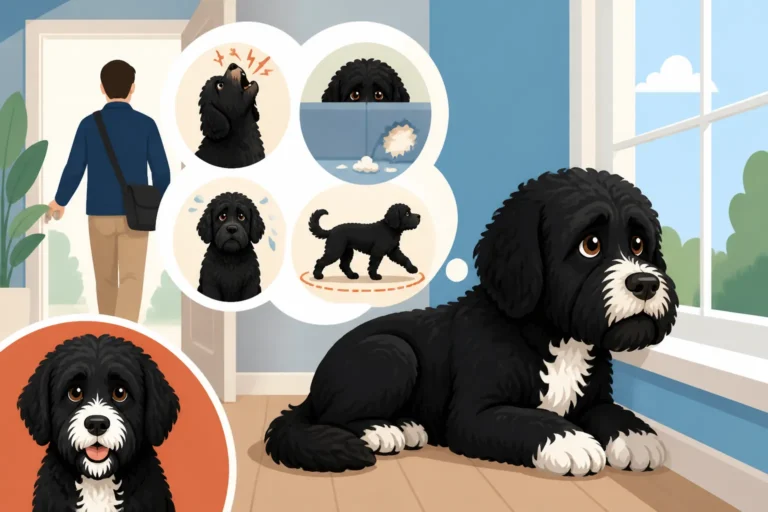
A Portuguese Water Dog that is consistently under-stimulated doesn't just "get over it." The unmet need for mental and physical engagement can manifest in a range of undesirable behaviors that go far beyond stealing your socks. Chronic boredom can contribute significantly to the development of separation anxiety, where the dog experiences extreme distress when left alone. This can lead to incessant barking, destructive chewing of furniture or doorframes (not just your mail), and even house-soiling. They might become restless, constantly seeking attention, or exhibit compulsive behaviors like pacing or tail chasing.
Moreover, persistent boredom can lead to frustration and a lack of self-control, making training more difficult and potentially straining the bond between you and your dog. A PWD who isn't given enough productive work will invent their own, and these self-appointed "jobs" are often destructive or anxiety-driven. Recognizing Signs a Portuguese Water Dog Has Separation Anxiety early and addressing the underlying causes, including inadequate stimulation, is vital for your dog's well-being and the harmony of your household. Giving your Portuguese Water Dog a consistent routine with plenty of appropriate exercise and mental challenges is truly the best gift you can give them.
Disclaimer
This article is for general informational purposes only and does not constitute professional advice. Laws, prices and regulations vary by location and change over time. Consult a qualified professional for guidance on your specific situation.