How a Portuguese Water Dog Can Have a White Chest
A Portuguese Water Dog can have a white chest even when most of its coat is black or brown. That marking is usually a normal variation in coat color, not a sign of illness or a different breed. This guide explains how white markings fit the breed’s accepted colors, what they can and cannot tell you about a puppy, and when a change in appearance deserves a closer look.
Why a Portuguese Water Dog Can Have a White Chest
White is an accepted coat color
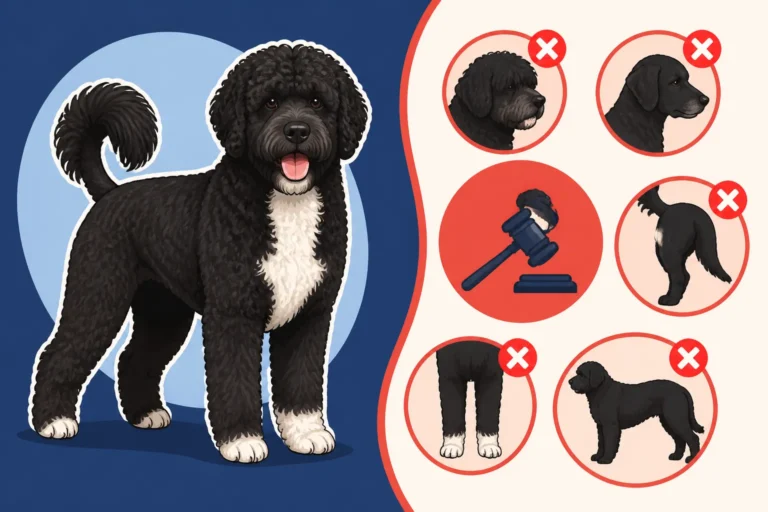
Portuguese Water Dogs can be black, brown, or white, and they can also have combinations of these colors. A dog with a dark body and white on its chest is therefore not unusual simply because the rest of its coat is solid-colored. The extent and placement of white can vary from one dog to another.
A white patch on the chest may be small and easy to miss beneath a shaggy coat, or it may form a broader area that is visible when the dog is clipped short. The coat can also make the shape of a marking look different depending on its length, curl, and how it lies. For examples of the broader color range, see Which Colors a Portuguese Water Dog Comes In and Which Colors the Portuguese Water Dog Standard Accepts.
Breed standards describe the colors and markings that can be accepted in the show ring. Those standards are not a health test, and a white chest does not by itself tell you whether a dog is healthy, well bred, or suitable for a particular home. It is one visible feature among many.
Pigment creates the pattern
A white patch in the coat generally reflects an area where the hairs have little or no pigment, while dark hairs contain pigment that gives them their color. Coat color and markings are influenced by inherited traits, but the pattern can be more complicated than a simple rule such as “one parent has a white chest, so the puppies will too.” A puppy’s markings should not be predicted from a single visible feature alone.
That is why a litter can include puppies with different amounts or placements of white, even when they have the same parents. Breeders may be able to discuss patterns seen in their lines, but the exact appearance of an individual puppy is not always guaranteed. If you are considering a puppy, focus on the breeder’s health practices, temperament, and care of the dogs as well as coat color.
White markings also do not establish that a dog is a mix. Portuguese Water Dogs can have varied coat colors and markings while still being purebred. For a closer look at the full-white version of the breed, read How a Portuguese Water Dog Can Be All White. Brown coats and markings are also part of the accepted color range; Whether a Brown Portuguese Water Dog Is Standard covers that question in more detail.
What a White Chest Means for Health and Breed Type
A marking is not the same as an illness
A dog with a stable white chest marking is usually just showing its natural coat pattern. The marking itself is not a diagnosis, and it does not mean the dog is unwell. It also does not automatically indicate that the dog has a coat defect. Appearance alone cannot replace health screening or a veterinary examination, but a clearly defined patch of white hair that has been present since puppyhood is generally a different concern from a new, unexplained change.
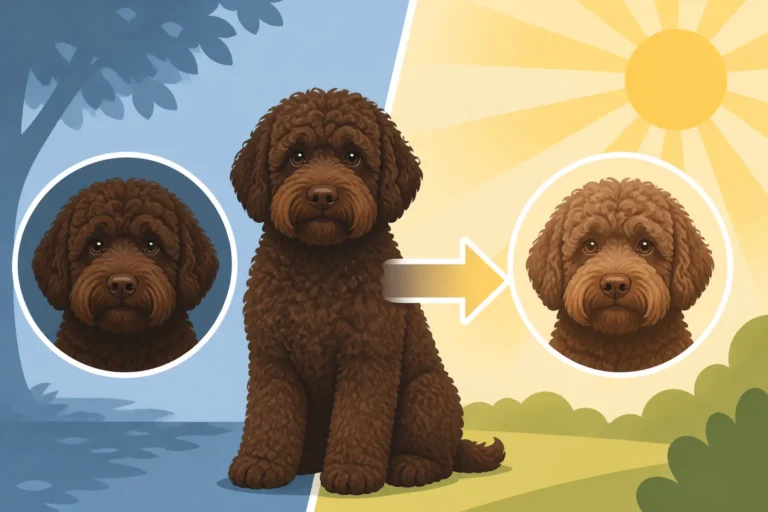
The distinction matters because owners can worry when they discover white hairs under a long coat or notice a marking after grooming. A close clip can reveal skin and coat details that were hidden by curls, so the chest may seem newly white even though the hairs were always there. Lighting, wet fur, and the direction the coat is brushed can change how strongly the marking stands out.
An “improper coat” is a separate issue involving coat characteristics, not simply a white chest. The two should not be confused. You can read Improper Coat in a Portuguese Water Dog Is Genetic, Not Illness for more on that distinction.
When a change is worth checking
A naturally white patch is usually made up of white hairs in a consistent area. If the skin beneath it looks healthy and the marking has been there for a long time, that is different from a patch that appears suddenly alongside redness, itching, hair loss, sores, or discomfort. Those symptoms are reasons to ask a veterinarian what is going on; they do not prove that the color change itself is the cause.
It can help to take a clear photo when you first notice a change and compare it over time. If the area is hard to assess under a dense coat, ask a groomer to show you the skin rather than trying to cut or shave the coat yourself. A vet can examine the skin and hair if the change is new, spreading, or accompanied by other signs.
A white chest also does not tell you whether a dog has inherited a particular health condition. Health questions are better approached through veterinary care and appropriate screening. Coat color is only one small part of a dog’s overall picture.
How White Chest Markings Fit Breed Standards
Standards describe appearance, not a perfect pattern
A breed standard gives judges and breeders a shared description of the breed’s appearance. It can specify accepted colors and explain which markings are permitted, but it does not mean every Portuguese Water Dog must have the same distribution of color. A white chest on a dark dog is compatible with the breed’s range of coat patterns.
Standards can differ between kennel organizations and countries, and show eligibility may depend on the specific standard being used. If your question is whether a particular dog can be shown, check the rules of the organization and show system involved rather than assuming that any one description applies everywhere. A pet dog’s value as a companion, of course, does not depend on whether its markings meet show preferences.
It is also useful to separate color from structure. A dog’s outline, movement, proportions, and overall condition are evaluated independently of whether its chest is white. What a Correct Portuguese Water Dog's Outline Looks Like explains the kind of physical features that shape the breed’s outline.
| What you notice | What it usually tells you | What it does not tell you |
|---|---|---|
| A stable white patch of chest hair | The dog has a white marking in that area | That the dog is ill or mixed breed |
| White visible after a shorter clip | Grooming has made an existing marking easier to see | That the marking necessarily appeared recently |
| A new pale area with itching or hair loss | The skin or coat may need veterinary assessment | A specific diagnosis without an examination |
| A puppy with more or less white than its littermates | Coat patterns can vary among puppies | A reliable prediction of adult health or temperament |
Coat texture can affect how the marking looks
Portuguese Water Dogs have curly or wavy coats, and texture and length can change how much of a marking you can see. Longer curls may separate or overlap, making a patch look narrower, larger, or less clearly outlined. After bathing, drying, or clipping, the same area may appear more distinct because the hairs lie differently.
The white chest does not create a separate grooming requirement, but it can make dirt or staining easier to notice. The coat still needs regular brushing and routine grooming regardless of color. For background on the coat itself, see What a Portuguese Water Dog's Coat Is Made Of and Whether Coat Type Runs in Portuguese Water Dog Lines.
Caring for a Portuguese Water Dog With a White Chest
Keep grooming gentle and practical
A white patch may show mud, food residue, or saliva more readily than a dark coat. If the chest gets dirty, rinse or wipe the area with a product made for dogs and follow its label. Avoid household cleaners, human whitening products, and harsh bleaching agents; these can irritate skin and are not appropriate shortcuts for making a coat look brighter.
If you shop online, retailers such as Chewy offer a place to compare general dog grooming supplies, but the important step is choosing a dog-safe product that suits your dog’s skin and coat. Ask your veterinarian or groomer for guidance if the skin is sensitive, the coat is stained repeatedly, or you are unsure whether a product is suitable. Gentle brushing and rinsing are usually more useful than trying to change the natural color of the hair.
For ordinary grooming, the goal is a clean, comfortable coat rather than a perfectly white chest. A damp cloth may be enough for a small spot. For a full bath, rinse thoroughly and dry the coat well, particularly if the dog has been swimming or the chest stays damp under longer curls.
Choose a puppy for more than its markings
It is understandable to have a favorite coat pattern, especially when comparing adorable puppies in a litter. But markings can change in how they look as the coat grows and is groomed, and they offer little information about the traits that matter most in day-to-day life. Ask about the puppy’s health history, the parents’ temperaments, socialization, and the breeder’s approach to health screening.
If you are buying from a breeder, request clear documentation and ask questions about the whole litter rather than choosing on chest color alone. What a Portuguese Water Dog Breeder Should Have Tested is a useful starting point for understanding what to ask. A responsible match should consider whether the puppy’s energy, grooming needs, and temperament suit your household.
For routine care, Chewy can be one option for comparing items such as dog shampoo or grooming wipes, but a product listing is not a substitute for veterinary advice if the chest has irritated skin or a sudden change in hair growth. If your dog’s white marking is simply part of its established coat pattern, there is usually no special treatment needed. Care for the dog in front of you: keep the coat comfortable, watch for changes in the skin, and enjoy the distinctive markings that make your Portuguese Water Dog yours.
Disclaimer
This article is for general informational purposes only and does not constitute professional advice. Laws, prices and regulations vary by location and change over time. Consult a qualified professional for guidance on your specific situation.