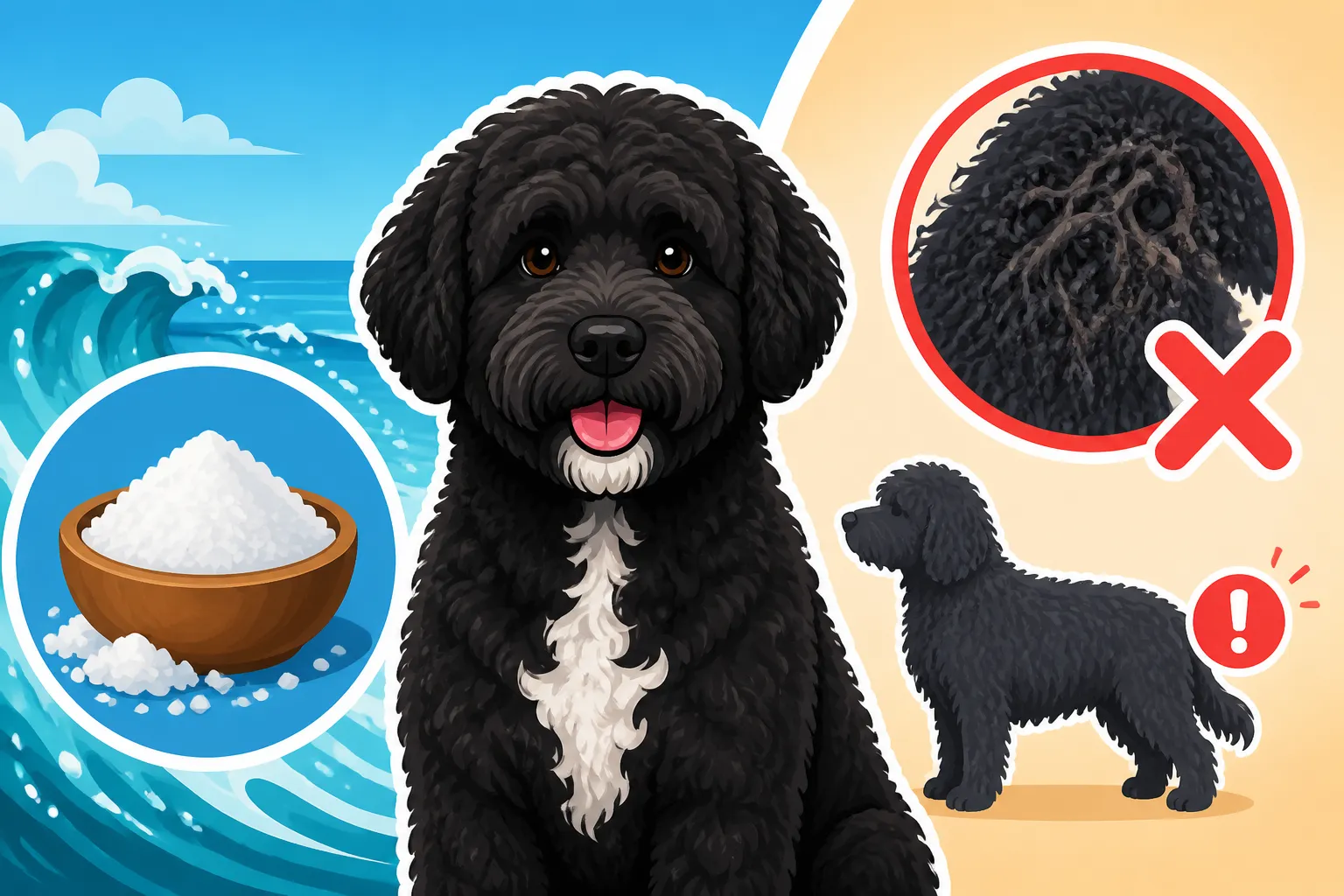
Whether Salt Dries a Portuguese Water Dog’s Coat Into Mats
Oh, the sheer joy of watching your Portuguese Water Dog plunge into the ocean, a true water dog in their element! It's one of the greatest pleasures of owning this breed. But that salty sea air and the endless waves come with a hidden challenge for their magnificent coat: the dreaded mat. Many owners find themselves battling dry, tangled fur after a day at the beach, leaving them wondering if salt water is the culprit. This guide is here to unravel that mystery, explain exactly why ocean swims can lead to mats, and arm you with practical strategies to keep your PWD's coat pristine.
The Truth About Salt Water and Your PWD's Coat: Why it Mats
Let's be real, the image of a PWD frolicking in the waves is picture-perfect, but the reality for their unique coat can be a bit more complicated. Salt water isn't inherently evil, but its properties interact with your dog's coat in ways that make matting a much higher risk. It's not just about getting wet; it's about the specific chemical and physical changes that occur.
How Salt Strips Natural Oils and Promotes Tangling
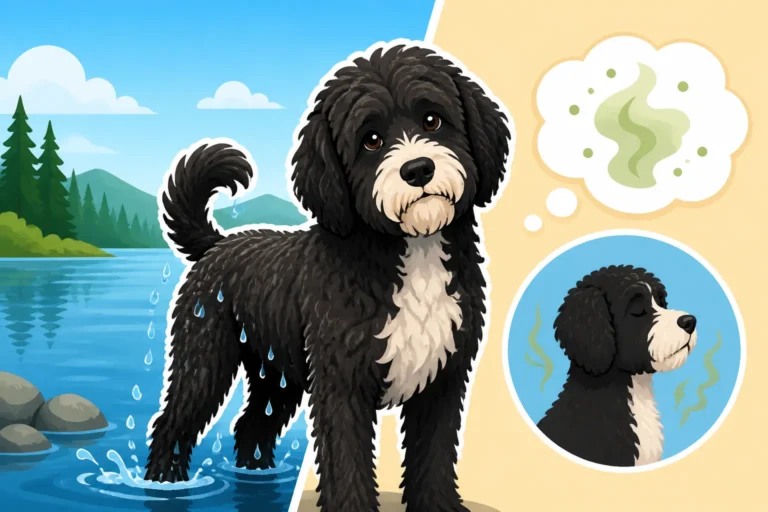
Think about your own hair after a day at the beach – it often feels dry, a bit stiff, and prone to tangles, right? The same principle applies, but even more intensely, to your Portuguese Water Dog's single, dense coat. Unlike breeds with an undercoat that sheds, the PWD's coat is designed to be water-repellent and insulating. However, salt water acts like a desiccant, meaning it actively pulls moisture out of things. When your dog swims in the ocean, the salt crystals in the water latch onto the individual hair strands. As the water evaporates, these salt crystals are left behind, drawing out the natural oils (sebum) that normally keep the coat lubricated, soft, and somewhat resistant to tangles.
Without these protective oils, the hair cuticle – the outer layer of each strand – can lift and become rough. Instead of gliding smoothly past each other, the dry, rough hairs begin to snag and intertwine. This creates the perfect storm for mats to form, especially in high-friction areas or where the coat is particularly dense. It's a frustrating cycle: the more they swim in salt water and air dry, the drier their coat becomes, and the faster mats develop. This is particularly true if your PWD has a Curly or Wavy: the Two Portuguese Water Dog Coats type that is naturally more prone to knotting.
The Impact of Dryness and Friction on Mat Formation
Beyond the stripping of natural oils, the sheer dryness that salt imparts contributes significantly to matting. A dry coat is a fragile coat. When your Portuguese Water Dog runs, shakes, or even just lies down with a dry, salt-laden coat, the friction between hair strands increases dramatically. Each movement can cause tiny knots to form. These small knots quickly snowball into larger, more formidable mats, especially if the coat isn't thoroughly brushed out after every exposure to salt water.
Consider how the water carries debris, too. Sand, tiny bits of seaweed, or even micro-plastics can get trapped in the coat, further exacerbating the matting process. These foreign particles act like tiny anchors, giving the hair strands something extra to grab onto and twist around. If you've ever seen a sandy, salty PWD, you know how quickly their coat can go from flowing to felted. It’s like trying to comb through a tangled fishing net – every strand is caught on another. Understanding Where a Portuguese Water Dog Mats First can help you focus your efforts. These areas often include behind the ears, under the legs, and around the tail.
Essential Pre-Swim Strategies to Protect Your Portuguese Water Dog's Hair
Preparation is truly half the battle when it comes to keeping your PWD's coat healthy and mat-free during their salty adventures. Don't just let them charge into the waves! A few proactive steps can make a monumental difference in the amount of post-swim grooming you'll face.
Thorough Brushing Before Entering the Water
This might sound counterintuitive, but one of the most crucial steps happens before your dog even dips a paw in the ocean. A well-brushed coat is your first line of defense against matting. Why? Because mats tend to form around existing tangles or loose hairs. If you send your PWD into the water with even small knots, the salt water will make them tighter and exponentially harder to remove later.
Before you head to the beach, dedicate time to a thorough grooming session. Use a slicker brush and a metal comb (I find a good greyhound comb from a place like Chewy indispensable) to work through every inch of their coat, making sure it's completely free of tangles and dead hair. This ensures that the hair strands are separated and less likely to grab onto each other when wet and exposed to salt. Think of it as creating a smooth canvas for the water to flow over, rather than a bumpy one where tangles can take root. Pay extra attention to those high-friction areas we discussed, like the armpits, behind the ears, and the groin. This step helps prevent the microscopic snags that salt water later hardens into solid mats.
Applying a Leave-In Conditioner or Coat Protectant
Just like humans use conditioner to protect their hair, a leave-in conditioner or coat protectant can work wonders for your Portuguese Water Dog. These products create a protective barrier on the hair shaft, helping to repel some of the salt and prevent excessive dryness. They essentially "pre-coat" the hair, making it less porous and less likely to absorb the salt water and lose its natural moisture.
You don't need to drench them, but a light spray or mist worked into the coat can be incredibly effective. Look for products specifically designed for dogs that are regularly in water or have curly, mat-prone coats. Many good options are available on platforms like Amazon, from brands that understand the unique needs of working dog coats. Apply it generously enough to feel a slight slickness to the fur. This barrier won't make their coat impenetrable, but it will significantly reduce the drying and tangling effects of the salt. This is especially helpful if your dog wears The Retriever Clip Is the Coat Most Portuguese Water Dogs Wear, as even shorter hair can still mat.
| Pre-Swim Action | Purpose | Best Practice |
|---|---|---|
| Thorough Brushing | Remove existing tangles, loose hair, and debris. Separate strands. | Use slicker brush & metal comb. Focus on high-friction areas. |
| Leave-In Conditioner | Create a protective barrier on hair. Repel salt and moisturize. | Lightly spray or mist. Work into coat. Ensure even coverage. |
| Freshwater Rinse (if possible) | Saturate coat with fresh water to reduce salt absorption capacity. | Briefly wet before entering ocean. |
Post-Ocean Rinse and Grooming: Preventing Mats and Restoring Coat Health
The moment your Portuguese Water Dog emerges from the ocean, your mat prevention efforts kick into high gear. What you do in those crucial minutes and hours after a swim will largely determine whether you'll be battling felted fur or enjoying a soft, healthy coat.
Immediate and Thorough Freshwater Rinse
The single most important thing you can do after a salt water swim is to rinse your PWD thoroughly with fresh water. And I mean thoroughly. Don't just hose them down casually. The goal is to wash away every last salt crystal clinging to their coat. The longer salt remains on the coat, the more it will continue to draw out moisture and contribute to dryness and matting.
If you're at the beach, seek out a dog wash station or even bring large jugs of fresh water specifically for this purpose. Start from the top of their head and work your way down, ensuring the water penetrates all the way to the skin. Pay special attention to their belly, legs, and tail, as these areas often collect the most salt and sand. Think about how you would rinse off sand from your own feet – you wouldn't leave any, right? Do the same for your dog. For those without immediate access to a full wash, even a quick rinse of When a Portuguese Water Dog Should Be Rinsed After the Sea can make a huge difference in preventing immediate damage.
The Importance of Drying and Detangling
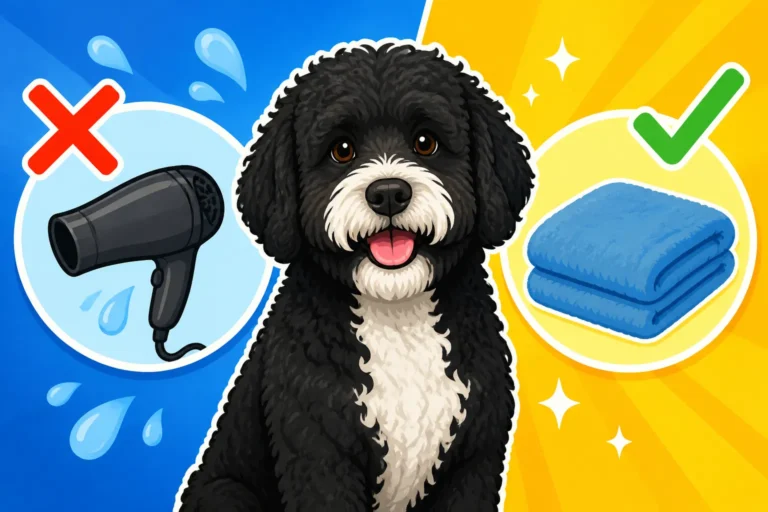
Once rinsed, the next critical step is proper drying and detangling. Simply letting your Portuguese Water Dog air dry after a salt water swim, even if rinsed, is a recipe for disaster. As the coat dries, any residual salt or minerals, combined with the natural contraction of the hair as it loses moisture, will cause tangles to lock in and tighten into mats. This is why Drying a Portuguese Water Dog After Every Swim is so paramount.
Start by towel-drying vigorously to remove as much excess water as possible. Then, it's time for the force dryer. Yes, I know, it's an investment, but a good force dryer (you can find various options on Chewy or Amazon) is a game-changer for PWD owners. It blasts water out of the coat quickly and efficiently, preventing that slow, air-dry matting. As you dry, use your slicker brush and comb simultaneously, working in sections to ensure no tangles are forming. This is where How Long Brushing a Portuguese Water Dog Takes can be extensive, but it's vital. A thorough dry ensures the coat is fluffy and tangle-free. This process also reveals if Whether a Portuguese Water Dog Mats After Swimming is happening despite your best efforts, allowing you to address small tangles before they become big problems. If you're wondering what kind of dryer to get, What a Force Dryer Does for a Portuguese Water Dog can give you some excellent insights.
Restorative Grooming: Brushing, Conditioning, and Regular Baths
Even with the best immediate post-swim care, regular restorative grooming is essential for a Portuguese Water Dog that loves the ocean.
Firstly, regular brushing is non-negotiable. Aim for at least every other day, and daily if your PWD is a frequent swimmer. This helps to prevent small tangles from becoming big mats and distributes natural oils. Choosing Which Brush a Portuguese Water Dog Needs is important, as not all brushes are created equal for this breed's coat.
Secondly, consider a good quality dog conditioner as part of your regular bathing routine. After shampooing (using Which Shampoo Suits a Portuguese Water Dog's Coat), apply a conditioner and let it sit for a few minutes before rinsing thoroughly. This helps to restore moisture, soften the coat, and improve its overall health and elasticity, making it more resilient to the drying effects of salt. Whether Conditioner Is Needed on a Portuguese Water Dog is a resounding yes for active PWDs.
Finally, while How Often a Portuguese Water Dog Needs a Bath varies, if your PWD is consistently in salt water, you might find yourself needing to bathe them more frequently. The key is to use gentle, moisturizing shampoos that won't strip their coat further. After every few salty swims, or at least weekly for regular ocean goers, a full bath with a moisturizing shampoo and conditioner will help reset their coat and keep it in top condition. By consistently following these steps, you can ensure your PWD enjoys their aquatic passions without you having to wage war on mats after every single beach trip.
Disclaimer
This article is for general informational purposes only and does not constitute professional advice. Laws, prices and regulations vary by location and change over time. Consult a qualified professional for guidance on your specific situation.