Whether a Portuguese Water Dog Sheds
One of the biggest misconceptions about Portuguese Water Dogs is the idea that they don't shed. Many people come to this breed, perhaps because of family allergies or simply the desire for a cleaner home, with the firm belief that a PWD will be completely hair-free. The reality, however, is a little more nuanced, and understanding it is key to avoiding frustration and keeping your dog healthy and happy. This guide is here to untangle the truth about Portuguese Water Dog coats and help you manage their unique grooming needs.
The Truth About the Portuguese Water Dog Coat
Let's get one thing straight right off the bat: no dog is truly non-shedding. Just like humans, dogs lose hair as part of their natural hair growth cycle. The difference with a Portuguese Water Dog isn't that they don't shed, but how they shed. This distinction is crucial for understanding why your PWD, despite its reputation, still requires significant coat care.
What "Non-Shedding" Really Means for PWDs
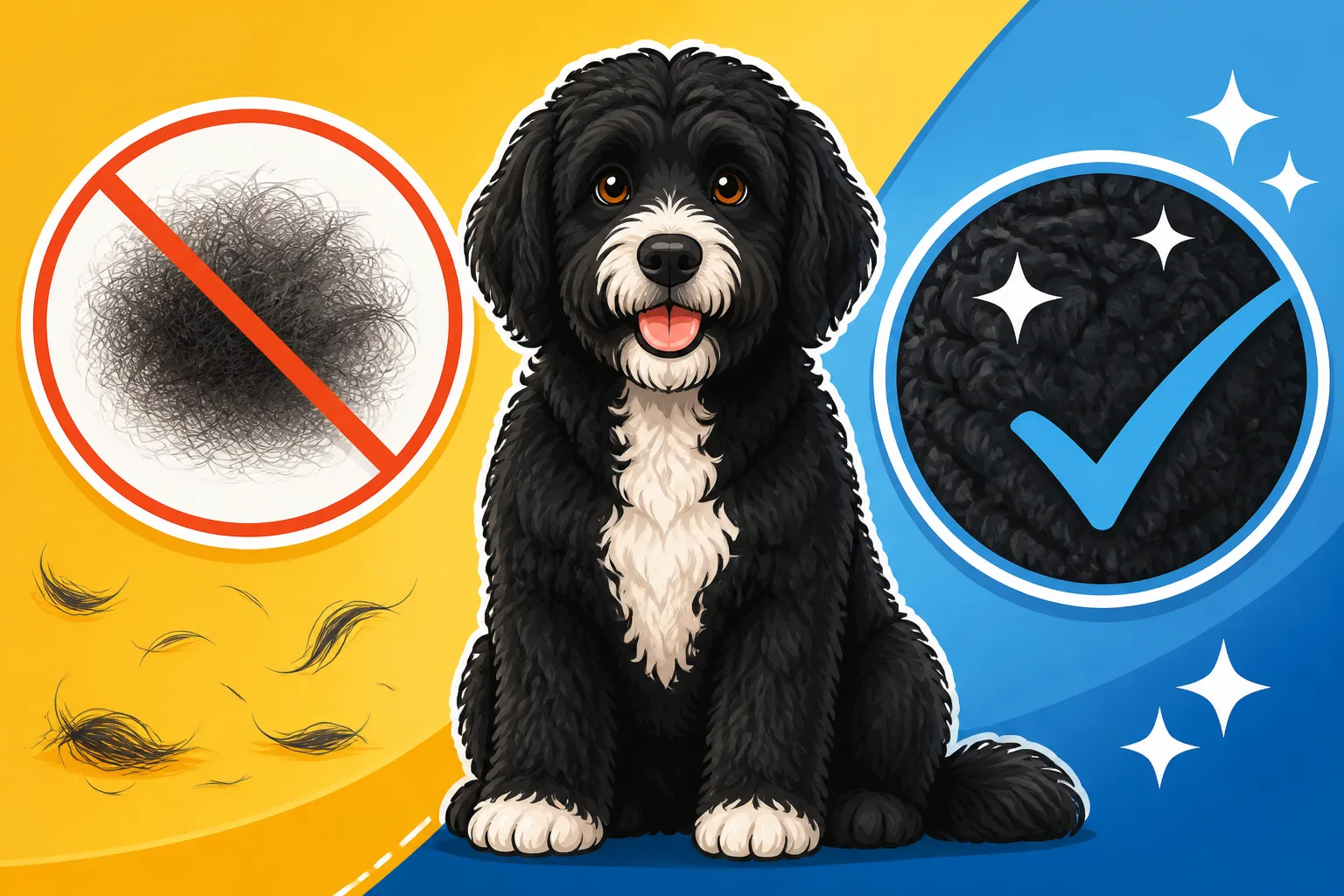
When people say a Portuguese Water Dog is "non-shedding," what they usually mean is that the dog doesn't "drop" hair all over your house in the same way a Labrador Retriever or a German Shepherd would. These breeds have double coats, with a soft undercoat that sheds profusely, especially seasonally, sending tumbleweeds of hair across your floors. The PWD, on the other hand, has a single coat. This single coat is designed to be thick and resilient, perfect for their original job of working in and around the water.
Instead of falling out and spreading everywhere, the dead hairs from a PWD's coat tend to get caught within the surrounding live hairs. Think of it like a tangled mess of yarn – the individual strands are still there, but they're held captive by the rest of the fibers. This is fantastic news if you're looking for less hair on your furniture, but it creates a different kind of challenge. If these trapped dead hairs aren't regularly brushed out, they quickly form mats. Many new owners, hoping for an easy-care coat, are often surprised and sometimes disheartened by the intense grooming commitment a PWD actually requires. It's a different kind of "shedding problem," but a problem nonetheless if not properly addressed.
Understanding the Curly and Wavy Coat Types
Portuguese Water Dogs come in two distinct coat types: curly and wavy. Both types share the characteristic of being single-coated and retaining their dead hair, but they do have subtle differences that can impact how you approach their grooming. Understanding these nuances helps tailor your care routine. You can delve deeper into these differences with Curly or Wavy: the Two Portuguese Water Dog Coats.
The curly coat is typically tighter, forming compact cylinders or ringlets across the dog's body. This dense texture can be quite effective at holding onto dead hair, making it prone to forming tight, deep mats if brushing is neglected. When brushed, the curly coat often springs back, making it vital to brush all the way down to the skin to ensure no tangles are left behind. Its dense nature is also a key factor in What a Portuguese Water Dog's Coat Is Made Of, highlighting its unique water-resistant qualities.
The wavy coat, by contrast, is generally softer and has a more flowing, open wave pattern. While it might seem like it would be less prone to matting because the waves are looser, this isn't necessarily true. The dead hair still gets caught, and the looser texture can sometimes allow mats to form quickly in less obvious places, such as behind the ears or under the legs, before becoming a larger issue. Regardless of whether your PWD has a curly or wavy coat, the fundamental principle remains: regular and thorough grooming is your best defense against matting and keeping your dog comfortable. To learn more about how these coat types compare, check out How a Curly Coat Differs From a Wavy Coat.
The Puppy Coat Change and What to Expect
If you're bringing home a Portuguese Water Dog puppy, prepare yourself for what's often referred to as the "puppy coat change." This can be a challenging period for both you and your little one, and it's where many owners first truly grasp the reality of PWD grooming. This transition typically begins around four to six months of age and can continue, sometimes intermittently, until the dog is well over a year old. It's a critical time when your puppy's soft, often fluffier puppy coat starts to give way to the denser, coarser adult coat.
During this phase, the puppy coat and the incoming adult coat have different textures, and they love to intertwine, creating a perfect storm for matting. It's like trying to comb through two different types of hair glued together. What might have been an easy five-minute brush session before the change can suddenly become a much longer, more demanding affair. It's not uncommon for owners to describe feeling like they're constantly battling tangles, and it can be frustrating for both the puppy, who might not appreciate the longer grooming sessions, and the owner. Knowing How Long a Portuguese Water Dog's Coat Change Runs can help you prepare mentally and practically for this intense period. The key during this time is consistency and patience; increasing your brushing frequency significantly can help you stay ahead of the mats and prevent uncomfortable skin issues for your puppy.
Why You Still See "Hair" Around the House
Even with the understanding that Portuguese Water Dogs don't "shed" like other breeds, many owners are still surprised to find some hair in their homes. It's not the same as the pervasive coverage you'd get from a heavy-shedding breed, but it's important to be realistic. The hair you do find usually comes from a few distinct sources, all tied back to the unique nature of their coat.
Dead Hair Trapped in the Coat
As we've discussed, the dead hair from your Portuguese Water Dog's natural growth cycle doesn't just fall off and disappear. It gets thoroughly enmeshed in the surrounding live coat. This is the primary reason why PWDs can appear not to shed much—because the hair stays on them rather than on your sofa. However, this also means that if you're not proactive, that trapped hair accumulates. Over time, these masses of dead hair, combined with any friction or moisture, will condense and tighten, leading directly to matting.
This matting isn't just an aesthetic issue; it can be incredibly uncomfortable and even painful for your dog. Mats can pull on the skin, restrict movement, and create a breeding ground for skin infections or hot spots by trapping moisture and preventing air circulation. The only way to remove this dead hair and prevent these problems is through regular and thorough brushing. When you properly brush your PWD, you're not just styling them; you're actively pulling out those dead, trapped hairs that would otherwise cause trouble. This process of intentional removal is often mistaken for shedding when, in fact, it's preventative maintenance.
The "Blow Out" Phenomenon During Grooming
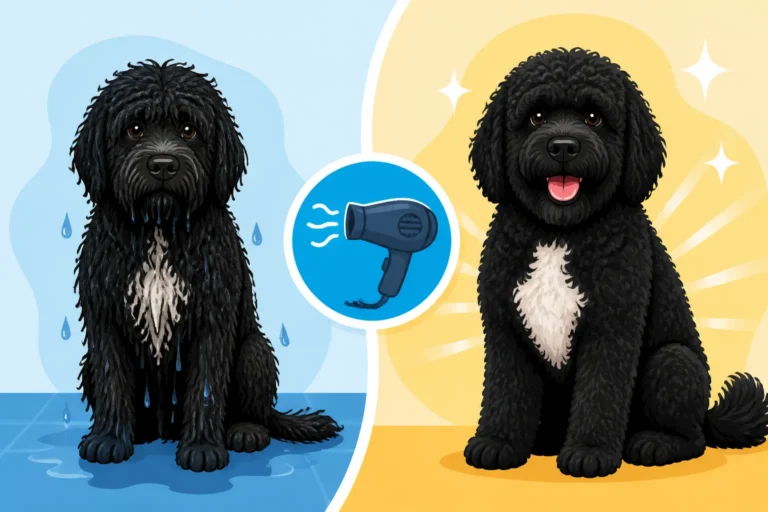
This is where the term "shedding" can truly confuse PWD owners. While your Portuguese Water Dog might not actively "shed" hair throughout the day, a significant amount of hair will come off during a proper grooming session, especially if you use a high-velocity force dryer. This is the "blow out" phenomenon, and it can be quite startling if you're not expecting it.
When you meticulously brush and then blow-dry your PWD, the force of the air and the action of the brush work together to extract all that trapped dead hair from the coat. You'll see handfuls, sometimes even small piles, of soft undercoat and dead topcoat strands being liberated. This isn't your dog suddenly "shedding" in the traditional sense; it's you, or your groomer, manually removing the hair that would have otherwise caused mats. It's a necessary part of keeping their coat healthy and tangle-free. This is why tools matter. A good force dryer, a sturdy slicker brush, and a long-toothed metal comb are invaluable for getting all that dead hair out. Without these tools, especially the force dryer, much of that hair would simply remain in the coat, leading to bigger problems down the line.
What Happens if Grooming is Neglected
Neglecting your Portuguese Water Dog's coat is a slippery slope that can quickly lead to painful and costly problems. Because their dead hair remains trapped, these dogs are highly susceptible to matting if not brushed regularly. Even a few missed sessions can cause small tangles to escalate into large, dense mats. These aren't just superficial knots; they can form tight, felt-like pads that pull on the skin, restrict blood flow, and make simple movements uncomfortable.
Severe matting can lead to skin irritation, abrasions, and even hot spots because moisture and dirt get trapped against the skin, creating a perfect environment for bacterial and fungal growth. Imagine wearing a tight, constricting sweater that's constantly pulling on your skin, never coming off, and always feeling damp—that's what severe matting can feel like for a dog. In many cases, if the matting is too extensive or too close to the skin, the only humane option left for a professional groomer is to shave the dog completely down. This process can be stressful for the dog, requires specialized tools, and often comes with a higher grooming bill due to the extra time and effort involved. It's a stark reminder that the "non-shedding" label doesn't equate to "no maintenance." For a comprehensive understanding of grooming frequency, consider How Often a Portuguese Water Dog Needs Brushing.
Managing Portuguese Water Dog Hair in Your Home
So, you understand that while they don't shed in the traditional sense, PWDs still require significant coat care. The good news is that with a proactive approach and the right tools, managing their unique coat is entirely achievable. It's all about consistency and making grooming a regular, even enjoyable, part of your routine.
Establishing a Consistent Brushing Routine
The cornerstone of managing a Portuguese Water Dog's coat is a consistent and thorough brushing routine. For most PWDs, especially during the puppy coat change or if they are frequently swimming, this means daily or every-other-day brushing. Don't just skim the surface; you need to get all the way down to the skin to truly remove the trapped dead hair and prevent mats.
A good line brushing technique is essential. This involves parting the coat and brushing in small sections, moving slowly across the dog's body, ensuring your brush reaches the skin with every stroke. You'll want to use a high-quality slicker brush first to work through tangles, followed by a long-toothed metal comb to confirm that all knots have been removed. Pay extra attention to common matting areas like behind the ears, under the legs, the armpits, and around the tail base. Make these sessions positive experiences with plenty of praise and treats; a well-behaved dog on the grooming table makes the job much easier. If you consistently brush, the amount of hair you find around the house will be minimal, as most of it will be removed during these dedicated sessions. For quality grooming tools, you can find a wide selection on Amazon that will make your home grooming sessions more effective.
The Role of Professional Grooming
While home brushing is vital, professional grooming plays an equally important role in maintaining a Portuguese Water Dog's coat. Most PWD owners schedule professional grooming every 4 to 8 weeks, depending on the coat type, lifestyle, and desired length. Professional groomers have specialized equipment, like high-velocity force dryers, that are essential for thoroughly drying the dense PWD coat and blowing out trapped dead hair without causing skin irritation. They also possess the expertise to handle any existing mats safely and efficiently, often able to save more coat than a home groomer might.
The cost of professional grooming for a Portuguese Water Dog can add up, but it's a worthwhile investment in your dog's health and comfort. A skilled groomer understands the breed-specific clips and can provide advice on maintaining the coat between visits. They can also spot potential skin issues or coat problems that might go unnoticed by an untrained eye. Think of it as preventative maintenance that helps avoid more expensive veterinary bills down the line due to severe matting or skin infections. Plus, it frees up your time to enjoy more activities with your PWD, rather than spending all your time battling tangles.
Cleaning Tips for PWD Owners
Even with the most diligent brushing and professional grooming, you might still find a stray PWD hair here and there. This is completely normal for any dog, and with a PWD, it's often minimal compared to other breeds. However, having a few smart cleaning strategies can make a big difference in maintaining a tidy home. The key is to be proactive and use the right tools.
Regular vacuuming with a good pet-specific vacuum cleaner, especially one with strong suction and specialized attachments for upholstery, is highly recommended. Many modern vacuums feature anti-tangle brush rolls that are perfect for picking up pet hair without getting clogged. Keep a lint roller handy for quick touch-ups on clothes and furniture before you head out the door. For hard floors, a microfiber mop or an electrostatic dusting cloth can effectively trap any shed hair without just pushing it around. Consider designating a specific "dog zone" with easy-to-clean bedding from retailers like Chewy, where your PWD can relax after a swim or a muddy walk. Regularly washing their bedding also helps reduce the amount of trapped hair that might otherwise migrate to other parts of your home. By combining consistent grooming with these practical cleaning habits, you'll find that living with a PWD is far from a hairy nightmare.
Common Misconceptions and Realities
The "non-shedding" label attached to Portuguese Water Dogs has led to a few widely held beliefs that, while well-intentioned, don't always align with reality. Clearing up these misconceptions is crucial for anyone considering or currently owning one of these wonderful dogs. It's about setting realistic expectations and understanding the true nature of their unique coats.
The "Hypoallergenic" Myth and Allergies
This is perhaps the biggest and most misunderstood aspect of the Portuguese Water Dog's coat. Often, PWDs are sought out specifically because they are labeled "hypoallergenic." While it's true that they are generally better for people with dog allergies compared to many other breeds, the term "hypoallergenic" itself is misleading. It doesn't mean "allergy-free"; it means "less likely to cause allergic reactions." To learn more about this, check out How Portuguese Water Dog Is Hypoallergenic.
Dog allergies are typically caused by dander (microscopic flakes of skin), saliva, and urine, not just the hair itself. The reason PWDs tend to be better for allergy sufferers is precisely because their coat retains the dead hair and dander. This means less dander is released into the air and onto surfaces, which is what often triggers allergic responses. However, allergens are still present. Someone with severe dog allergies might still react to a Portuguese Water Dog, especially if the dog isn't regularly groomed to remove trapped dander. It's always a good idea for allergy sufferers to spend time with a PWD before bringing one home to see if they have a reaction. This thoughtful approach can prevent heartache later on. This topic is also explored further in Whether a Portuguese Water Dog Suits an Allergy Household.
Different Coat Types, Different Shedding Patterns?
As we discussed, Portuguese Water Dogs come in both curly and wavy coat types. While both are single-coated and technically "non-shedding" in the sense that they retain dead hair, some owners perceive subtle differences in how much hair might appear to be "shedding" between the two. The truth is, the fundamental mechanism of dead hair retention is the same for both.
Any perceived difference usually boils down to how easily the dead hair can be dislodged or how quickly mats form if grooming isn't absolutely meticulous. A very tightly curled coat might hold onto dead hair so effectively that you rarely see a stray strand, only noticing large amounts during a dedicated brushing session. A wavy coat, with its more open texture, might allow a few more individual strands to work their way free from time to time, especially during vigorous play or scratching. However, neither coat type truly "sheds" in the way a retriever does. The key differentiator for both is consistent, thorough brushing to remove the trapped hair. If either coat type is neglected, mats will form, and the appearance of "shedding" (during the desperate attempts to brush them out) will increase dramatically.
Is There an "Improper Coat" That Sheds More?
Yes, there is a distinct coat type known as an "improper coat," and it definitely sheds more noticeably than the standard curly or wavy Portuguese Water Dog coat. This is a genetic trait, not an illness, but it's not desirable in the breed standard because it compromises the coat's functional qualities. An improper coat (IC) typically looks shaggier, less dense, and often has a soft undercoat, similar to some other breeds. You can read more about this in Improper Coat in a Portuguese Water Dog Is Genetic, Not Illness.
A PWD with an improper coat will shed in a more traditional sense, dropping hair around the house. Their coat texture is different, often less water-repellent, and more prone to matting because of the presence of an undercoat. Reputable Portuguese Water Dog breeders take great care to test their breeding stock for the gene responsible for improper coat (often referred to as the IC gene). They aim to produce puppies with the correct curly or wavy single coat, which is why most well-bred PWDs will not have this issue. If you encounter a PWD that sheds significantly and leaves hair everywhere, it's highly likely it carries the improper coat gene. While these dogs are still loving companions, their grooming needs and the amount of hair in your home will be quite different from a PWD with a proper coat. Understanding Whether an Improper Coated Portuguese Water Dog Is Healthy can help prospective owners make informed decisions.
Long-Term Coat Care and Health Considerations
Maintaining the unique coat of a Portuguese Water Dog isn't just about brushing; it's a holistic approach that ties directly into their overall health. What goes on inside your dog directly impacts the quality and manageability of their coat on the outside. Long-term care involves considering their diet, environmental factors, and being vigilant for signs of underlying health issues.
Nutrition and Skin/Coat Health
Just like with humans, a Portuguese Water Dog's diet plays a monumental role in the health and appearance of their coat. A dog fed a high-quality, balanced diet will generally have a healthier, shinier coat that is more resilient and potentially easier to manage. Conversely, a poor diet can manifest as a dull, dry, brittle coat that may break easily or be more prone to matting and skin issues.
Look for dog foods that list high-quality animal protein as the first ingredient. Essential fatty acids, particularly Omega-3s and Omega-6s, are crucial for skin and coat health. Many premium dog food brands, easily found on Chewy, incorporate these. Some owners even supplement their PWD's diet with fish oil, which is rich in Omega-3s, to promote a lustrous coat and healthy skin. Fresh food options, like those offered by Ollie, can also provide a high level of nutrition that supports overall wellness, including coat condition. Always consult your veterinarian before making significant changes to your dog's diet or adding supplements, as they can guide you on the best nutritional plan for your individual PWD's needs and activity level. How Much an Adult Portuguese Water Dog Eats is also a good guide to quantity.
Seasonal Changes and Coat Management
Environmental factors, particularly seasonal changes, can have a noticeable impact on your Portuguese Water Dog's coat and how you manage it. Just like your own hair might feel different in summer versus winter, a PWD's coat responds to changes in temperature and humidity. Their dense, water-repellent coat is designed to protect them, but it also requires special attention during extreme weather.
In warmer, more humid months, especially if your PWD is enjoying regular swims, their coat can become more prone to matting. The combination of moisture and warmth can cause tangles to tighten faster. Therefore, more frequent baths and the use of a good conditioner can help keep the coat hydrated and easier to brush. Most importantly, ensuring your PWD is thoroughly dried after every swim is paramount to prevent skin issues like hot spots. You can find detailed guidance on this in Drying a Portuguese Water Dog After Every Swim. In colder, drier weather, the coat might become drier, necessitating moisturizing shampoos or conditioners to prevent static and breakage. Regular brushing remains critical year-round, but adjusting your products and drying techniques based on the season will help keep your PWD's coat in top condition.
Recognizing Coat Problems Beyond Normal Hair Retention
While managing trapped dead hair is a normal part of Portuguese Water Dog ownership, it's vital to recognize when a coat issue might signal a deeper health problem. Your PWD's coat and skin can be excellent indicators of their overall well-being. Any significant changes in coat texture, excessive dryness, unusual dullness, or unexpected hair loss (beyond what's manually removed during grooming) should prompt a call to your veterinarian.
For example, unexplained bald patches, thinning hair, or a brittle, coarse coat could be signs of hormonal imbalances, such as hypothyroidism. For more on this, you can look at Signs a Portuguese Water Dog's Thyroid Is Low. Persistent dry flakes or excessive itching could indicate allergies (food or environmental), parasites, or skin infections. Redness, bumps, or hot spots often point to underlying irritation or infection, frequently exacerbated by matting or dampness. While PWDs don't "shed" like other breeds, a sudden or unusual amount of loose hair, especially if accompanied by other symptoms, is definitely a red flag. Being attentive to these subtle cues and seeking professional veterinary advice promptly can ensure that any underlying health issues are addressed quickly, keeping your beloved PWD comfortable and healthy.
| Characteristic | Traditional "Shedding" Breeds (e.g., Labrador) | Portuguese Water Dog |
|---|---|---|
| Hair Release | Hair falls out freely, often in clumps | Dead hair trapped in coat |
| Visibility | Hair visible on furniture, clothes, floor | Minimal loose hair, but released during grooming |
| Grooming Impact | Brushing removes loose hair, reduces spread | Brushing removes trapped dead hair, prevents mats |
| Allergy Impact | Higher allergen dispersal | Lower allergen dispersal (due to retention) |
| Matting Risk | Low | High, if not regularly groomed |
Disclaimer
This article is for general informational purposes only and does not constitute professional advice. Laws, prices and regulations vary by location and change over time. Consult a qualified professional for guidance on your specific situation.