Whether a Portuguese Water Dog Puppy’s Color Changes
A Portuguese Water Dog puppy may look darker, lighter, or more reddish as its coat grows, which can be surprising when the color you fell for seems to be changing. In most cases, that shift is a normal mix of puppy-coat replacement, sunlight, and grooming. This guide explains what may change, what usually stays the same, and when a coat change deserves a closer look.
How a Portuguese Water Dog puppy’s color changes
The puppy coat and adult coat can look different
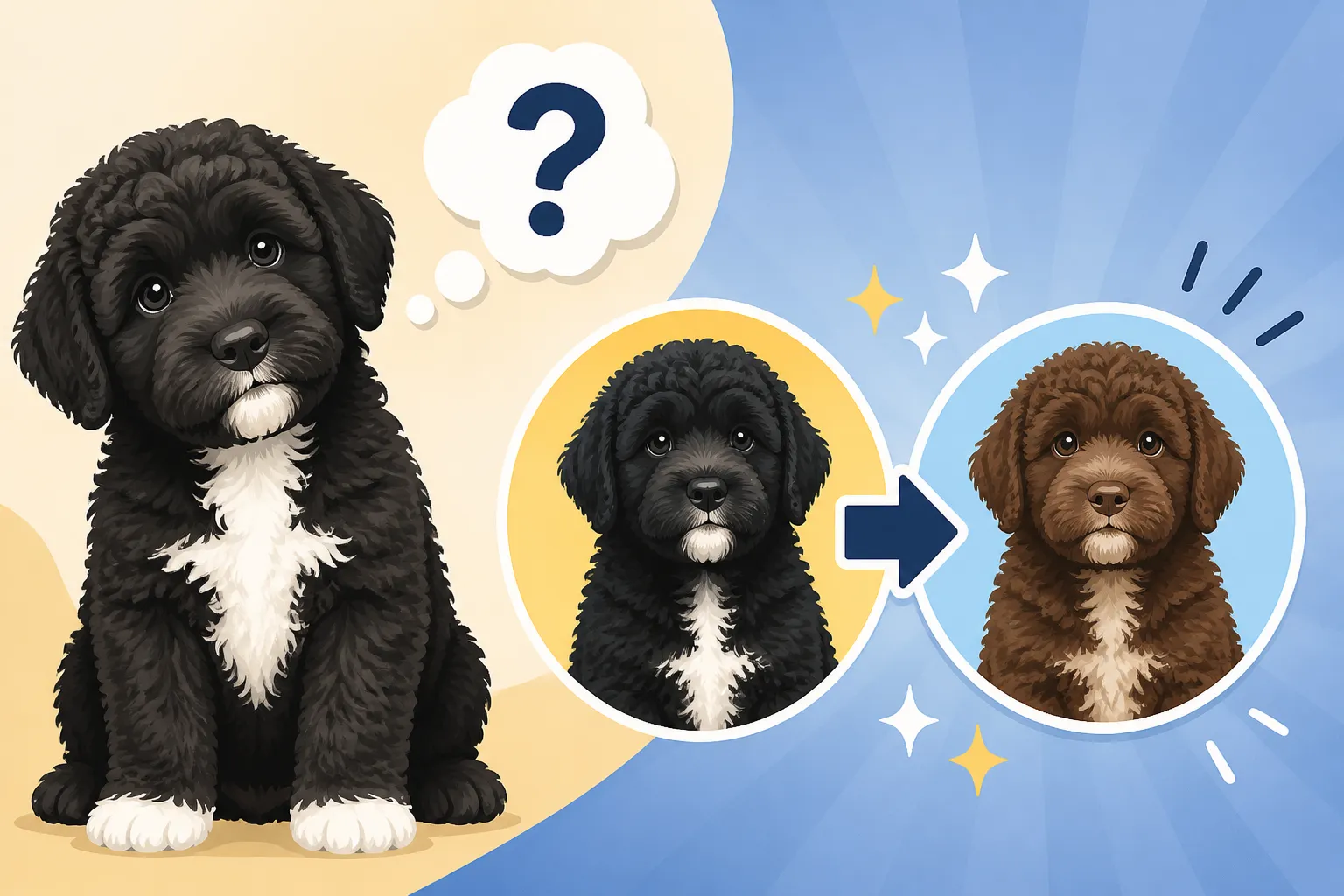
Portuguese Water Dog puppies are born with a coat that changes as they mature. As the puppy coat is replaced by adult hair, the coat’s length, texture, and overall appearance can shift. A puppy’s short, dense coat may look like one solid shade, while longer adult hair catches light differently and appears softer, lighter, or less uniform.
This transition doesn’t happen on one exact schedule. It can unfold gradually, and the timing and appearance vary from dog to dog. During the change, you might notice that the hair around the shoulders looks different from the hair on the legs, or that a recently clipped patch seems to be a new shade. Those differences don’t necessarily mean the dog’s underlying color has changed dramatically.
It helps to think of color as something you observe in the coat, not a fixed visual effect. Hair length, curl or wave, light, and grooming all influence what your eye sees. For a closer look at the coat itself, see What a Portuguese Water Dog's Coat Is Made Of.
Which colors are recognized, and what can change
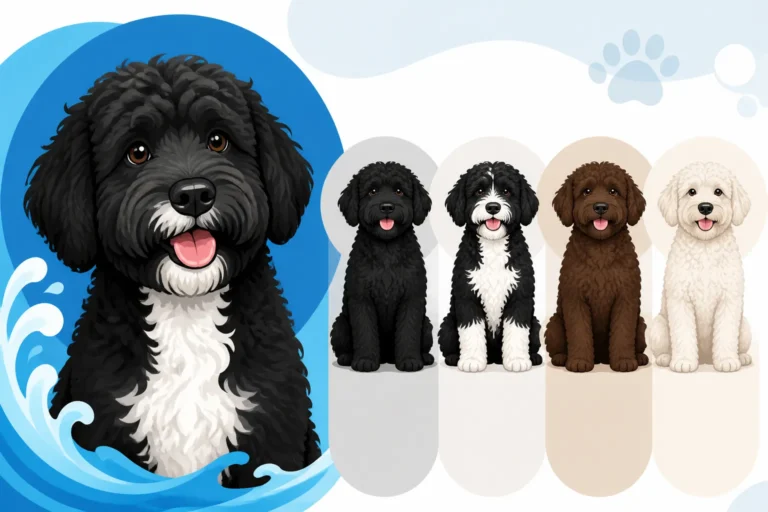
Portuguese Water Dogs come in black, brown, and white, as well as combinations that include black or brown with white. White markings can be present on the chest, muzzle, legs, or other areas. These basic color patterns are part of the breed’s familiar look, but the shade you see on a growing puppy may not remain visually identical throughout adulthood. More on the accepted range is covered in Which Colors a Portuguese Water Dog Comes In.
Black hair may look brownish or reddish after a lot of sun exposure, especially on the tips. Brown hair can appear lighter or more washed out in bright sunlight. White areas may seem more noticeable as surrounding dark hair changes, or after a trim makes the contrast easier to see. These effects can happen without the dog’s basic pattern changing.
A puppy’s adult coat may also look less even than its first coat. Some areas may retain a richer shade while others appear lighter, particularly during coat transition. That doesn’t mean every puppy will noticeably fade, or that a dramatic color transformation is inevitable. Individual dogs vary, and family lines can offer clues without guaranteeing exactly how a particular puppy’s coat will look later.
Why a puppy’s coat may look lighter or darker
Sunlight, grooming, and coat length affect appearance
Sunlight can make dark hair appear warmer or lighter, much as it can change the look of human hair. A black Portuguese Water Dog that spends time outdoors may develop brownish or reddish-looking tips. Brown coats can also appear lighter after prolonged sun exposure. The effect is often most visible on exposed areas or longer hair, and it may be more noticeable in summer than in winter.
Clipping can change the way color appears, too. Hair that is cut short may look darker or more even because you’re seeing a different part of the hair shaft, and because there’s less length to catch the light. As the hair grows back, it may look like a different shade even when the dog’s overall color pattern is unchanged. A freshly groomed dog can also seem lighter or darker simply because the coat lies differently.
If you’re comparing puppy photos, try to account for lighting and coat length. A phone photo taken indoors beside a window can make a black coat look brown, while a photo taken in shade may make it look nearly solid black. For a fair comparison, take pictures in similar natural light and include a note about when the dog was last clipped.
Coat genetics and family history matter, but don’t predict everything
A puppy inherits its coat characteristics from its parents, but a breeder’s description of the parents’ colors isn’t a precise forecast of the puppy’s adult shade. Siblings can have different markings or show color differently as their coats mature. The dog’s coat type can influence its appearance as well: curly and wavy hair reflect light in different ways and may appear more or less textured or dimensional. You can explore that distinction in Whether Coat Type Runs in Portuguese Water Dog Lines.
Ask the breeder what they’ve observed in adult dogs from the same family, especially if color stability matters to you. Useful questions include whether relatives’ coats became lighter with age, whether black dogs tend to show sun bleaching, and how the puppy’s markings have looked as the coat has grown. These are observations, not guarantees, but they’re more informative than relying on a single puppy photo.
It’s also worth remembering that color is only one part of choosing a dog. A puppy’s temperament, health, breeder practices, and suitability for your household matter much more over a lifetime. If you’re trying to understand how common fading is in particular colors, Whether a Black Portuguese Water Dog Fades and Whether a Brown Portuguese Water Dog Fades in Sun discuss those patterns in more detail.
| What you notice | Common explanation | What to do |
|---|---|---|
| Dark hair looks reddish or brown outdoors | Sunlight changing the appearance of exposed hair | Compare in similar lighting and watch for skin changes |
| Coat looks different after clipping | Shorter hair reflects light differently or exposes a different part of the coat | Reassess after the coat has grown for a while |
| Patchy shades during puppyhood | Coat transition or uneven growth | Take photos and mention it at routine veterinary visits |
| Gradual graying in an older dog | Age-related changes may affect coat color | Ask your veterinarian if the change is sudden or accompanied by other signs |
| Hair loss, irritation, or sudden color change with illness signs | A possible health or skin concern | Arrange a veterinary assessment |
How to care for a changing Portuguese Water Dog coat
Keep grooming gentle and consistent
A changing coat can be frustrating because it may mat more easily, especially where the coat is growing out or rubbing against a harness. Regular brushing helps you spot tangles before they tighten against the skin. Work gently, parting the hair so you can check the coat close to the skin rather than brushing only over the surface. If you find a tight mat, avoid pulling hard or cutting close to the skin; ask a groomer or veterinarian for help when needed.
Bathing and drying habits also affect how the coat looks. Rinse out shampoo thoroughly, use products intended for dogs, and dry the coat well after swimming or bathing. A damp coat can tangle as it dries, so taking time to comb through it can make the next grooming session easier. A new shampoo or conditioner may change how shiny or soft the coat looks, but it won’t permanently change the dog’s genetic color.
If you’re shopping for grooming basics, a pet retailer such as Chewy can be one place to compare dog shampoos, combs, and brushes. Check that a product suits your dog’s coat and skin, and ask your groomer or veterinarian if your puppy has irritation or a history of sensitivity. Chewy listings and other retailers can help you compare product descriptions, but a product’s color-enhancing claims aren’t a substitute for gentle grooming and sound coat care.
Track gradual changes without worrying over every shade
Take a clear photo every few weeks during the coat transition. Use similar lighting, stand in roughly the same place, and photograph the same areas, such as the back, shoulders, and legs. This makes it easier to tell whether the coat is genuinely changing or whether the difference is mostly from sunlight, length, or a recent trim.
A simple grooming log can be useful, too. Record the date of a bath or clip, the products used, and any changes you notice in texture, shedding, or skin. If you try a new product from Chewy or another retailer, introduce it carefully and stop using it if your puppy develops redness, itching, or discomfort. This kind of record can make a conversation with a groomer or vet more specific.
Color change alone is usually less concerning than color change paired with other symptoms. Contact a veterinarian if you see sudden patchy hair loss, sores, persistent itching, a change in skin color, or a coat that becomes brittle or unusually thin. Those signs can have many explanations, so an examination is more useful than guessing based on coat color. For context on early graying, see Whether a Portuguese Water Dog Goes Gray Early.
When a coat change is worth checking
Normal color variation versus a possible health issue
A gradual shift in shade as a puppy grows, or dark hair that looks lighter after sun exposure, is often a matter of normal coat development and appearance. A coat that looks uneven during puppyhood may also even out as the adult hair comes in. Take note of changes, but you don’t need to treat every difference between two photos as a warning sign.
A sudden change is different, particularly if the coat becomes patchy or the skin looks irritated. Hair loss, persistent scratching, sores, an unpleasant odor, or a change in your dog’s energy or appetite are good reasons to seek veterinary advice. These signs don’t point to one specific cause on their own, but they do deserve attention rather than a new grooming product alone.
If your puppy seems comfortable and the skin looks healthy, mention the color shift at the next routine checkup. Bring photos if you have them. Your veterinarian can assess the skin and coat in person and advise whether anything needs further investigation.
Questions to ask a breeder or groomer
A breeder may be able to tell you how the puppy’s parents and close relatives changed as they matured. Ask for adult photos taken in natural light, and whether the dogs were clipped recently. If the puppy has distinctive white markings, ask whether those markings have appeared stable in relatives. The answers can help set expectations, but no one can promise the exact shade your puppy will have as an adult.
A groomer can help you understand how coat length, matting, and clipping affect color appearance. If your puppy looks lighter after a haircut, ask whether the difference is likely to be temporary or related to the exposed hair. You can also ask what brush and comb are suitable for the coat’s current length and texture. For broader coat information, Curly or Wavy: the Two Portuguese Water Dog Coats explains the breed’s two coat types.
If you’re deciding whether a puppy’s current color is the one you want for life, keep expectations flexible. Portuguese Water Dogs can change in appearance as their coats grow, and photographs rarely capture every nuance. Appreciate the puppy in front of you, keep grooming calm and consistent, and ask for professional guidance if the change comes with skin or health concerns.
Disclaimer
This article is for general informational purposes only and does not constitute professional advice. Laws, prices and regulations vary by location and change over time. Consult a qualified professional for guidance on your specific situation.