Whether Inbreeding Explains Portuguese Water Dog Disease
It’s a question that keeps many potential and current Portuguese Water Dog owners up at night: are the health issues we see in this incredible breed simply a result of inbreeding? It’s a valid concern, and one that often causes a great deal of anxiety. This comprehensive guide will peel back the layers of history, genetics, and modern breeding practices to give you a clear, empathetic understanding of why some diseases seem prevalent and what we, as responsible owners and breeders, are doing about it.
The Historical Bottleneck: How the Portuguese Water Dog Almost Vanished
When we talk about the health of purebred dogs, it’s impossible to ignore their history. For the Portuguese Water Dog, that history includes a very real brush with extinction, which inevitably shaped its genetic makeup today. Understanding this past is crucial to understanding the present challenges.
Tracing the Breed's Near Extinction
Imagine the rugged coastlines of Portugal, where for centuries, the ancestors of our beloved PWDs were indispensable companions to fishermen. These dogs were workers, retrieving lost gear, herding fish into nets, and even carrying messages between boats. They were bred for intelligence, stamina, and their incredible affinity for water. But as the 20th century dawned, modernization swept through the fishing industry. Traditional fishing methods, reliant on the physical prowess of these dogs, began to disappear, replaced by mechanized boats and advanced equipment.
With their traditional roles diminishing, the numbers of Portuguese Water Dogs dwindled dramatically. By the 1930s, the breed was teetering on the brink of non-existence, with only a handful of individuals left in their native Portugal. This wasn’t just a decline; it was a severe population bottleneck, where genetic diversity was massively reduced almost overnight. It’s hard to imagine, but our vibrant, energetic PWDs of today nearly vanished entirely. This period of near extinction is absolutely central to understanding the breed's genetic landscape.
The Role of Foundation Stock in Modern Genetics
Thankfully, the story didn't end there. A few dedicated individuals, most notably Dr. Vasco Bensaude, recognized the profound historical and cultural value of these dogs and began efforts to save them. They gathered the few remaining specimens, established breeding programs, and meticulously documented their lineage. It's truly inspiring to think about the dedication it took to pull a breed back from such an abyss.
However, the reality of starting from such a small group of dogs means that all modern Portuguese Water Dogs can trace their ancestry back to a very limited number of "foundation" dogs. This means that even seemingly unrelated PWDs today still share a significant amount of common ancestry from those few survivors. While these efforts saved the breed, they inadvertently created a gene pool that, by its very nature, is less diverse than breeds with broader historical populations. When you hear discussions about "How Narrow the Portuguese Water Dog Gene Pool Is", this historical bottleneck is precisely what people are talking about. This lack of initial diversity is the fundamental reason why inbreeding, even accidental, can be a more significant factor in PWD health than in some other breeds.
Understanding Inbreeding and Genetic Diversity in PWDs
The concept of inbreeding often carries a negative connotation, and while it certainly poses risks, it’s also a complex aspect of purebred dog breeding, particularly for breeds like the Portuguese Water Dog with its unique history. Let’s break down what it actually means for our furry friends.
What Inbreeding Coefficients Really Mean
Inbreeding, at its core, refers to the breeding of closely related individuals. In the world of purebred dogs, we measure this using something called an "inbreeding coefficient" (COI). This number represents the probability that two copies of the same gene, inherited from an ancestor common to both parents, are identical. Simply put, a higher COI means a higher chance that a dog has inherited identical genes from both its mother and father because those parents share common ancestors.
For a breed saved from near extinction, a certain baseline level of inbreeding is almost unavoidable. Because the original gene pool was so small, even when breeders try to pick seemingly unrelated partners, there’s often a shared ancestor further back in the pedigree. It’s like everyone in a small village eventually being distantly related. A COI of, say, 10% means there's a 10% chance that any randomly selected gene pair within that dog is identical by descent. This isn't necessarily a death sentence, but it does highlight the increased likelihood of inheriting two copies of a particular recessive gene if that gene was present in the shared ancestor. Reputable breeders often calculate COIs for potential pairings to make informed decisions and strive to keep them as low as reasonably possible without sacrificing other desirable traits or narrowing the gene pool further in other ways.
The Impact of a Limited Gene Pool on Health
This limited gene pool, a direct consequence of the historical bottleneck, is precisely why certain genetic diseases can become more prevalent in Portuguese Water Dogs. Genes don't just carry information for coat color or temperament; they also carry information for health predispositions. Many genetic diseases are "recessive," meaning a dog must inherit two copies of the faulty gene (one from each parent) to actually develop the condition. A dog with only one copy is a "carrier" and appears perfectly healthy itself.
When a breed starts with a small number of foundation dogs, and especially if some of those original dogs were carriers for a recessive disease, those faulty genes can become more widespread in the population. Because related individuals are more likely to share common ancestors, and thus share the same recessive genes, breeding related dogs increases the statistical probability of two carriers being paired. When two carriers are bred, there’s a 25% chance their offspring will inherit two copies of the faulty gene and express the disease. This is why we see certain conditions appearing more frequently in breeds with limited gene pools, not necessarily because the breed is inherently "unhealthy," but because the chance of those specific recessive genes pairing up is higher. Conditions like Juvenile Dilated Cardiomyopathy (JDCM), GM1 Gangliosidosis, Progressive Retinal Atrophy (PRA), and even Addison's Disease are all examples of health challenges that have, at one point or another, been identified within the PWD population, with many having a known genetic component. Even "Improper Coat in a Portuguese Water Dog Is Genetic, Not Illness" is a genetic trait influenced by this.
Modern Breeding Practices and Mitigating Genetic Risk
While the historical realities of the Portuguese Water Dog’s journey to the present day mean a certain level of genetic predisposition to some conditions, it’s absolutely critical to understand that modern, ethical breeders are not just sitting idly by. They are on the front lines, utilizing science and diligent practices to minimize these risks and ensure the continued health of the breed.
The Power of Genetic Testing and Ethical Breeding
This is where science truly shines a light on the path forward. Thanks to advancements in veterinary genetics, we now have DNA tests for many of the conditions that once plagued our beloved PWDs. Responsible breeders are meticulous about testing their breeding stock. They won't just tell you about the tests; they'll show you the results for both parents.
For conditions like GM1 Gangliosidosis, Juvenile Dilated Cardiomyopathy (JDCM), and the two forms of Progressive Retinal Atrophy (prcd-PRA and EOPRA), there are readily available DNA tests that can identify whether a dog is clear, a carrier, or affected. A truly ethical breeder will never breed two carriers for a recessive condition. This practice completely eliminates the risk of producing affected puppies for that specific disease. While breeding a clear dog to a carrier might still produce carrier puppies, those puppies will not develop the disease themselves, and the next generation of breeders can continue to manage the gene effectively.
If you’re looking for a puppy, always ask to see "The Four DNA Tests Every Portuguese Water Dog Breeder Runs" as well as hip and elbow evaluations, and annual eye clearances. This commitment to transparency and testing is a cornerstone of "What a Portuguese Water Dog Breeder Should Have Tested". Many breeders work closely with veterinary geneticists and specialized laboratories, which means the insights they gain are robust and reliable. These proactive measures are directly contributing to "Whether Portuguese Water Dog Health Has Improved" over the past few decades.
Expanding the Gene Pool and Health Registries
While DNA testing helps manage existing genetic conditions, breeders are also looking at strategies to broaden the breed's genetic diversity over the long term. This isn't always straightforward in a relatively small population, but careful selection of breeding partners to maximize genetic differences and minimize COIs (inbreeding coefficients) is a key strategy. This might involve looking at less common lines or, in very rare and carefully considered circumstances, even outcrossing to another breed if a similar dog with a wider gene pool could be used to introduce new genetics without sacrificing breed type – though this is highly controversial and rarely done in established breeds.
Crucially, breed clubs like the Portuguese Water Dog Club of America (PWDCA) play a vital role. They maintain health databases and encourage breeders to submit their health test results, often through organizations like the Orthopedic Foundation for Animals (OFA). These centralized registries are invaluable resources. They allow researchers to track disease prevalence, identify trends, and provide transparent information to both breeders and prospective owners. Knowing "Which Registry Holds Portuguese Water Dog Health Results" means you can verify the health clearances of a puppy's parents, ensuring you're making an informed decision. These cooperative efforts demonstrate a genuine commitment to the breed's future, striving to reduce the impact of the historical genetic bottleneck on current and future generations.
Common Portuguese Water Dog Health Concerns and How They're Managed
Even with the most meticulous breeding practices, all living beings, including our cherished Portuguese Water Dogs, can face health challenges. Understanding the most common concerns, both genetic and otherwise, helps us be better, more proactive caregivers.
Understanding Specific Genetic Conditions
While the history of the Portuguese Water Dog, with its limited foundation stock, means a predisposition to certain genetic conditions, it's also true that diligent breeding has made tremendous strides. Knowing what to look for and how these conditions are managed is part of being a responsible owner.
Let's talk about a few of the more prominent genetic conditions:
- Juvenile Dilated Cardiomyopathy (JDCM): This is a truly heartbreaking condition because it hits puppies hard and fast, often with no prior warning signs. It's a recessive genetic disease that causes the heart muscle to weaken, leading to sudden death in young puppies, usually before six months of age. The good news? A highly accurate DNA test exists, and responsible breeders rigorously test for it. This means that if both parents are tested as "clear," their puppies will not be affected by JDCM. This critical test is a perfect example of how science helps prevent suffering. For more detail, you can read "Juvenile Dilated Cardiomyopathy Kills a Portuguese Water Dog Puppy Fast."
- GM1 Gangliosidosis: Another devastating recessive neurological disorder, GM1 also affects puppies, typically appearing around 5-6 months of age. It causes a progressive degeneration of the nervous system, leading to loss of coordination, tremors, and eventually severe debilitation. Like JDCM, there's a reliable DNA test for GM1, allowing breeders to ensure they never produce affected puppies. This has significantly reduced the incidence of this once-fearsome disease. Learn more about its impact in "GM1 Gangliosidosis and the Portuguese Water Dog Puppy That Never Reaches Six Months."
- Progressive Retinal Atrophy (PRA): Unlike the rapid onset of JDCM or GM1, PRA is a group of genetic eye diseases that cause a gradual deterioration of the retina, eventually leading to blindness. There are two main types affecting PWDs: prcd-PRA (progressive rod-cone degeneration) and EOPRA (Early Onset PRA). Again, DNA tests are available for both, allowing breeders to make informed decisions and reduce the incidence of affected dogs. While losing sight is tough, many PWDs adapt remarkably well to blindness, especially when their family provides consistent routines. For deeper insights, see "Two Kinds of Retinal Atrophy in a Portuguese Water Dog."
- Addison's Disease: While not as straightforwardly recessive as the previous conditions, Addison's disease (hypoadrenocorticism) is certainly common in Portuguese Water Dogs, suggesting a complex genetic predisposition. It's often called "the great pretender" because its symptoms can mimic many other conditions, ranging from lethargy and vomiting to collapse. While there isn't a simple DNA test for Addison's, careful pedigree analysis by breeders can help identify lines with higher incidence, and research continues. It's manageable with lifelong medication, and dogs with Addison's can live full, happy lives. We cover this extensively in "Addisons Disease Is Common in Portuguese Water Dogs."
Beyond Genetics: Environmental and Lifestyle Factors
It’s easy to focus solely on genetics, but it’s crucial to remember that a dog's health is a holistic picture. Environmental factors, lifestyle, and general care play an enormous role in their overall well-being and can even influence how genetic predispositions manifest. A Portuguese Water Dog's "The Twelve to Fifteen Years a Portuguese Water Dog Gets" is impacted by everything from diet to exercise.
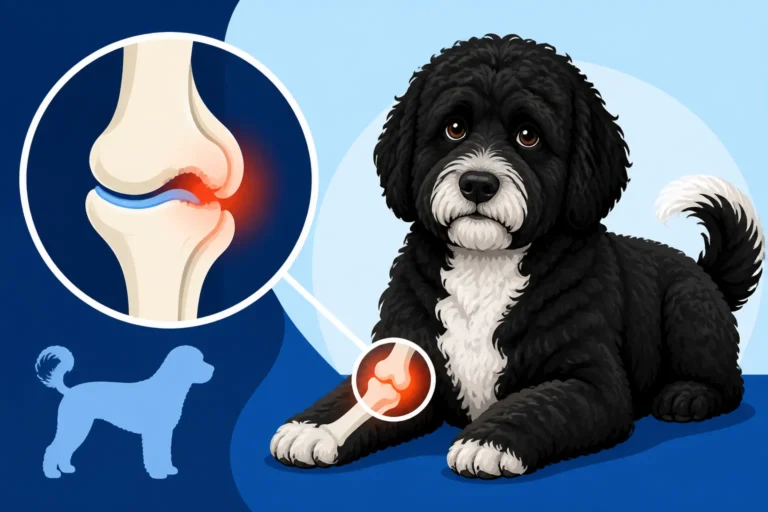
Providing proper nutrition tailored to an active, medium-sized breed is fundamental. High-quality food supports everything from a healthy coat to strong bones and organs. Regular, vigorous exercise is non-negotiable for a PWD; they are working dogs, and a bored, under-exercised PWD can develop behavioral issues and even some physical problems. Swimming, their natural element, is fantastic for conditioning and joint health, as discussed in "Hips and Joints in a Portuguese Water Dog." But beyond that, consistent veterinary care, including annual check-ups, appropriate vaccinations, and parasite prevention, is paramount. Your vet is your best partner in keeping your PWD healthy.
Being prepared for the unexpected is also part of responsible ownership. Even with all the preventative measures, life happens. This is where pet insurance, like Healthy Paws, can be an absolute lifesaver. Knowing that a significant portion of unexpected veterinary bills, whether for an accident or a sudden illness, can be covered takes a huge weight off your shoulders. It allows you to make medical decisions based on what’s best for your dog, rather than being solely driven by cost. As our PWDs age, their needs will also change, requiring even more attentive care, which is a topic explored in "Caring for a Portuguese Water Dog Past Nine." Balancing genetic awareness with excellent daily care is the recipe for a long, happy life for your Portuguese Water Dog.
Here’s a quick overview of some key genetic conditions and their management:
| Condition | Inheritance Pattern | DNA Test Available? | Impact on Dog | Management/Prognosis |
|---|---|---|---|---|
| Juvenile Dilated Cardiomyopathy (JDCM) | Autosomal Recessive | Yes | Rapid, fatal heart failure in puppies (<6 months) | Avoid breeding two carriers; affected puppies generally don't survive. |
| GM1 Gangliosidosis | Autosomal Recessive | Yes | Progressive neurological degeneration in puppies | Avoid breeding two carriers; affected puppies don't reach full maturity. |
| prcd-Progressive Retinal Atrophy (PRA) | Autosomal Recessive | Yes | Gradual vision loss, leading to blindness | Avoid breeding two carriers; manage environment for blind dogs. |
| Early Onset PRA (EOPRA) | Autosomal Recessive | Yes | Faster progression of vision loss, leading to blindness | Avoid breeding two carriers; manage environment for blind dogs. |
| Addison's Disease | Polygenic (Complex) | No direct DNA test | Adrenal gland dysfunction, varied symptoms | Lifelong medication (hormone replacement); good prognosis with consistent care. |
| Improper Coat (IC) | Autosomal Recessive | Yes | Altered coat texture (non-shedding, less curly) | Harmless cosmetic trait; avoid breeding two carriers if standard coat desired. |
Conclusion
The question of whether inbreeding explains Portuguese Water Dog disease is complex, intertwined with the breed's dramatic history and subsequent efforts to save it from extinction. While the foundational bottleneck did indeed lead to a more limited gene pool, making certain genetic conditions more prevalent than they might otherwise be, it's crucial to acknowledge the immense progress made by dedicated breeders and veterinary science.
Today, responsible breeding practices, stringent genetic testing, and transparent health registries are actively working to mitigate these risks. When you choose a Portuguese Water Dog puppy from a breeder who meticulously screens their dogs for known genetic conditions, you are dramatically reducing the likelihood of encountering these heartbreaking diseases. Furthermore, providing excellent general care—from proper nutrition and ample exercise to regular veterinary check-ups and being prepared for emergencies with resources like Healthy Paws pet insurance—is equally vital to ensuring your Portuguese Water Dog thrives.
So, while the past created challenges, the present offers solutions. A well-bred Portuguese Water Dog from health-tested parents, given a loving and active home, has every chance of living a long, healthy, and joy-filled life.
Disclaimer
This article is intended for informational purposes only and does not constitute veterinary advice. Always consult with a qualified veterinarian for any health concerns or before making any decisions about your pet's care.