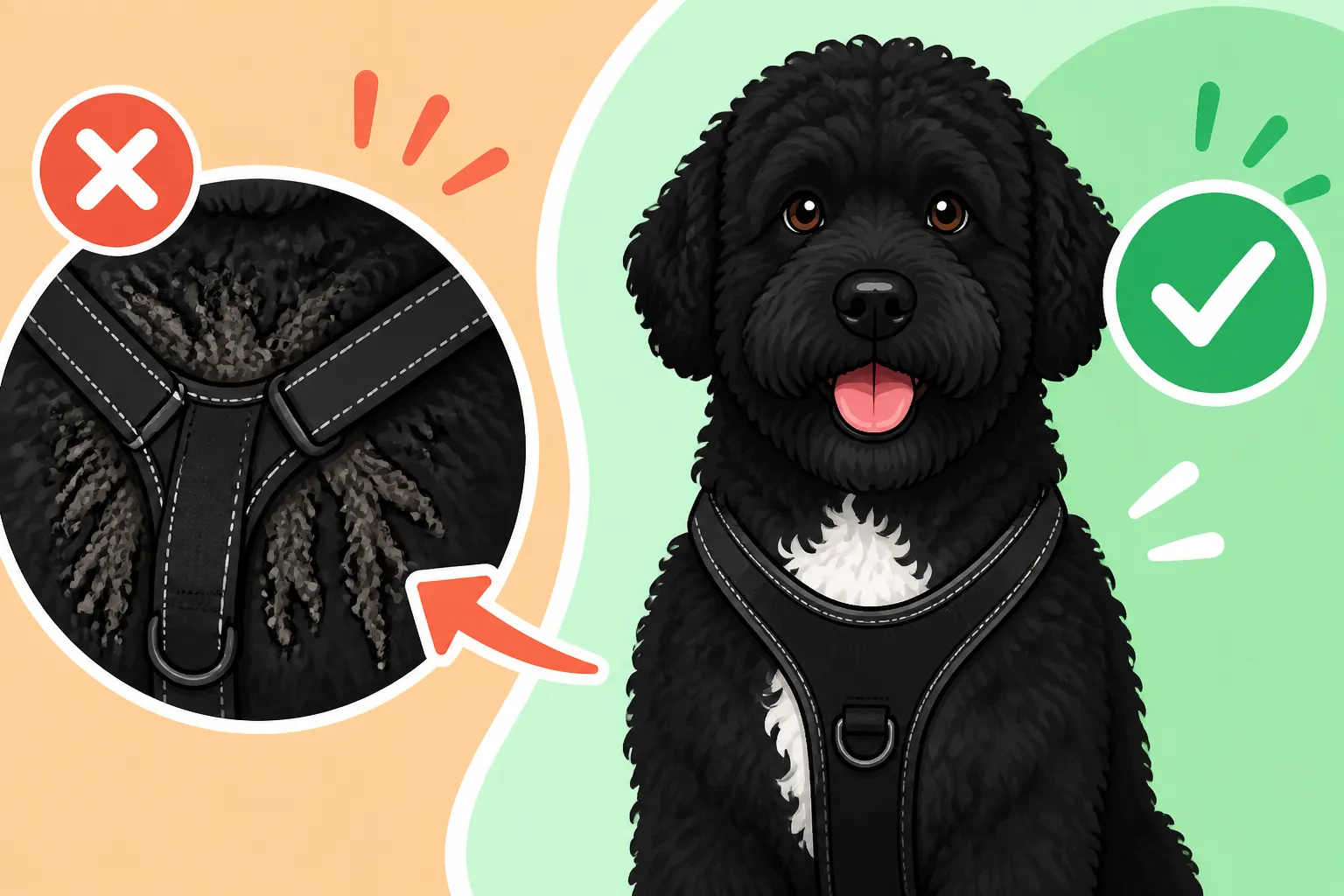
Whether a Portuguese Water Dog Mats Under the Harness
One of the most common and truly frustrating challenges for any Portuguese Water Dog owner is discovering tight, painful mats lurking beneath their dog's harness. You think you're doing everything right—regular walks, proper training, maybe even a refreshing swim—only to remove the harness and find a felted disaster area. It’s disheartening, and it feels like a losing battle, but trust me, you're not alone in this struggle. This comprehensive guide will walk you through exactly why harnesses are a mat magnet for our PWDs, how you can proactively prevent those stubborn tangles, and what to do when you inevitably find them.
The Inevitable Battle: Why Harnesses Cause Matting on a Portuguese Water Dog
Let's face it, our Portuguese Water Dogs have magnificent, unique coats. They’re functional, beautiful, and utterly charming, but they come with their own set of maintenance demands. Understanding why they mat, especially under a harness, is the first step in winning the battle against those pesky tangles.
The Nature of the Portuguese Water Dog Coat
The Portuguese Water Dog is renowned for its single coat, which can be either curly or wavy. This isn't a double coat like many shedding breeds; instead, it's dense and designed to repel water, providing insulation both in and out of the sea. While this means minimal shedding—a huge plus for allergy sufferers and house cleanliness—it also means that any loose hair doesn't fall out. Instead, it gets trapped within the existing coat. This trapped hair, combined with friction and moisture, is the perfect recipe for matting.
Think of it like this: each strand of their coat is a tiny, barbed hook, eager to interlock with its neighbors. When your PWD moves, those strands rub against each other, creating small tangles. If these tangles aren't brushed out regularly, they tighten, gather more loose hair, and eventually form dense, felt-like mats that can pull on the skin and cause discomfort or even skin infections. Their coat is literally designed to hold onto itself, which is great for warmth and water resistance, but a nightmare for tangles if not diligently maintained. We often talk about What a Portuguese Water Dog's Coat Is Made Of, but the practical implication is that it requires constant attention.
How a Harness Exacerbates Matting
Now, introduce a harness into this equation, and you've got a matting accelerator. The constant pressure and movement of the harness straps against your dog's body create friction. This friction rubs the hair together, much like rubbing wool between your hands to felt it. The areas where the harness straps lie, particularly under the chest, behind the front legs, and across the shoulders, become prime targets for mat formation.
Beyond the friction, there's also the issue of moisture and body heat. Portuguese Water Dogs are, well, water dogs! They love to swim, splash, and get wet. Even a damp coat from humidity or a quick run in the rain, combined with the body heat trapped under the harness, can create a warm, moist environment that encourages mats to form and tighten at an alarming rate. If you've ever noticed how quickly a sweater can shrink in a hot dryer, imagine that happening to your dog's coat in those high-friction, damp areas. The straps compress the coat, preventing airflow and holding in moisture, which is the worst possible scenario for mat prevention.
Proactive Prevention: Keeping Mats at Bay Under Your PWD's Harness
The good news is that with a bit of vigilance and the right routine, you can significantly reduce, if not entirely prevent, matting under your PWD's harness. It's all about consistent habits and making smart choices.
Daily Grooming is Non-Negotiable
This is perhaps the most critical step. For a Portuguese Water Dog, especially one that wears a harness regularly, daily grooming isn't a luxury; it's a necessity. You need to make brushing a non-negotiable part of your routine, ideally before and after every time the harness goes on or comes off.
Start by gently removing the harness. Then, with a high-quality slicker brush and a sturdy metal comb, meticulously line brush all the areas where the harness lay. Which Brush a Portuguese Water Dog Needs is crucial for this task. This means parting the hair down to the skin and brushing small sections, working your way up. Pay particular attention to the "armpits" (behind the front legs), the chest, and along the back where the harness would rest. These are often the first places Where a Portuguese Water Dog Mats First. A good routine might look like a quick 5-10 minute brush-through before the morning walk and another one after the evening walk. If your dog has been swimming or gotten wet, that post-activity brush-through becomes even more critical. Remember, it's far easier to prevent a mat than to remove one. Consistency truly is the key here.
Choosing the Right Harness
Not all harnesses are created equal when it comes to preventing matting. The material, fit, and style can all play a significant role.
- Material Matters: Look for harnesses made from smooth, quick-drying materials. Nylon webbing, while durable, can sometimes be rough and contribute to friction. Softer, perhaps padded, or even silicone-based materials might be gentler on the coat. Some owners find success with flat, broad webbing that distributes pressure more evenly rather than thin, rope-like straps that can dig in. Brands available on platforms like Chewy or Amazon often offer a range of materials, so take your time to read reviews and consider what will be kindest to your PWD's unique coat.
- Fit is Fundamental: A harness that is too loose will shift and rub excessively, causing more friction. One that is too tight can compress the coat and restrict movement, also leading to matting. The harness should fit snugly, allowing two fingers to comfortably slip under the straps, but not more. Ensure there's no rubbing behind the front legs.
- Style Considerations: Y-front harnesses, which have a strap running down the chest and then separating around the front legs, can sometimes be better than those with a horizontal strap straight across the chest, as they may avoid some of the high-friction areas. However, every dog is different, and what works for one PWD might not work for another. It might be worth having a couple of different styles on hand and rotating them, allowing the coat to recover in certain areas. Also, consider removing the harness entirely when not actively walking or training. Giving your dog "naked" time allows the coat to breathe and reduces constant friction.
Here's a quick comparison of harness considerations:
| Harness Feature | Impact on Matting | Ideal for PWDs? |
|---|---|---|
| Material: Smooth, Silky Nylon | Less friction, quick-drying | Good |
| Material: Rough Webbing | High friction, holds moisture | Avoid or use sparingly |
| Fit: Snug but Not Tight | Minimizes shifting and rubbing | Essential |
| Fit: Loose | More shifting, increased rubbing | Avoid |
| Fit: Too Tight | Compresses coat, restricts blood flow | Avoid |
| Style: Y-Front | Often better pressure distribution | Generally good |
| Style: Chest Plate | Can spread pressure, but bulky | Depends on individual dog, monitor closely |
| Wear Time: Only during walks | Reduces continuous friction | Highly recommended |
Post-Swim Care and Drying
This is an absolute game-changer for swimming PWDs. If your Portuguese Water Dog loves the water (and most do!), you must remove their harness immediately after swimming. Whether a Portuguese Water Dog's Harness Rubs When Wet is a critical question, and the answer is usually yes, leading directly to matting.
The coat, especially under the harness, will be soaking wet. This trapped moisture, combined with the pressure, will accelerate matting exponentially. After removing the harness, the next crucial step is thorough drying. Air drying simply won't cut it for a PWD. You need to towel dry vigorously and then use a force dryer. What a Force Dryer Does for a Portuguese Water Dog is invaluable for pushing water out of the dense coat, preventing mildew, skin irritation, and, of course, mats. Focus the dryer particularly on the areas that were covered by the harness. If you're rinsing off chlorine or salt water—which you absolutely should be doing after every swim to protect their skin and coat, as discussed in When a Portuguese Water Dog Should Be Rinsed After the Sea—ensure every bit of that fresh water is also thoroughly dried. Skipping this step is almost a guarantee of developing painful mats.
Tackling Existing Mats: A Gentle Approach
Despite your best efforts, sometimes a small mat will sneak in. The key is to address it quickly and gently before it grows into a monster.
Detangling Small Knots
For small, isolated tangles, patience is your best friend.
- Gather Your Tools: You'll need a metal comb (preferably with both wide and fine teeth), a slicker brush, and a good quality detangling spray or conditioner. Products like those found on Amazon can work wonders.
- Isolate the Mat: Gently separate the matted section from the surrounding hair.
- Apply Detangler: Spray or work a small amount of detangling conditioner directly onto the mat. Let it sit for a minute or two to help loosen the hair.
- Work from the Outside In: Start at the very edge of the mat, closest to the hair that isn't matted. Using the wide-toothed end of your comb, gently tease out a few strands at a time. Do not pull hard. Hold the hair at the base of the mat, close to the skin, to prevent pulling on your dog's skin, which can be painful.
- Small Sections, Persistent Effort: Work slowly, moving towards the center of the mat, little by little. You can use your slicker brush to help separate larger chunks. If the mat is particularly tight, you might need to try to "split" it gently with your fingers or the point of your comb, being extra careful not to cut the skin.
It’s a tedious process, but a gentle approach will make your dog more cooperative for future grooming sessions.
When to Call in the Professionals (or Get Out the Clippers)
Sometimes, a mat is beyond home detangling. If you encounter large, dense, or skin-tight mats, especially in sensitive areas, it's often best to seek professional help. A professional groomer has specialized tools and experience in safely removing severe mats without injuring your dog. Attempting to cut out a tight mat yourself can easily result in accidentally cutting your dog's skin, which is often pulled up into the mat. This is a common and painful mistake.
If a mat is truly severe and covering a large area, the kindest solution might be to have it clipped out. This often means a very short shave in that area. While not ideal for the PWD's aesthetic, it's far better for their comfort and skin health. You can then let the coat regrow. Discussing How Often a Portuguese Water Dog Needs Clipping with your groomer can help you establish a routine that minimizes future issues. Remember, your dog's comfort and health always come before appearance.
The Role of Lifestyle and Coat Type in Matting
Understanding how your dog's daily life and their specific coat type interact with matting can help you tailor your prevention strategies.
Activity Level and Water Exposure
It stands to reason that a more active Portuguese Water Dog, especially one that regularly engages in their namesake water sports, will be more prone to matting. All that running, jumping, and swimming creates more friction and introduces more moisture to the coat.
For example, a PWD that spends an hour playing fetch in a lake every day will require far more diligent grooming than one that only takes leash walks. Water naturally causes the coat to clump and twist as it dries, and if that clumping happens under a harness, it's a mat in the making. Whether a Portuguese Water Dog Mats After Swimming is almost always a resounding yes if not properly dried. If your dog is a dedicated swimmer, consider a harness designed for water use—perhaps one that’s minimalist and quick-drying, or even a simple collar for water activities if safe to do so, switching back to a proper harness for land walks once dry. Always, always, always rinse off chlorine or salt water immediately after your dog exits the water. Whether Salt Dries a Portuguese Water Dog's Coat Into Mats is a real concern, as salt can indeed dry out and stiffen the coat, making it more prone to tangling and matting.
Curly vs. Wavy Coats and Matting Differences
Portuguese Water Dogs come in two distinct coat types: curly and wavy. While both require significant grooming, they can present slightly different matting challenges.
- Curly Coats: Often denser and more compact, curly coats tend to trap loose hair very effectively, leading to mats that form quite close to the skin. These mats can be harder to spot and feel until they're already tight. Owners of curly-coated PWDs often report that the mats seem to appear out of nowhere, seemingly overnight.
- Wavy Coats: While appearing looser and perhaps "shaggier," wavy coats are by no means immune to matting. The longer waves can easily intertwine, creating large, sheet-like mats, especially when wet or under pressure. Sometimes, the matting in a wavy coat can seem more superficial at first, but it can quickly tighten and become just as problematic as in a curly coat.
Regardless of the coat type, the principles of prevention remain the same: consistent, thorough line brushing, careful harness selection, and meticulous post-water care. The puppy coat transition, usually between 6 and 18 months, is also a prime time for matting, regardless of coat type. During When a Portuguese Water Dog's Puppy Coat Changes, the soft puppy hair sheds out while the denser adult coat grows in, creating a chaotic mix that knots easily. This period is often Why a Portuguese Water Dog Mats Worst During the Change, requiring even more diligent grooming. Knowing your dog's specific coat type and its tendencies will help you fine-tune your grooming strategy and keep them comfortable and mat-free.
Disclaimer
This article is for general informational purposes only and does not constitute professional advice. Laws, prices and regulations vary by location and change over time. Consult a qualified professional for guidance on your specific situation.