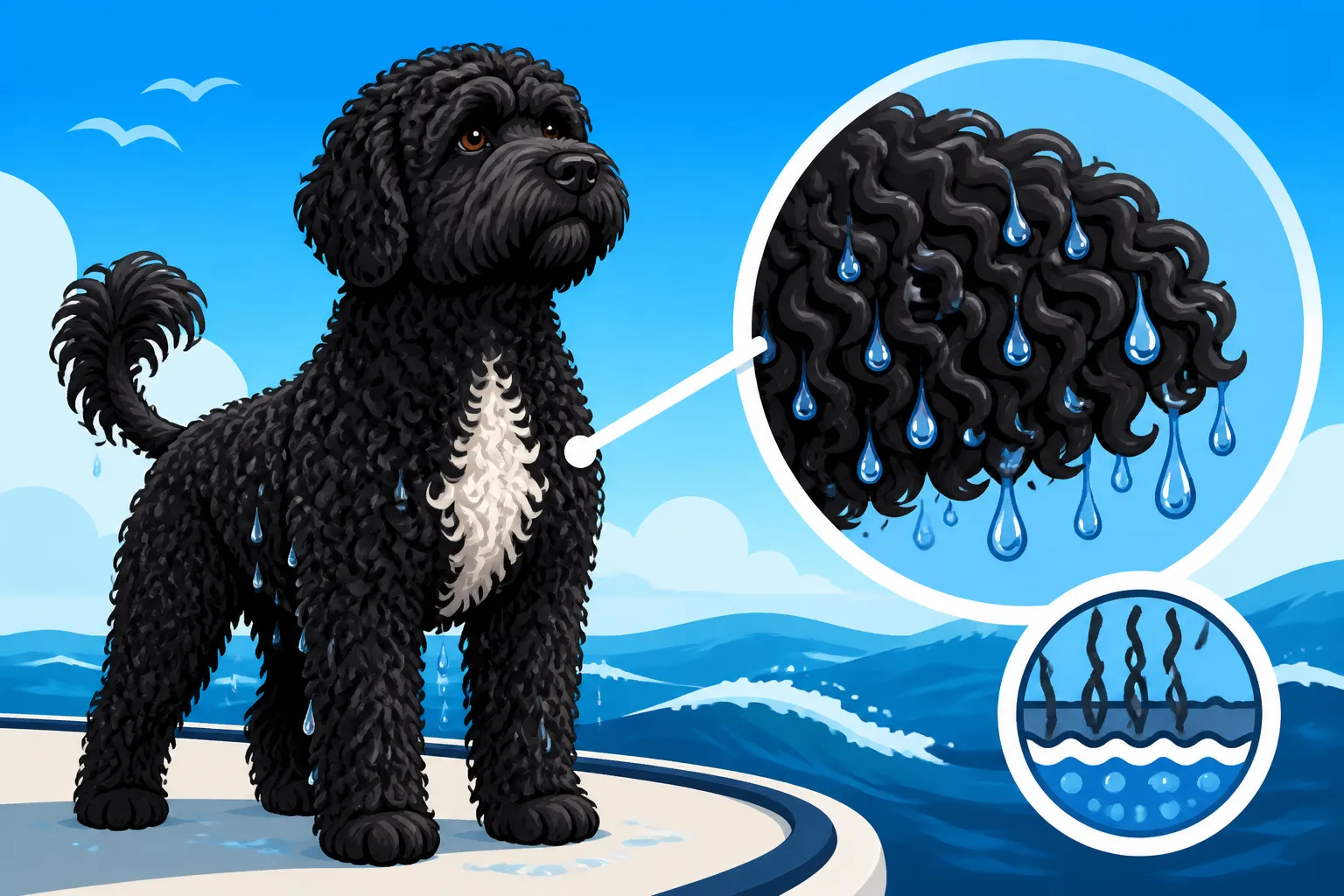
Why a Portuguese Water Dog’s Coat Holds Water
One of the first things many new Portuguese Water Dog owners realize, often after a joyful romp in the lake or a splash in the backyard pool, is just how much water their dog's coat seems to absorb and hold. You might find yourself standing there with towel after towel, wondering if you'll ever get them truly dry, or if your home is destined to become a perpetually damp zone. This isn't just an observation; it's a very real characteristic of the breed, and understanding why their coat acts like a sponge is key to effective care and avoiding common frustrations. This guide will dive deep into the unique qualities of the Portuguese Water Dog's coat, explaining its historical purpose and offering practical advice for managing it in your modern home.
The Unique Structure of the Portuguese Water Dog Coat
Unlike many breeds, the Portuguese Water Dog doesn't have a typical "water-repellent" coat that sheds water like a duck's feathers. Instead, their coat is designed to be deeply absorbent, a trait that served them well in their original working environment. It's a marvel of natural engineering, but one that requires a bit of understanding from us, their human companions.
Single Coat vs. Double Coat: A Key Difference
Most dogs possess a double coat, which consists of a soft, dense undercoat for insulation and a coarser, water-repellent outer coat (or guard hairs) that protects against the elements. Think of a Labrador Retriever or a Siberian Husky; water beads up and rolls off, and they air dry relatively quickly because the outer coat acts as a shield.
The Portuguese Water Dog, however, has a single coat. This means they lack that distinct, shedding undercoat. Their entire coat, whether curly or wavy, is made up of hair rather than fur, which is why they are often touted as a good choice for people with allergies. This single layer is dense and grows continuously, feeling more like human hair than traditional dog fur. Because there's no oily, water-shedding topcoat, the PWD's hair readily takes on water, soaking it up into its fibers and the tight coils or waves. This is the fundamental reason why you find yourself with a surprisingly heavy, dripping dog after a swim.
The Curly or Wavy Texture: More Than Just Looks
The texture of a Portuguese Water Dog's coat plays an enormous role in its water-holding capacity. Whether your PWD has a tight, crisp curl or a softer, more open wave, these textures create an intricate network of tiny spaces throughout the coat. When the dog enters the water, these spaces fill up with liquid, effectively trapping it within the individual hairs and between the strands.
Imagine millions of miniature sponges all working in unison across your dog's body. The tighter the curl, the more surface area and more little pockets there are to hold water. This isn't a coat that sheds water, but rather one that integrates it. It's truly fascinating when you consider its purpose, which we'll get into shortly, but it certainly presents a drying challenge in a household setting. You can really see this difference when you look at Curly or Wavy: the Two Portuguese Water Dog Coats side-by-side after they've both been for a dip. The curly coat might look like it's holding more, but both types are equally effective at their job of water retention.
How Water Retention Serves Their Ancestral Purpose
To truly appreciate why your Portuguese Water Dog's coat holds water, we need to take a trip back in time to their origins on the rugged coast of Portugal. These dogs weren't bred for aesthetic appeal or to be household companions; they were working dogs, indispensable partners to fishermen. Every aspect of their physical design, including their unique coat, was honed by centuries of practical application in a challenging marine environment.
Insulation in Cold Ocean Waters
The primary reason for the PWD's water-retentive coat is insulation. The Atlantic waters off the coast of Portugal, even in summer, can be surprisingly chilly, and imagine those winter fishing trips! A dog constantly diving into and out of the sea needed a way to stay warm to perform its duties effectively. Instead of repelling water, which would then be quickly chilled by the cold air and sea, the PWD's coat was designed to absorb it.
Once the water is trapped within the dense, curly or wavy coat, it quickly warms to the dog's body temperature. This layer of warmed water then acts as a highly efficient insulator, much like a wetsuit works for human divers. It prevents the colder external water and air from directly touching the dog's skin, helping to maintain their core body temperature. This brilliant adaptation allowed them to spend extended periods in the frigid ocean without succumbing to hypothermia, retrieving nets, herding fish, or carrying messages between boats. It's a testament to their incredible resilience and the cleverness of their design that they could spend How Long a Portuguese Water Dog Can Stay in Cold Water and still function.
Protection and Buoyancy in the Water
Beyond insulation, the water-laden coat offered additional benefits for a working dog at sea. The dense, wet mass of hair provided a layer of physical protection for their skin against the harsh elements of the ocean environment. It shielded them from scrapes against barnacle-covered boats or rocky shorelines and offered a barrier against the sun's rays on long days at sea.
Furthermore, a heavily saturated coat can contribute to a slight increase in buoyancy. While their strong, muscular bodies and powerful webbed feet were the main drivers of their incredible swimming ability, the added volume and slight lift from the water held in their coat certainly didn't hurt. This combination of insulation, protection, and a subtle boost in buoyancy meant the Portuguese Water Dog was perfectly equipped for its demanding maritime tasks, making them true aquatic athletes. Their coat wasn't just hair; it was an integral part of their working gear, as essential as the fishing nets themselves.
The Practicalities for Modern Portuguese Water Dog Owners
While the historical reasons for your Portuguese Water Dog's water-holding coat are fascinating, the reality for modern owners often translates into a few practical challenges. Living with a water dog means adapting your routine and understanding the specific needs that come with their unique hair. It's not just about managing dampness; it's about maintaining their health and comfort.
The Challenge of Drying Your Portuguese Water Dog
Let's be real: drying a Portuguese Water Dog is a commitment. It's not a quick towel-off-and-go situation like it might be with a smooth-coated breed. Because their coat is so absorbent and dense, even a short dip can leave them thoroughly soaked right down to the skin. If you're new to the breed, you might find yourself going through several towels and still feeling damp spots.
Improper or incomplete drying isn't just an inconvenience; it can lead to serious skin issues. Trapped moisture against the skin creates a perfect breeding ground for bacteria and yeast, leading to hot spots, skin infections, and unpleasant odors. It's a particular concern in warmer, humid climates, or if your dog is frequently swimming. This is why investing in proper drying tools and techniques is non-negotiable for PWD owners. You can read more about Drying a Portuguese Water Dog After Every Swim to get some specific tips, and believe me, it makes a huge difference.
Grooming Implications and Matting Risks
The dense, continuously growing, and water-retaining nature of the Portuguese Water Dog's coat makes regular grooming absolutely essential, especially if they spend a lot of time in the water. Water, coupled with movement and the natural friction of life, can quickly cause the coat to mat. Mats are tangles that become tightly knotted, pulling on the skin and causing discomfort or even pain. They can hide skin infections, parasites, and prevent proper air circulation, exacerbating dampness-related skin problems.
A wet coat, if not thoroughly brushed out as it dries, will almost certainly form mats, especially in areas of high friction like behind the ears, under the legs, and around the collar or harness. This means that swimming without a proper post-swim grooming routine is a recipe for disaster. Owners often ask Whether a Portuguese Water Dog Mats After Swimming, and the answer is a resounding yes, if not cared for immediately. Regular and thorough brushing is the best defense. Knowing How Long Home Grooming a Portuguese Water Dog Takes Weekly will help you set realistic expectations.
Here’s a quick overview of how coat type affects drying and matting:
| Coat Type | Water Retention | Drying Time (Typical) | Matting Risk (If Undried) | Grooming Effort (Post-Swim) |
|---|---|---|---|---|
| Curly Coat | High (tight coils trap more) | Long | Very High | Significant |
| Wavy Coat | High (dense waves absorb) | Long | High | Significant |
Managing a Water-Holding Coat
Living with a Portuguese Water Dog means embracing their aquatic nature, but it also means being proactive about coat care. It might seem like a lot of work initially, but once you establish a routine and gather the right tools, it becomes second nature. Proper care ensures your PWD stays healthy, comfortable, and looking their best.
Essential Grooming Tools and Techniques
First things first, you need the right arsenal of grooming tools. Forget flimsy brushes; your PWD's coat demands professional-grade equipment. The absolute most important tool you can invest in is a high-velocity force dryer. This isn't your average human hairdryer (which can burn your dog's skin); a force dryer blows air at a high velocity, blasting water out of the coat rather than just drying it with heat. It dramatically cuts down drying time and helps prevent matting by separating the hairs. You can find excellent options on Amazon, often with various nozzle attachments to suit different areas of the coat.
Beyond the dryer, a good slicker brush that can reach down to the skin is crucial, along with a sturdy metal comb. After a swim, the process should be:
- Rinse: If your dog has been in salt water, lake water, or chlorinated pool water, a thorough rinse with fresh water is paramount to remove irritants and prevent drying out the skin or coat.
- Towel Dry: Use highly absorbent towels to get out as much excess water as possible. Some owners even use microfiber towels from Chewy or similar pet supply stores because they are so effective at wicking moisture.
- Force Dry: This is where the magic happens. Systematically work through the coat with the force dryer, section by section. As you dry, use your slicker brush to lift and separate the hair, ensuring every part gets completely dry.
- Comb: Once the coat feels dry, run your metal comb through it from root to tip. If the comb snags, you've found a mat that needs gentle working out or, if severe, careful cutting. A fully dried and combed coat should be fluffy and free of tangles. You'll be amazed at how long it can take to get a PWD truly dry; How Long a Portuguese Water Dog Takes to Dry is usually longer than new owners expect.
Post-Swim Routine is Non-Negotiable
For a Portuguese Water Dog, every swim warrants a full post-swim routine. It's not an optional extra; it's fundamental to their health and comfort. If you plan to have a water-loving PWD, you need to factor in this time commitment. Skipping the drying and brushing process, even just once, can result in mats that are incredibly difficult and painful to remove, potentially requiring a trip to the groomer for a full shave down.
The routine should look something like this: After their swim, bring them inside to a designated "drying station" – perhaps a utility room, a garage, or even a bathtub. Rinse them if needed, towel off thoroughly, then engage the force dryer. Pay special attention to areas like behind the ears, armpits, and groin, where mats form easily. As you dry, visually inspect their skin for any irritation or redness. Don't forget their ears! Because their ear canals can trap moisture, weekly ear checks are vital to prevent infections. You can find detailed advice on Why a Portuguese Water Dog's Ears Need Checking Every Week, and having a good ear cleaner on hand (available from retailers like Chewy or Ollie) is always a good idea. This diligent routine will ensure your PWD remains a happy, healthy water enthusiast.
Considering Coat Length and Clipping Styles
The length and style of your Portuguese Water Dog's coat can significantly impact how much water it holds and, consequently, how easy it is to manage. While their natural coat grows long, many pet owners opt for shorter clips to reduce grooming time and the challenges of water retention.
The two most common clips are the Lion Clip and the Retriever Clip. The traditional The Lion Clip Costs a Portuguese Water Dog Owner Daily Brushing, and while striking, it leaves hair long on the head, chest, and hindquarters, meaning those areas will still absorb and hold a lot of water. This clip requires daily upkeep if the dog is frequently swimming. On the other hand, The Retriever Clip Is the Coat Most Portuguese Water Dogs Wear among pet owners. This involves clipping the entire body to a uniform, shorter length, typically around 1-2 inches. A shorter coat will still get wet, of course, but it will shed water more easily and dry much faster with a force dryer, making it far more practical for an active, swimming PWD in a family home. Discuss your dog's lifestyle and your grooming commitment with your professional groomer to choose the best clip for both of you.
Disclaimer
This article is for general informational purposes only and does not constitute professional advice. Laws, prices and regulations vary by location and change over time. Consult a qualified professional for guidance on your specific situation.