Whether a Wavy Portuguese Water Dog Looks Shaggier
It's a question many prospective and current Portuguese Water Dog owners ponder: does the wavy coat really look shaggier than the curly one? And what exactly does "shaggy" even mean when we're talking about a breed known for its unique, non-shedding, single coat? You're not alone in observing these subtle differences, and it’s a valid point of curiosity that impacts everything from grooming routines to how your furry friend presents themselves. This guide will dive deep into the nuances of the Portuguese Water Dog's two coat types, explaining why the wavy coat often appears shaggier and what that means for daily care and overall aesthetics.
Understanding the Two Portuguese Water Dog Coat Types
The Portuguese Water Dog is unique for having two distinct coat types, both of which are considered correct within the breed standard. While they share the common characteristics of being single-coated and non-shedding (or rather, very low-shedding), their appearance and texture can differ quite a bit, leading to the "shaggy" debate. It’s not just about what they look like; it’s about how they feel, how they manage water, and what kind of grooming commitment they demand. Understanding these foundational differences is key to appreciating the wavy coat's particular characteristics. You can learn more about these fascinating differences in Curly or Wavy: the Two Portuguese Water Dog Coats and How a Curly Coat Differs From a Wavy Coat.
The Curly Coat Explained
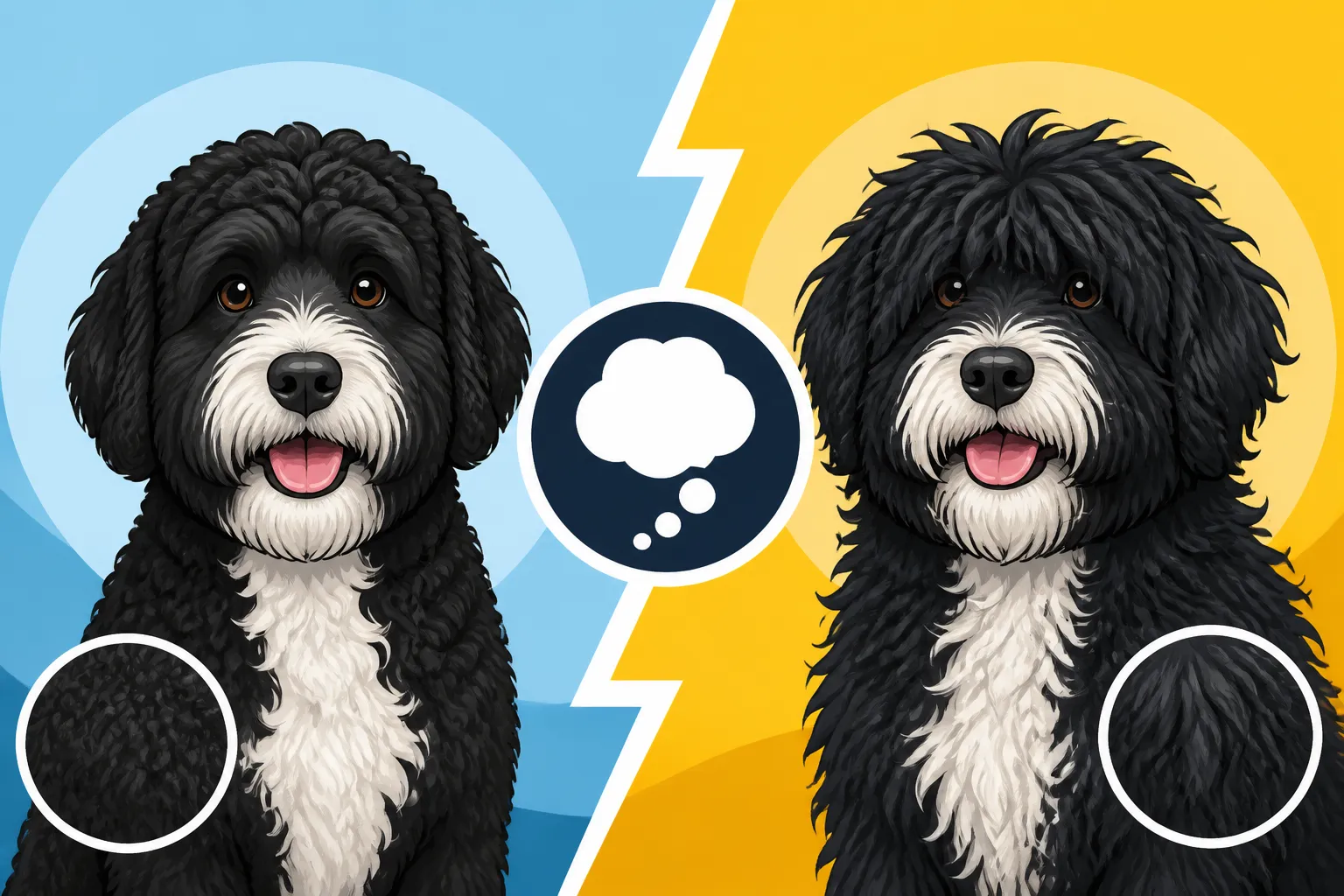
The curly coat is perhaps what most people picture when they think of a Portuguese Water Dog. It's often described as a compact cylinder of hair, tightly curled, sometimes resembling an Astrakhan lamb's fleece. These curls are dense and can feel quite springy and resilient to the touch.
When a curly-coated PWD gets wet, the water tends to bead off or get trapped within the tightly coiled structure, which can make them quite efficient at shedding water. However, if not thoroughly dried and brushed, these tight curls can felt together, forming dense mats close to the skin. The uniform nature of the curls often gives the dog a very neat, almost sculpted appearance, especially after a fresh groom. This uniform texture means there are fewer "flyaways" or stray hairs that contribute to a shaggy look.
The Wavy Coat Explained
The wavy coat, on the other hand, presents a softer, more flowing appearance. Instead of tight, distinct curls, the hair forms gentle waves or a loose curl pattern. It often has a slight sheen that can catch the light beautifully, giving it a somewhat glossy look compared to the more matte appearance of a very tightly curled coat.
This coat type tends to feel softer and silkier than the curly coat, and the individual hairs can be longer, especially when allowed to grow out. When a wavy-coated Portuguese Water Dog shakes off water, the waves might appear longer and more free-flowing. Because the waves are less compact, the coat can sometimes appear less dense than its curly counterpart, even though the hair follicles are just as numerous. This inherent looseness in the wave pattern is precisely what can contribute to a more "shaggy" or untamed appearance, particularly when the coat is not kept meticulously trimmed or brushed.
Why the Wavy Coat Can Appear Shaggier (and What That Really Means)
The perception of a wavy Portuguese Water Dog looking "shaggier" isn't just in your head; it’s a natural consequence of how the hair grows and lies, often exacerbated by grooming choices. It doesn't mean the dog is messy or poorly kept, but rather that its coat type inherently presents itself with a different silhouette than a dog with tight, uniform curls. It's about understanding the visual dynamics of the coat and how light and movement play a role.
The Illusion of Length and Volume
The primary reason a wavy coat often appears shaggier is due to the illusion of length and volume that its looser structure creates. Imagine a head of tightly coiled human hair versus long, flowing waves. The coiled hair, even if the individual strands are long, will appear shorter because of the tight spirals. The wavy hair, however, will hang down, revealing its full length and giving an impression of greater volume and a less compact form. This is exactly what happens with your Portuguese Water Dog!
Because the wavy coat's strands don't coil as tightly, they tend to lie flatter against the body while still retaining their characteristic wave. When these waves are allowed to grow out, they create a softer, less defined outline for the dog. The ends of the hair can fan out, giving a "bushier" or more unkempt look if not regularly tidied. This contrasts sharply with the very clean, distinct outline created by a well-maintained curly coat, where each curl acts as a small, contained unit. So, while both coats have a unique texture, the wavy coat's open structure naturally lends itself to a looser, more "shaggy" aesthetic.
The Role of Grooming in Coat Appearance
Grooming plays an absolutely monumental role in whether a wavy Portuguese Water Dog truly looks shaggy or simply has a soft, flowing coat. A wavy coat that is left to grow without regular trimming will indeed look quite shaggy, almost like a fluffy mop, because the length and looseness of the waves are maximized. Without shaping, the coat lacks definition and can appear quite unkempt.
However, with consistent grooming, a wavy coat can be transformed. Regular brushing, especially with a good slicker brush and a long-toothed comb that you can find on Amazon or Chewy, helps to separate the waves, remove loose hair, and prevent matting, which instantly tidies the appearance. More importantly, proper clipping can completely redefine the wavy coat. Many owners opt for the popular The Retriever Clip Is the Coat Most Portuguese Water Dogs Wear, which keeps the coat at a manageable length, reducing the "shaggy" effect significantly while still showcasing the beautiful waves. Even shorter clips can give a sleek, almost velvety appearance, effectively eliminating any shagginess. Conversely, a curly coat, if neglected, can also become matted and appear disheveled, but its inherent tight structure makes it less prone to the shaggy look and more prone to dense, uncomfortable matting.
Practicalities of Living with a Wavy Portuguese Water Dog Coat
Choosing a Portuguese Water Dog with a wavy coat means embracing its unique characteristics, which come with their own set of practical considerations, especially regarding grooming. While the "shaggy" appearance can be charming, maintaining a healthy, tangle-free coat requires dedication. It's a hands-on commitment, but one that is incredibly rewarding when you see your dog happy, comfortable, and looking their best.
Grooming Needs and Challenges
Living with a wavy Portuguese Water Dog means you'll become very familiar with your grooming tools. The wavy coat, due to its looser structure, can actually be more prone to matting than the tightly curled coat, especially if not brushed frequently. The waves can intertwine and trap debris, forming painful mats if neglected. Owners often find that daily brushing, or at least every other day, is essential to keep mats at bay, particularly in high-friction areas like behind the ears, under the legs, and around the tail. For a deeper dive into the specific challenges, check out Which Portuguese Water Dog Coat Mats More.
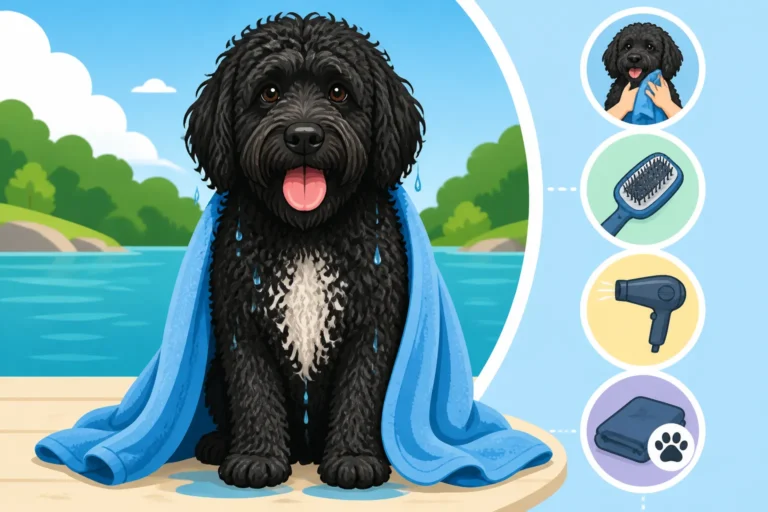
You’ll want a sturdy pin brush and a good quality, long-toothed comb to ensure you get all the way down to the skin. These are readily available on pet supply sites like Chewy. Remember that simply brushing over the top of the coat isn't enough; you need to systematically brush sections to prevent mats from forming against the skin, where they can be incredibly difficult and painful to remove. Swimming, a favorite activity for most PWDs, also exacerbates matting. Water can cause the hair to clump and tighten, making it even more vital to thoroughly brush and dry the coat after every swim. For tips on managing the coat post-swim, see Whether a Portuguese Water Dog Mats After Swimming.
Maintenance for a Tidy Look
Beyond daily brushing, regular clipping is indispensable for maintaining a tidy, non-shaggy appearance for your wavy-coated Portuguese Water Dog. Professional groomers are experts at shaping these coats, offering various clips that can reduce length and define the dog's silhouette. A popular choice, as mentioned earlier, is the Retriever Clip, which keeps the coat practical for an active dog while minimizing the shaggy look.
If you're brave enough to tackle grooming at home, investing in quality clippers and learning proper techniques can save you a significant amount of money and ensure your dog always looks sharp. You can find excellent clippers and grooming tables on Amazon or specialty pet supply stores. For the wavy coat, keeping the hair a bit shorter, especially around the face, ears, and feet, can dramatically reduce the impression of shagginess. And don't forget the importance of proper drying! After a bath or a swim, a thorough towel dry followed by a force dryer can help straighten out the waves temporarily, making brushing easier and preventing the coat from air-drying into a more unruly, shaggy state. This also helps prevent skin issues that can arise from dampness. Drying a Portuguese Water Dog After Every Swim offers more insights into post-swim care.
Does "Shaggier" Mean "Less Desirable"?
It's natural to wonder if a wavy coat, often perceived as "shaggier," might be considered less desirable than a curly one. However, in the world of Portuguese Water Dogs, both coat types are equally valued and are perfectly correct according to breed standards. The idea of "shaggy" is often more about aesthetic preference and presentation than it is about inherent quality or health.
Understanding Breed Standards and Personal Preference
The breed standard for the Portuguese Water Dog clearly states that both curly and wavy coats are acceptable. There is no preference given to one over the other in the show ring, as long as the coat is healthy, of the correct texture, and properly presented. So, from a purebred perspective, a wavy coat is just as desirable as a curly one. The "shaggy" descriptor is purely visual and often arises when the coat is at a longer length without meticulous shaping.
Ultimately, whether you prefer the look of a curly or a wavy coat often boils down to personal taste. Some people adore the free-flowing, softer appearance of a wavy coat, finding it adds to the dog's rustic charm. Others prefer the more uniform, compact look of a curly coat. Neither preference is right or wrong. It's important to remember that the most crucial aspect of any Portuguese Water Dog's coat, regardless of its type, is its health and cleanliness. A well-cared-for wavy coat, even if long, will always be more desirable than a matted, neglected curly coat. For details on what the breed standard expects, you can look into Which Coat Types a Portuguese Water Dog Comes In.
The Health and Comfort Perspective
From a health and comfort standpoint, neither a wavy nor a curly coat holds an advantage over the other. Both coats are designed to be water-resistant and provide insulation, perfectly suited for the breed's historical role as a fisherman's companion. What truly matters for your dog's well-being is that the coat is kept clean, dry, and free of mats. Mats can pull at the skin, cause irritation, hide skin infections, and make it difficult for your dog to move comfortably.
A wavy coat that is allowed to become excessively long and matted will certainly be uncomfortable for your dog, just as a matted curly coat would be. Therefore, the "shagginess" itself isn't a health concern, but the lack of care that leads to excessive shagginess and matting certainly is. Keeping the coat at a manageable length, brushing regularly, and ensuring thorough drying after swims are all critical practices that contribute to your Portuguese Water Dog's overall comfort and skin health, regardless of whether their coat is curly or wavy. It's about proactive care, not just the inherent visual characteristics.
Here's a quick comparison of the two coat types:
| Characteristic | Curly Coat | Wavy Coat |
|---|---|---|
| Appearance | Tightly coiled, compact cylinders of hair | Softer, flowing waves, less distinct curls |
| Texture | Dense, springy, resilient, often matte look | Softer, silkier, often with a slight sheen |
| Perceived Length | Appears shorter due to tight coils | Appears longer due to looser waves |
| "Shaggy" Factor | Less prone to "shaggy" look when maintained | More prone to "shaggy" look if untrimmed/unbrushed |
| Matting Tendency | Prone to dense mats if neglected | Can be equally prone to mats, especially if long |
| Grooming Effort | Regular brushing (often daily), clipping | Regular brushing (often daily), clipping |
| Water Management | Water beads/traps within tight coils | Waves shed water, can appear longer when wet |
| Breed Standard | Fully acceptable and desired | Fully acceptable and desired |
Ultimately, whether your Portuguese Water Dog has a curly or wavy coat, the joy and companionship they bring are what truly matter. Embrace their unique coat, commit to its care, and enjoy the beautiful, active dog you have!
Disclaimer
This article is for general informational purposes only and does not constitute professional advice. Laws, prices and regulations vary by location and change over time. Consult a qualified professional for guidance on your specific situation.