Whether Sand Works Into a Portuguese Water Dog’s Coat
Oh, the sheer joy of watching your Portuguese Water Dog revel in the surf, bounding across the sand, tail wagging with absolute delight! It's one of the quintessential PWD experiences, isn't it? But then, the moment of reckoning arrives: you look at your beautiful, wet, sandy dog, and a familiar dread washes over you. That sand, fine and pervasive, seems to cling to their wonderful coat like a second skin, promising to invade every crevice of your car, home, and sanity. If you’ve ever wondered how much of a magnet your PWD’s coat truly is for sand, and what on earth you can do about it, you’ve come to the right place. This guide will dive deep into why sand loves your PWD as much as your PWD loves the beach, and equip you with practical strategies to manage the inevitable sandy aftermath.
Understanding the Portuguese Water Dog's Coat and Its Affinity for Sand
The Portuguese Water Dog's coat is truly a marvel of nature, a testament to centuries of selective breeding for a working dog perfectly adapted to the aquatic environment. However, what makes it so fantastic for swimming also makes it, shall we say, exceptionally good at collecting and holding onto sand. It's a bit of a double-edged sword, and understanding why is the first step in managing the sandy situation.
The Anatomy of a PWD Coat: Curly, Wavy, and Water-Loving
Unlike many breeds, Portuguese Water Dogs possess a single coat, meaning they lack an undercoat. This coat comes in two distinct textures: curly or wavy. The curly coat is often described as cylindrical or tightly coiled, while the wavy coat is softer with a slight sheen and forms gentle waves rather than tight curls. Both types are dense and profuse, designed to protect the dog from cold water, harsh weather, and even sharp objects in their working environment. Because they don't have an undercoat and their hair grows continuously, PWDs are often lauded as "hypoallergenic," as they shed very minimally. This is great for allergy sufferers, but it also means any debris that gets into the coat tends to stay there until removed, rather than falling out with shedding hair. This includes everything from burrs and twigs to, you guessed it, sand.
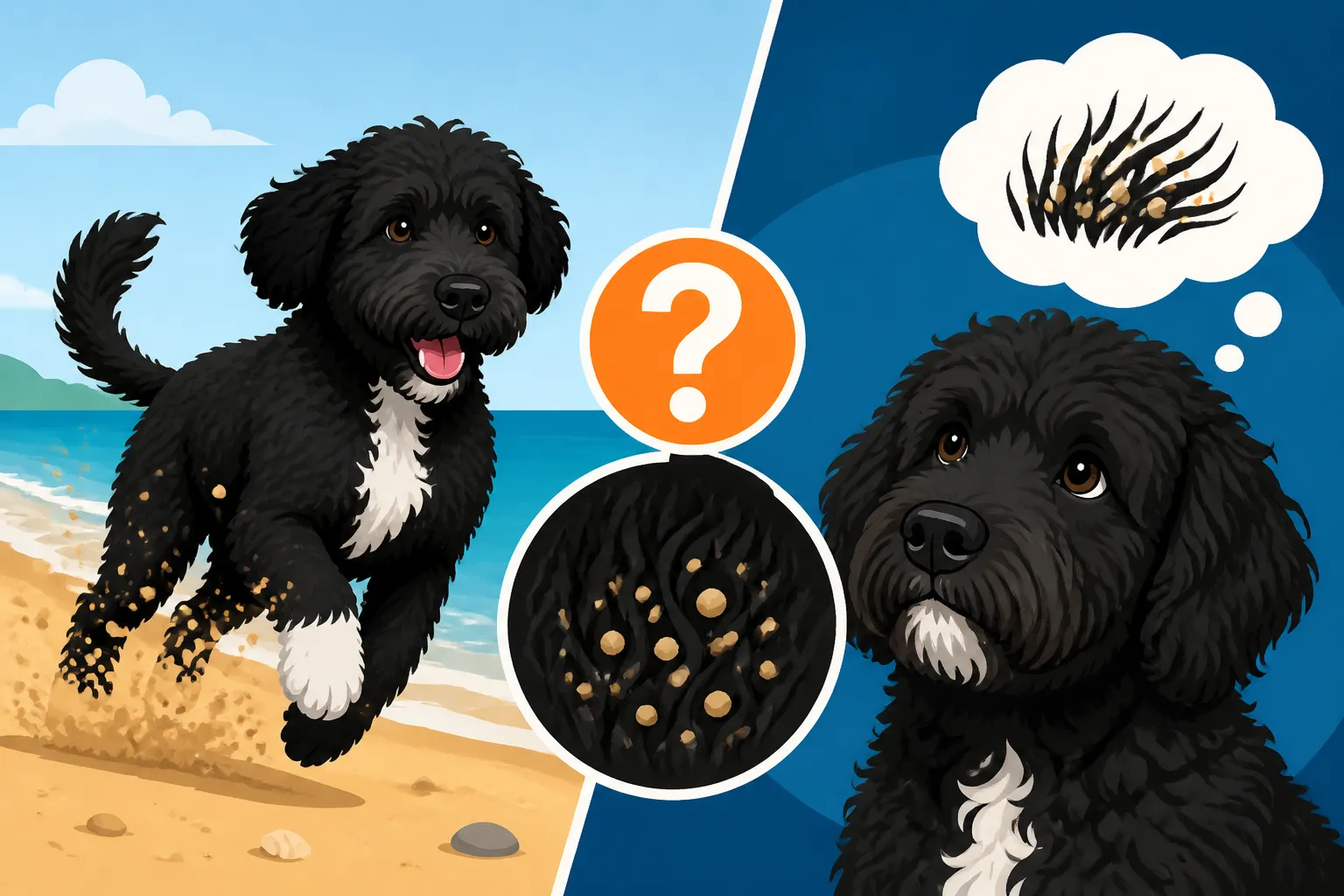
Consider a hot summer day at the coast. Your PWD plunges into the ocean, retrieving a ball with gusto. The water beads off their dense, oily coat, keeping them insulated and comfortable. This very density, however, creates a fantastic net. As they emerge from the water and shake, the coarser sand might fly off, but the finer, microscopic grains can become trapped within the tight curls or waves, adhering to the individual hair shafts. It's not just about what washes off; it's about what clings. This protective, non-shedding quality is brilliant for keeping them warm in the Atlantic, but less so for keeping your sofa sand-free.
How This Unique Coat Becomes a Sand Magnet
The structure of the Portuguese Water Dog's coat, whether curly or wavy, is fundamentally designed to hold air for insulation and repel water. When wet, the individual hairs clump together, creating channels and pockets. As the dog moves through sand, especially wet sand, these tiny grains work their way into these spaces and adhere to the damp, textured hair. It’s not just sitting on the surface; it’s literally integrated into the coat. Think of it like a natural Loofah sponge – great for scrubbing, also great for holding onto tiny particles.
When the coat then dries, the sand often dries with it, becoming even more entrenched. The natural oils in their skin and coat, while beneficial for water repellency, can also act as a microscopic adhesive for fine sand particles. A short-haired dog might emerge from the beach, give a good shake, and most of the sand is gone. A double-coated dog might hold onto some in its undercoat, but a good blow-out with a force dryer can usually dislodge it. But with a PWD? Those curls and waves are like a thousand tiny clasps. Every damp curl can hold dozens of sand grains, and once it dries, it's really locked in there. This is especially true after a good roll in the dry sand post-swim, which many PWDs adore. They're just doing what comes naturally, but for us owners, it creates a monumental cleaning task.
The Everyday Reality: Where Sand Hides and the Hassle It Creates
Living with a Portuguese Water Dog who loves the beach means accepting sand as a semi-permanent fixture in your life, but that doesn't make the actual experience any less frustrating. Knowing where the sand tends to accumulate and the ripple effect it has on your home life can help you prepare and strategize.
Common Sand Accumulation Zones on Your PWD
You might think the body coat is the main culprit, but sand has a knack for finding the most unexpected places on your PWD. The truth is, anywhere their body comes into contact with sand can become a deposition zone.
First and foremost are the paws and paw pads. Their wonderful webbed feet, perfect for propelling them through water, also act as efficient sand scoops. Fine sand lodges between their paw pads, and the hair that grows between the toes (which should be kept trimmed, by the way!) can trap even more. Imagine your dog walking through the house, leaving a trail of tiny sand particles with every step. The hair on their legs and feathering around the hocks and elbows are also prime targets, often collecting a surprising amount.
Beyond the feet, sand loves to hide in the ears. Their floppy ears provide ample opportunity for sand to get shaken in or simply brushed against. If water gets trapped in the ear canal alongside sand, it creates a perfect breeding ground for irritation or infection. The armpits and groin areas are also notorious collection points. These areas often remain damp longer, and the friction from movement can rub sand deeper into the coat and onto the skin. Even their faces and muzzles can get sandy, particularly if they're sniffing and digging in the sand. And of course, the general body coat, especially after a vigorous roll, will be thoroughly infiltrated. It’s easy for sand to get everywhere!
The Frustrating Aftermath for Your Home and Car
Let's be honest: a sandy Portuguese Water Dog transforms into a mobile sand dispenser the moment they step off the beach. The car is usually the first casualty. Those tiny grains seem to embed themselves into every fiber of your car seats and floor mats, no matter how many towels you lay down. You'll be finding sand in your car for weeks, maybe even months, after a single beach trip.
Once inside the house, the sand truly begins its insidious journey. It tracks onto hardwood floors, where it feels gritty underfoot. It works its way into carpets, becoming almost impossible for a regular vacuum cleaner to fully extract. Your dog's favorite napping spots – their bed, your sofa, that comfy armchair – quickly become sandy havens. You'll find it on blankets, clothes, and even in your own bed if your PWD is a snuggle bug. The constant sweeping, vacuuming, and laundry can become a serious chore, turning the joy of a beach outing into a household battle. This is the reality for many PWD owners; the desire to give our dogs the best life, full of water fun, often clashes with the desire to maintain a relatively clean living space. It’s a struggle we all know.
The Hidden Health Risks Sand Poses to Your PWD
Beyond the sheer annoyance of sand in your home, there are genuine health considerations for your Portuguese Water Dog when sand isn't properly managed. These aren't just minor irritations; they can lead to discomfort and even more serious issues if ignored.
One of the most common problems is skin irritation and hot spots. When fine sand particles become trapped deep in the coat, especially in areas that stay damp or experience friction like the armpits, groin, or behind the ears, they can abrade the skin. This constant rubbing, combined with moisture, creates an ideal environment for bacteria or yeast to flourish, leading to itchy, inflamed, and often painful hot spots. You might notice your PWD excessively licking, chewing, or scratching at these areas. If left untreated, hot spots can quickly escalate into larger, open wounds that require veterinary attention. Many PWD owners find that their dogs are susceptible to these issues, especially after a particularly sandy and damp adventure. It's a key reason why drying and thorough sand removal are so important. Whether a Damp Portuguese Water Dog Gets Skin Trouble is a common concern among owners for this very reason.
Furthermore, sand can lead to ear infections and eye issues. The PWD's floppy ears are beautiful, but they can trap moisture and debris like sand inside the ear canal, especially after swimming. This warm, moist, sandy environment is a breeding ground for yeast and bacterial ear infections, which are painful and can be recurrent. Signs include head shaking, scratching at the ears, and a foul odor. Regularly checking and cleaning your PWD's ears after water activities is paramount. Why a Swimming Dog Gets Ear Infections is a topic every PWD owner should be familiar with. Sand can also cause direct irritation to the eyes. If sand gets into your dog's eyes, it can cause redness, discharge, squinting, and in severe cases, even corneal abrasions. A quick rinse with sterile saline solution can often help, but persistent irritation warrants a vet visit.
Finally, persistent sand significantly contributes to matting and coat damage. Sand mixed with wet hair creates a gritty, abrasive paste that, as the coat dries, pulls the hairs together into tight, stubborn mats. These mats are not only difficult to brush out but can be incredibly painful for your dog, pulling on their skin. Severe matting can restrict movement, create skin problems underneath, and may even require shaving down the coat entirely, which is a major undertaking for a PWD. The curly or wavy coat is already prone to matting, and the addition of sand simply accelerates the process exponentially. Whether a Portuguese Water Dog Mats After Swimming is a common and legitimate concern, as the combination of water and debris like sand is a perfect storm for mat formation.
Your Battle Plan: Effective Strategies for Sand Management
Dealing with sand is an inevitable part of Portuguese Water Dog ownership, especially if you embrace their natural love for water. But with a solid battle plan, you can significantly reduce the amount of sand that makes it into your home and mitigate the health risks to your beloved companion. It's all about consistency and the right techniques.
Immediate Actions After a Beach or Sandy Outing
The key to sand management is often found in the moments immediately after your PWD leaves the sandy environment. Delaying can make the problem much worse.
Your first line of defense should always be a thorough rinse with fresh water. As soon as you can, even before getting into the car, rinse your PWD off. A portable shower, a large jug of water, or even a hose at an outdoor shower station is invaluable. The goal is to flush as much loose sand as possible from the coat while it's still wet. Pay particular attention to the paws, legs, belly, and armpits. Really work your fingers through the coat while rinsing to help dislodge those stubborn grains. The fresher the water, the better – saltwater can be incredibly drying and can make sand stick even more firmly once it dries.
After rinsing, the next step is vigorous towel drying. Don't just dab; really rub and ruffle the coat with highly absorbent towels. Whether a Portuguese Water Dog Needs a Towel by the Door is a question many PWD owners solve by having several dedicated dog towels ready! Microfiber towels are excellent for this as they absorb a lot of water and can help physically lift sand particles from the coat. While towel drying, you might notice more sand coming off. This is good! Your goal here is to remove as much moisture and sand as possible before it dries and becomes locked in.
Once towel-dried, or at least damp, it's time for some initial brushing. Many owners find it counter-intuitive to brush a damp coat, but with sand, it can be incredibly effective. Use a slicker brush or a wide-toothed comb and work through sections of the coat, gently lifting and shaking the sand out. If you wait until the coat is completely dry, the sand will be much harder to dislodge. Pay special attention to the areas where sand tends to accumulate, like the legs, belly, and behind the ears. For the paw pads, a dedicated paw washer or a damp cloth can help remove sand from between the toes and pads.
Deep Cleaning and Ongoing Grooming Routines
While immediate post-beach care is crucial, ongoing deep cleaning and regular grooming are your long-term allies in the fight against sand.
When it comes to bathing, a double-shampooing technique is often best after a very sandy outing. The first shampoo helps break down dirt, oils, and the initial layer of sand. Rinse thoroughly, and then apply a second shampoo, working it deep into the coat. Choose a shampoo designed for deep cleansing but ensure it's gentle enough not to strip the natural oils or irritate the skin. Follow up with a good conditioner; a silky coat is less likely to hold onto sand and is easier to brush. The conditioning process can also help loosen any remaining sand. Crucially, rinse, rinse, rinse! Ensure absolutely all shampoo and conditioner residue is removed, as residue can attract more dirt and cause skin irritation. Which Shampoo Suits a Portuguese Water Dog's Coat is a topic worth exploring to find the best product for your specific dog.
After bathing, using a force dryer is an absolute game-changer for PWD owners. These powerful dryers blow air at a high velocity, literally blasting water and, more importantly, sand out of the coat. A force dryer will reduce drying time dramatically and help ensure the coat is completely dry, preventing hot spots and matting. As you dry, use a slicker brush to work through the coat, further separating the hairs and encouraging any lingering sand to fall out. A good quality force dryer, available on platforms like Amazon or Chewy, is an investment that pays dividends in cleanliness and coat health.
Beyond baths, regular brushing is non-negotiable for a Portuguese Water Dog, especially one that frequents sandy areas. Aim for brushing several times a week, or even daily if your PWD is actively swimming or playing in sand. This routine brushing helps to remove any small amounts of sand that accumulate over time and prevents it from settling in and causing mats. When brushing, make sure you are getting down to the skin, not just skimming the surface, to effectively remove debris. Don't forget their ears! Why a Portuguese Water Dog's Ears Need Checking Every Week is vital, as sand and water can quickly lead to problems. Use a veterinarian-approved ear cleaner to gently wipe out any sand or debris from the visible parts of the ear.
Proactive Measures to Prevent Sand Infiltration
While you can't stop your PWD from loving the sand, you can take some proactive steps to minimize the amount they bring home.
Consider booties or paw protection if your dog tolerates them. While not every dog will be a fan, neoprene booties can provide a barrier against sand getting lodged between paw pads and help keep their feet cleaner. This is particularly useful for dogs prone to paw pad irritation or cuts.
Actively limiting rolling in dry sand is another strategy. Easier said than done with a joyful PWD, but if you can redirect them with a toy or a quick dip in the water instead of a full body roll in the dry sand, it can save you a lot of cleanup. Some owners also find that keeping their PWD in a shorter clip, like the Retriever Clip Is the Coat Most Portuguese Water Dogs Wear, makes sand management significantly easier than the more elaborate The Lion Clip Costs a Portuguese Water Dog Owner Daily Brushing. A shorter coat has less surface area to trap sand and dries faster.
Finally, setting up dedicated "drying stations" at home can make a huge difference. This might be a specific area in a mudroom, laundry room, or even a section of the garage with easy-to-clean flooring. Keep all your post-beach essentials there: towels, brushes, paw washers, and maybe even a small force dryer. This localized approach helps contain the mess and makes the cleanup process more efficient, preventing sand from migrating throughout your entire home.
Essential Gear and Products for a Sand-Free PWD Life
Successfully managing sand in your Portuguese Water Dog's coat isn't just about technique; it's also about having the right tools for the job. Investing in a few key items can dramatically simplify your post-beach routine and keep your PWD healthier and your home cleaner.
Grooming Tools Designed for Sand Removal
When it comes to brushing out sand, you need tools that can penetrate the dense coat effectively. A good slicker brush is indispensable for a PWD owner. Look for one with firm, angled pins that can reach deep into the curls or waves without scratching the skin. Regular brushing with a slicker helps to separate the hairs and release trapped sand. A wide-toothed comb is also crucial for working through any tangles and ensuring you've reached every part of the coat. After a swim, even a damp brush through can dislodge surprising amounts of sand before it dries and becomes more embedded.
As mentioned earlier, a force dryer is a game-changer. Brands often available on Amazon or Chewy offer powerful, pet-specific models. These dryers are designed to blow high-velocity air, not just heat, which literally blasts sand particles out of the coat while significantly speeding up drying time. This prevents moisture-related skin issues and makes brushing much easier. Trust me, once you use a force dryer, you'll wonder how you ever managed without one. Additionally, invest in several high-quality, super-absorbent towels or even a specialized dog drying robe. These can quickly wick away moisture, taking a lot of the initial sand with them. For the paws, a paw washer cup can be incredibly effective. You fill it with a little water, insert your dog's paw, and gently twist. Soft silicone bristles inside scrub away sand and mud from between their pads and toes.
Shampoos, Conditioners, and Ear Care Solutions
Choosing the right bathing products can make a difference in how well sand rinses out and how healthy your PWD's coat and skin remain. Look for deep-cleansing shampoos that are still gentle enough for frequent use. Many dog shampoos are formulated to be pH-balanced for canine skin. Avoid harsh detergents that can strip natural oils, as this can lead to dry, itchy skin. A good conditioner is equally important. It helps to smooth the hair cuticles, making the coat less prone to tangling and allowing sand to slide out more easily during rinsing and brushing.
For ear care, a vet-approved ear cleaning solution is a must-have. Regular cleaning, especially after swimming in sandy water, helps prevent infections by flushing out debris and drying the ear canal. Whether a Portuguese Water Dog's Ears Should Be Dried Inside is crucial; while you shouldn't insert cotton swabs deep into the canal, gently wiping the outer ear and using a drying solution can be very beneficial. Your veterinarian can recommend specific brands or formulations suitable for your PWD.
Home and Travel Solutions to Contain the Mess
Keeping your home clean when you have a sandy PWD requires some preventative measures and the right cleaning tools. Investing in machine-washable dog beds and covers is a smart move. Many pet product retailers, like Chewy or Amazon, offer durable options that can withstand frequent washing. This allows you to easily remove sand-laden bedding and throw it in the wash, rather than having to deep clean or replace beds constantly.
For your car, waterproof car seat covers or hammocks are essential. These protect your upholstery from both water and sand, and many are designed to be easily removed and shaken out or washed. Look for options that create a barrier between the front and back seats to truly contain the mess. Finally, a powerful vacuum cleaner with good suction and attachments for pet hair is a non-negotiable. While no vacuum will get every grain of sand out of a carpet, a good one will make a significant dent in the problem and keep your living spaces more pleasant.
Comparison of Sand Management Techniques
Here's a quick overview of different sand management approaches, highlighting their pros and cons.
| Technique/Tool | Purpose | Pros | Cons | Best For |
|---|---|---|---|---|
| Immediate Fresh Water Rinse | Remove loose sand while wet | Very effective for initial removal; prevents sand from drying in coat | Requires access to water source immediately; can't get all sand | Post-beach, preventing major infiltration |
| Vigorous Towel Drying | Absorb moisture, lift sand | Quick, portable; good initial sand removal | Doesn't remove deep-set sand; towels get very sandy | Initial cleanup, reducing car/home mess |
| Damp Coat Brushing | Dislodge embedded sand | Effective for semi-wet sand | Can be challenging if coat is matted; requires patience | Post-rinse, pre-drying sand removal |
| Force Dryer | Blast sand & water from coat | Highly effective for deep sand removal; speeds drying | Can be noisy; initial investment; dog must tolerate | Thorough drying and deep sand extraction |
| Full Bath with Conditioner | Deep clean, condition coat | Removes most sand; promotes coat health | Time-consuming; requires specific products | After major sandy outings; regular maintenance |
| Paw Washer Cup | Clean paw pads and between toes | Targets specific sandy areas; easy to use | Only for paws; some dogs dislike it | Paw-specific sand removal |
| Car Seat Covers/Hammocks | Protect vehicle interior | Contains mess; easy to clean | Requires setup/take-down; not all cars fit | Travel with sandy dogs |
| Machine-Washable Dog Beds | Keep bedding clean | Easy to clean; hygienic | Requires frequent washing | Everyday home use |
Disclaimer
This article is for general informational purposes only and does not constitute professional advice. Laws, prices and regulations vary by location and change over time. Consult a qualified professional for guidance on your specific situation.