Curly or Wavy, Black or Brown: What a Portuguese Water Dog Looks Like
One of the first things that draws people to the Portuguese Water Dog is their truly distinctive appearance – from their captivating eyes to their unique, curly or wavy coats. However, many prospective owners are surprised by the nuances of their look, the sheer variety within the breed, and what it truly means for daily care. This guide will walk you through every aspect of what a Portuguese Water Dog looks like, debunking myths and setting realistic expectations for their appearance and the commitment it entails.
The Iconic Coat: Curly, Wavy, and Everything In Between
The coat of a Portuguese Water Dog is arguably its most defining feature, the very characteristic that often makes people stop and ask, "What kind of dog is that?" It's a marvel of canine engineering, designed to protect them from the icy waters of the Atlantic, yet it also demands a significant amount of attention to keep it looking its best. Far from being a simple, low-maintenance wash-and-go kind of coat, it's a living, breathing part of the dog that requires consistent care.
Unpacking the Two Official Coat Types
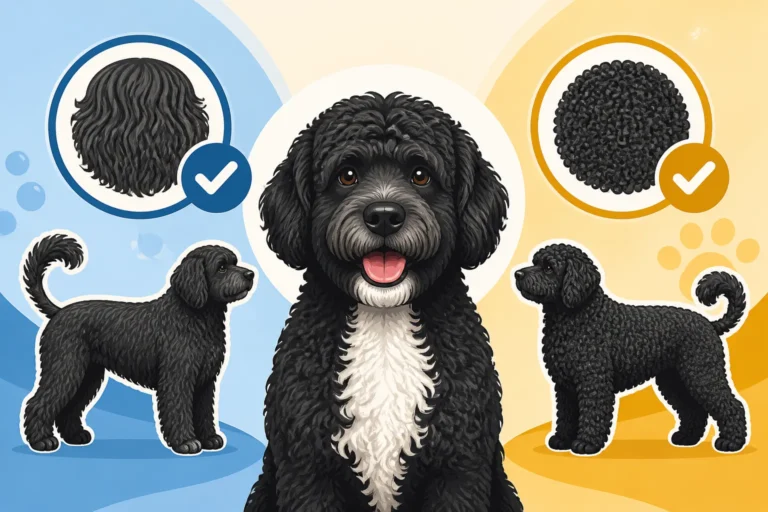
When you delve into the world of Portuguese Water Dogs, you'll quickly learn there are two officially recognized coat types: curly and wavy. While both share the same non-shedding, single-layer characteristic, their appearance and even their feel are quite different. It's not uncommon for a single litter to produce puppies with both types, which can be a fun surprise for breeders and new owners alike. Understanding these distinctions is key to appreciating the breed's diversity.
The curly coat is dense, compact, and forms tight, cylindrical curls that lie close to the body, almost like ringlets or tight coils. When wet, these curls become even more pronounced. Imagine tiny springs covering your dog from head to tail, often with a slightly duller sheen than the wavy coat. This density provides excellent insulation in cold water. People often describe the curly coat as feeling more like wool, especially if it's kept longer. It's a striking look, almost regal in its uniformity. You might hear people refer to these dogs as having a "heavy" coat.
On the other hand, the wavy coat is, as the name suggests, softer and less tightly curled, forming gentle waves rather than distinct ringlets. It often has a noticeable sheen, appearing somewhat glossy compared to the curly coat. The hair tends to be longer and looser, sometimes falling into a shaggier look if not regularly trimmed. This coat type can often appear fuller and more flowing, particularly around the ears and tail. Many owners find the wavy coat feels silkier to the touch. Both coat types are equally correct for the breed standard, but they do present slightly different grooming challenges and visual appeals. For a deeper dive, check out Curly or Wavy: the Two Portuguese Water Dog Coats and How a Curly Coat Differs From a Wavy Coat.
The "Hypoallergenic" Myth and the Reality of Shedding
Many people are drawn to Portuguese Water Dogs because they’re often touted as "hypoallergenic." This is a deeply ingrained misconception that, while well-intentioned, can lead to frustration and disappointment if not understood properly. The truth is, no dog is truly 100% hypoallergenic. The term "hypoallergenic" simply means "less allergenic," not "non-allergenic." It implies a reduced likelihood of triggering allergic reactions in sensitive individuals, but it certainly doesn't guarantee it.
The reason PWDs are considered "less allergenic" is due to their unique single coat, which lacks an undercoat and sheds very minimally compared to double-coated breeds. Instead of shedding loose hair all over your furniture and floors, their dead hair tends to get caught within the curls or waves of their existing coat. This means fewer airborne allergens from dander and hair. However, this also means that the hair needs to be brushed out regularly to prevent matting and to remove those dead hairs. If not, mats will quickly form, becoming tight, painful, and potentially leading to skin issues.
So, while you might not find tumbleweeds of dog hair rolling across your floors, you'll certainly be pulling out plenty of hair from your brush. It's a different kind of "shedding" experience, one that shifts the burden from your vacuum cleaner to your grooming tools. For those with severe allergies, spending time with a PWD before committing to one is always the best advice, as individual reactions can vary greatly. Understanding How Portuguese Water Dog Is Hypoallergenic can really help set expectations.
When the Puppy Coat Transforms
Watching a Portuguese Water Dog puppy grow is a joy, and part of that journey involves a significant change in their coat. When they’re young, PWD puppies typically have a soft, fluffy coat that's delightful to pet. It might already show hints of their adult curly or wavy texture, but it’s generally much softer and less dense than what they'll carry as adults. This puppy fluff is adorable, but it's also a precursor to a period that can challenge even the most dedicated new owner.
Around 4 to 8 months of age, sometimes even later, your puppy will begin to "blow" their puppy coat, meaning it will start to be replaced by the coarser, denser adult coat. This transition phase, often referred to as the "coat change," can be incredibly frustrating. The softer puppy fur mixes with the emerging adult fur, creating a perfect storm for matting. It's during this time that daily, thorough brushing becomes absolutely critical. If you miss a few days, you can quickly find yourself dealing with large, painful mats that may require professional intervention or even shaving the dog down.
Many first-time PWD owners are caught off guard by the intensity of the coat change. It feels like overnight your easy-to-manage puppy coat turns into a matting disaster. This period can last for several months, sometimes even up to two years, as the adult coat fully establishes itself. Patience, diligence, and a good set of grooming tools (perhaps ordered from Chewy) are your best friends during this phase. It's a temporary challenge, but one that undeniably impacts your dog's appearance and comfort, so being prepared for Why a Portuguese Water Dog Mats Worst During the Change is essential.
A Rainbow of Colors: Understanding Portuguese Water Dog Hues
Beyond their distinctive coats, Portuguese Water Dogs come in a beautiful array of colors, from deep, rich solids to striking parti-colors. While some breeds have very strict color standards, the PWD offers a bit more variety, reflecting their working history where color was far less important than ability. This spectrum of colors adds to the visual appeal of the breed, ensuring there's a PWD to capture nearly anyone's heart.
The Standard Solids: Black, Brown, and White
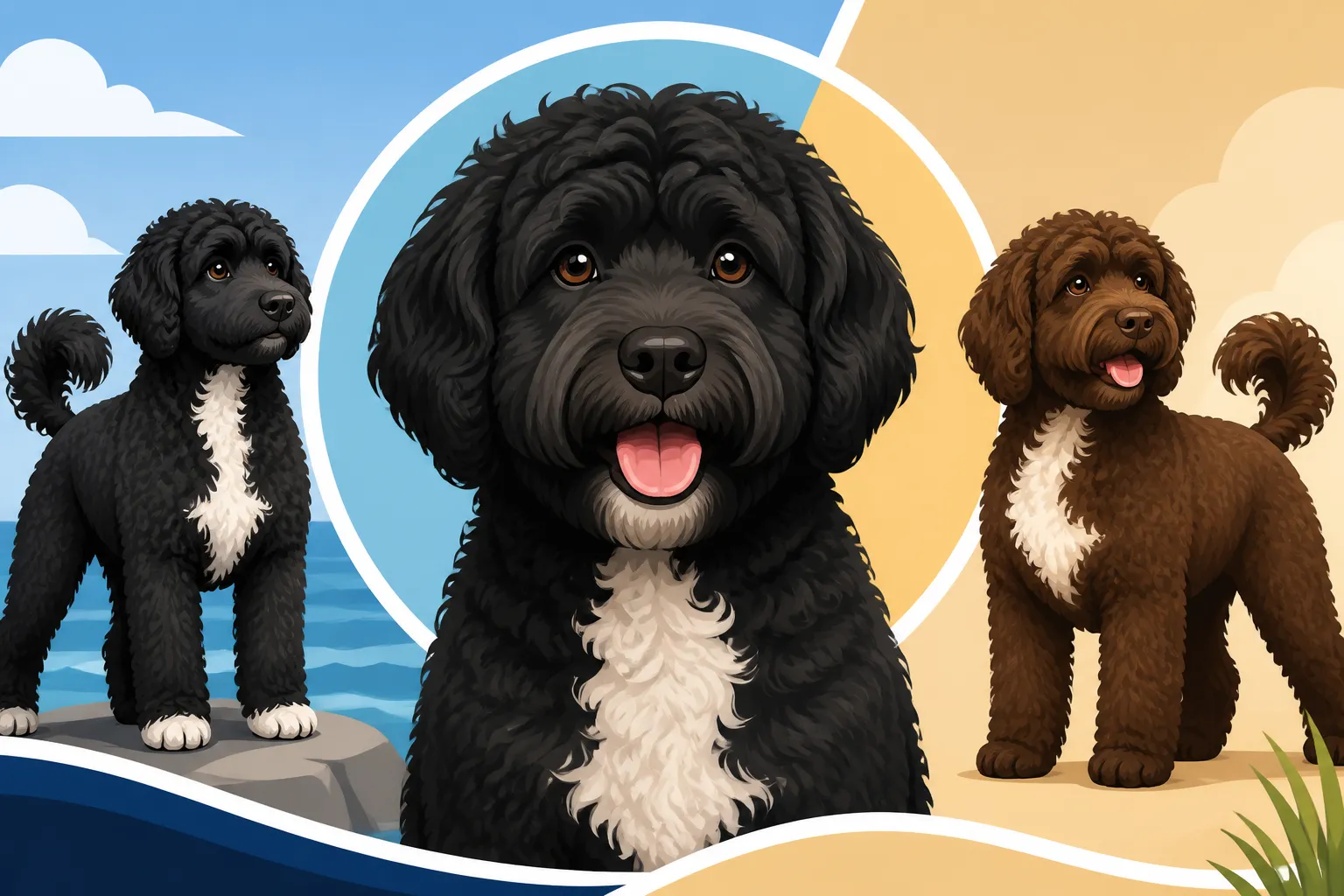
The most commonly seen Portuguese Water Dog colors are the solids: black, brown, and white. These are all perfectly acceptable within the breed standard and are equally beautiful in their own right. Each solid color can have its own range of shades, adding subtle variations to their appearance.
Black PWDs are perhaps the most recognized, especially given the breed's rise to fame with Bo and Sunny. Their coats are typically a deep, true black, often with a lovely sheen. Sometimes, a black PWD might have a small patch of white on their chest or feet, which is usually acceptable. However, like many black-coated breeds, some black PWDs can experience "fading" as they age or with sun exposure, developing a reddish or brownish tint. This isn't a fault but a natural occurrence for many black dogs. You can learn more about this in Whether a Black Portuguese Water Dog Fades.
Brown PWDs come in a stunning variety of shades, from very dark, almost black chocolate to lighter, café au lait tones. These rich, earthy colors are incredibly appealing and, like the black coats, can show subtle variations depending on genetics and sun exposure. A brown PWD's nose and eye rims should match their coat color, making for a harmonious and striking appearance. Whether it's a deep liver or a lighter tan, the brown PWD is a beautiful sight. Find out more on Whether a Brown Portuguese Water Dog Is Standard.
White PWDs are less common but equally striking. Their coats are typically a pure, snowy white, and they often have black pigment on their nose, lips, and eye rims, providing a lovely contrast. Occasionally, a white PWD might have small patches of color, known as "parti-color" if large enough, but a true solid white is a sight to behold. It's a less frequently seen color, which makes encountering a white PWD even more special. Discover How a Portuguese Water Dog Can Be All White for more details.
Parti-Colors and Irish Markings: Beyond the Solids
While solids are prevalent, Portuguese Water Dogs also come in a fascinating array of parti-colors and Irish markings, adding even more diversity to their visual appeal. These patterns are not only beautiful but are also perfectly within the breed standard, showing the historical breadth of the breed's genetics.
Parti-color PWDs have a white base coat with patches of another solid color, such as black or brown. These patches can vary widely in size and placement, from large, clearly defined areas to smaller, scattered spots. Think of it as a canvas of white adorned with artistic splashes of color. A common variation might be a black and white parti or a brown and white parti. The distribution of these patches is entirely unique to each dog, making every parti-colored PWD truly one-of-a-kind. These dogs often have very expressive faces, with the color patterns highlighting their eyes or framing their features.
Irish markings, on the other hand, are a specific type of white patterning. An Irish marked PWD typically has a solid body color (black or brown) with white markings on the chest, muzzle, feet, and a white tip on the tail. It’s a symmetrical pattern that is quite distinct and appealing. This pattern can be very subtle, with just a flash of white on the chest, or more pronounced. It's a classic and often elegant look that many PWD enthusiasts adore. Whether solid, parti-color, or Irish marked, the color of a Portuguese Water Dog is just one more facet of their charm. Check out Whether a Parti Colored Portuguese Water Dog Is Standard and How a Portuguese Water Dog Can Have a White Chest for further reading.
Do Their Coats Change Color Over Time?
It's a common question among PWD owners, especially those with puppies or darker-colored dogs: "Will my dog's coat color change?" The answer is often yes, to varying degrees. Just like human hair, a dog's coat can be influenced by genetics, sunlight, and age. These changes are usually subtle and natural, but they can sometimes surprise owners who expected their dog's color to remain exactly the same from puppyhood to old age.
One of the most frequent color changes seen in Portuguese Water Dogs, particularly in black individuals, is a phenomenon often called "sun-bleaching" or "rusting." A rich black coat can develop reddish or brownish highlights, especially on areas exposed to the most sun, like their back and ears. This isn't a sign of poor health but simply a natural reaction to UV light. Brown PWDs can also lighten or darken over time. Some brown coats might deepen, while others might become a softer, lighter shade of brown, again influenced by sun exposure. These changes are part of the dog's life story, adding character to their appearance.
As PWDs age, regardless of their original color, it's also common for them to develop "grizzling" or graying around their muzzle, eyes, and sometimes on their paws. This is a normal sign of aging, much like how humans get gray hair. A once jet-black muzzle can slowly turn salt-and-pepper, softening their overall look. Some dogs might gray more extensively than others, with genetics playing a role. So, while your PWD might start out one shade, be prepared for a beautiful evolution of their coat color over their lifetime. It’s all part of the unique journey with a Portuguese Water Dog, and it's certainly nothing to worry about. Find out more about Whether a Portuguese Water Dog Goes Gray Early.
Built for the Water: The Portuguese Water Dog Physique
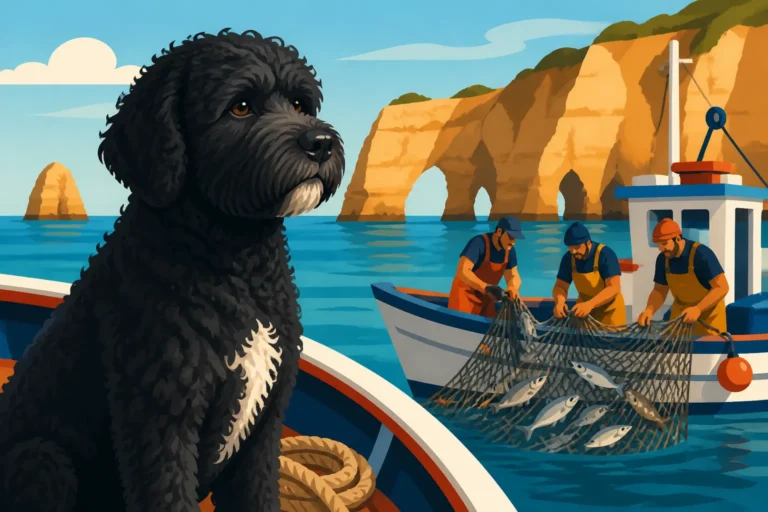
Every aspect of the Portuguese Water Dog's physical appearance is a testament to their heritage as a working dog on the fishing boats of Portugal. They are not just pretty faces; they are meticulously designed athletes, crafted by nature and selective breeding to excel in the water. From their sturdy build to their unique feet, every feature serves a purpose in their original maritime role.
Size and Stature: What to Expect from an Adult PWD
The Portuguese Water Dog is a medium-sized breed, falling into a sweet spot that makes them large enough to be substantial without being overwhelmingly huge. This size was practical for working on boats, allowing them to be agile and powerful in the water, yet compact enough to not take up too much space on deck. There's a noticeable difference in size between males and females, though both possess the characteristic strength and athleticism.
Adult males typically stand a bit taller and are more heavily muscled than females. They generally range from around 20 to 23 inches at the shoulder and can weigh anywhere from 42 to 60 pounds. They have a more masculine, robust build. Females are usually a bit smaller and lighter, standing between 17 to 21 inches at the shoulder and weighing between 35 to 50 pounds. They have a distinctly feminine and often more refined appearance. Both sexes should appear well-balanced, strong, and capable, with a deep chest and well-sprung ribs to allow for powerful swimming and good lung capacity.
It's important to remember that these are general guidelines. Individual dogs can fall slightly outside these ranges, and things like diet and exercise play a big role in their overall condition. What's crucial is that they maintain a healthy weight and are proportionate. They should never look overly delicate or excessively bulky, but rather convey an impression of strength and endurance. Understanding What a Portuguese Water Dog Weighs and How Tall It Stands is a good starting point for prospective owners.
Webbed Feet and Tail: Tools of the Trade
Two of the most distinctive and functional physical features of the Portuguese Water Dog are their fully webbed feet and their powerful, rudder-like tail. These aren't just charming quirks; they are evolutionary adaptations that were absolutely essential for their job as aquatic retrievers and helpers on fishing boats.
Their feet are a marvel. Each paw is equipped with strong, thick webbing between the toes, extending almost to the tips. This webbing acts like a set of natural flippers, providing increased surface area when propelling themselves through water. Imagine trying to swim with your fingers spread wide versus cupping them together – the webbing gives them that extra push. This isn't just a slight membrane; it's robust and clearly visible. It allows them to swim with remarkable power and efficiency, making them incredibly strong swimmers. They can cover impressive distances in the water, a testament to this unique design. You can learn more about Why a Portuguese Water Dog Has Webbed Feet and How Much a Portuguese Water Dog's Webbing Adds to Its Speed.
The tail of a Portuguese Water Dog is also incredibly important for their aquatic prowess. It's thick at the base, tapering to a point, and often carried in a distinctive ring or semicircle over their back when alert or excited. But in the water, that tail transforms into a powerful rudder. It helps them steer, balance, and make quick turns, allowing them to navigate currents and retrieve objects with precision. Without this strong tail, their agility in the water would be significantly hampered. It’s why the breed standard specifically calls for a tail that is never docked. These two features, the webbed feet and the rudder tail, highlight just how perfectly engineered the PWD is for its watery environment, a true example of form following function. Discover Why a Portuguese Water Dog's Tail Works as a Rudder for more fascinating details.
The Head and Expression: More Than Just a Pretty Face
While the coat and overall physique tell a story of function, the head and expression of a Portuguese Water Dog add layers of intelligence, loyalty, and sometimes, a mischievous charm. Their facial features contribute significantly to their breed type and convey a sense of alertness and focus that aligns perfectly with their working heritage. It's an important part of their overall appearance that breeders and judges pay close attention to.
A typical PWD head is strong and well-proportioned to the body. They have a broad skull and a distinct stop, leading to a muzzle that is slightly shorter than the skull. Their lips are thick, and their teeth should meet in a strong scissor bite, essential for gripping and retrieving. But it's their eyes that truly capture attention. They are medium in size, set fairly wide apart, and can range in color from shades of brown to black, always harmonizing with their coat color. The expression is alert, intelligent, and often very keen, reflecting their bright minds and eagerness to engage. It's an expression that says, "I'm ready for anything."
Their ears are set moderately high, are heart-shaped, and lie flat against the head. When they are alert or listening intently, those ears can perk up slightly, further enhancing their engaged expression. The combination of their broad forehead, expressive eyes, and well-set ears gives them a distinct look that is undeniably Portuguese Water Dog. It’s a face that speaks of loyalty and readiness for a task, whether that's retrieving a lost fishing net or playing fetch in the backyard. Their entire appearance, from their head to their webbed toes, is a harmonious blend of purposeful design and captivating beauty.
The Grooming Factor: How Appearance Links to Care
The Portuguese Water Dog's striking appearance isn't just something they're born with; it's something that is carefully maintained through diligent grooming. Without proper care, that beautiful, non-shedding coat can quickly become a matted mess, impacting not only their looks but also their comfort and health. Grooming is an intrinsic part of PWD ownership, and the way you choose to manage their coat directly dictates their aesthetic.
How Your Clip Choice Affects Their Look
The type of clip you choose for your Portuguese Water Dog will dramatically alter their appearance. Unlike many breeds where grooming is a minor touch-up, with a PWD, the clip can transform them from a shaggy mop to a sleek athlete, or even a fancy show dog. Understanding the options is key to both their presentation and your grooming commitment.
The two main clips you'll typically see are the "Retriever clip" and the "Lion clip." The Retriever clip is by far the most popular for pet PWDs. In this style, the coat is clipped evenly all over, leaving it at a consistent length, usually between one inch and a few inches, depending on preference and coat texture. This clip gives the dog a uniform, athletic appearance, emphasizing their muscular build. It's often chosen for its practicality, as it's easier to maintain, less prone to matting, and still provides adequate protection. Many PWD owners find this look to be the most fitting for their active companions, and it's also common in conformation events for younger dogs. Check out The Retriever Clip Is the Coat Most Portuguese Water Dogs Wear for more information.
The Lion clip is the traditional, historic clip associated with the breed, often seen in the show ring and on old working photos. In this clip, the muzzle and the hindquarters from the last rib to the tail are shaved very short, while the rest of the coat is left longer, with a plume on the tail. The idea was to keep the vital organs warm in cold water, while freeing up the hindquarters for powerful propulsion. This clip gives the PWD a truly unique and distinctive look, almost like a miniature lion. While visually striking, it requires significant maintenance to keep the shaved areas clean and the long areas free of mats. Many pet owners find the daily brushing required for the longer sections, especially after swimming, to be a considerable undertaking, as detailed in The Lion Clip Costs a Portuguese Water Dog Owner Daily Brushing. So, your choice of clip isn't just about aesthetics; it's about lifestyle.
Maintaining the Coat Type You Love
Regardless of whether your Portuguese Water Dog has a curly or wavy coat, or which clip you choose, consistent maintenance is non-negotiable if you want to keep them looking their best and feeling comfortable. This isn't a breed you can neglect for weeks without consequences. Their unique coat, while low-shedding, is a magnet for mats if not properly tended to.
For a pet PWD in a Retriever clip, brushing at least 2-3 times a week, and often daily if they are swimming frequently or have longer hair, is essential. You'll need a good slicker brush and a metal comb to work through the entire coat, making sure to reach the skin. Pay particular attention to areas prone to matting, such as behind the ears, under the legs, in the armpits, and under the collar or harness. These spots tend to tangle quickly due to friction. Regular baths, followed by thorough drying with a force dryer, are also crucial to keep the coat clean and prevent skin issues that can hide beneath their thick fur. For these grooming essentials, many owners rely on reputable online retailers like Chewy to stock up.
If you opt for the more elaborate Lion clip, your grooming commitment escalates. The contrast between the shaved and long areas means you need to re-clip the shaved sections regularly to maintain the sharp lines, while meticulously brushing and conditioning the longer sections. This often means more frequent trips to a professional groomer or investing a significant amount of time learning to do it yourself. Neglecting the coat for even a short period can lead to uncomfortable mats that pull on the skin and can be painful to remove. The key to a beautiful PWD appearance, whether curly or wavy, in a Retriever or Lion clip, lies in understanding and embracing the consistent grooming required.
The Importance of Regular Grooming for Health and Appearance
Beyond just looking good, regular grooming is absolutely vital for the overall health and well-being of your Portuguese Water Dog. It's not just a superficial act; it's a preventative measure against a host of potential problems that can arise from a neglected coat. A PWD whose coat is allowed to become matted isn't just unsightly; they're uncomfortable, potentially in pain, and at risk for various health complications.
Mats, especially tight ones that form close to the skin, can pull and cause irritation, leading to skin infections. They can also hide parasites, wounds, or skin conditions, making it difficult to spot problems early. In hot weather, a severely matted coat can trap heat, leading to overheating, which is particularly dangerous for an active dog. Furthermore, mats can restrict movement, making walking and playing difficult and painful. Beyond the coat itself, regular grooming sessions allow you to inspect your dog's skin, ears, eyes, and paws. You can check for lumps, cuts, redness, ear infections (a common issue for water dogs, as discussed in Why a Swimming Dog Gets Ear Infections), or anything out of the ordinary that might warrant a vet visit.
Maintaining their coat in good condition also prevents the need for drastic measures, like shaving your dog down completely to remove severe matting. While sometimes necessary, shaving can temporarily strip them of their natural insulation and protection, and it can take a long time for the full coat to grow back. Therefore, consistent brushing, bathing, and clipping, along with routine checks of their nails and ears, are not just about aesthetics. They are fundamental components of responsible Portuguese Water Dog ownership that directly impact their comfort, happiness, and long-term health. Think of it as preventative medicine, helping your PWD stay vibrant and healthy for The Twelve to Fifteen Years a Portuguese Water Dog Gets.
Distinguishing Your PWD from Other Breeds
With their unique appearance, Portuguese Water Dogs often draw comparisons to other breeds, particularly those with similar curly coats or a working history in water. However, a closer look reveals distinct differences that set them apart. Understanding these nuances helps clarify their unique identity and prevents common misidentifications.
Portuguese Water Dog vs. Standard Poodle: Spotting the Differences
One of the most common comparisons, and often confusions, arises between the Portuguese Water Dog and the Standard Poodle. Both are active, intelligent, curly-coated breeds, but they possess clear physical and temperamental distinctions. It’s important to appreciate these differences to truly understand what a PWD is all about.
Physically, while both have curly, non-shedding coats, the texture and density often differ. The Poodle's coat tends to be finer and softer, often described as woolly, and can be clipped into a wider array of elaborate styles. The PWD's coat, whether curly or wavy, is typically coarser and more robust, designed for protection in water, and generally kept in more utilitarian clips like the Retriever or Lion clip. Beyond the coat, their body types are quite distinct. The PWD is typically more squarely built and muscular, with a deeper chest and more substantial bone, reflecting its history of arduous physical labor on boats. The Standard Poodle, while also athletic, tends to be more elegant and refined in build, often appearing taller on leg with a more graceful outline.
Their heads also differ. A PWD has a broader skull and a more defined stop, leading to a strong, medium-length muzzle. Poodles typically have a longer, more refined muzzle and a narrower skull. The PWD’s tail is thick at the base and serves as a rudder, often carried over the back. A Poodle's tail is usually carried higher and can be docked, though this practice is becoming less common. While both are highly intelligent, their working styles differ, with the PWD being more prone to independent thought and improvisation, characteristic of a dog that had to make quick decisions at sea. Delve into How a Portuguese Water Dog Differs From a Standard Poodle for a full comparison.
PWD vs. Spanish Water Dog: A Tale of Two Water Dogs
The confusion between the Portuguese Water Dog and the Spanish Water Dog is understandable, given their similar names and shared historical roots in aquatic work on the Iberian Peninsula. However, despite their "water dog" title, they are distinct breeds with noticeable differences in appearance and coat type.
The most obvious distinction lies in their coats. The Spanish Water Dog's coat is always curly and forms characteristic "cords" or ringlets when left to grow long, which is a key feature of the breed. Their coat is never brushed or combed in the traditional sense; instead, it is either left to cord naturally or clipped short. The PWD, as we've discussed, can have both curly and wavy coats, and is actively brushed to prevent matting and maintain its texture. The texture of the SWD's coat is often described as woolly or goat-like, whereas the PWD's coat feels different.
Beyond the coat, there are differences in their general build and facial features. The Spanish Water Dog tends to be a slightly more rustic-looking breed, often with a more compact and less refined build than the PWD. Their ears are often smaller and set higher, and their overall head shape can be a bit different. The SWD typically has a shorter tail, often naturally bobbed or docked, whereas the PWD's long, powerful tail is crucial for its swimming ability and is never docked. While both breeds are intelligent and active, understanding these visual cues is crucial to telling these two fascinating water dogs apart. Exploring How a Portuguese Water Dog Differs From a Spanish Water Dog offers a deeper look at their unique traits.
The Unique PWD Silhouette
Beyond individual features, the overall silhouette and "type" of the Portuguese Water Dog is truly unique and immediately recognizable to those familiar with the breed. It's a blend of athleticism, robustness, and a certain jaunty confidence that tells a story of their working past. This overall impression is a critical part of their appearance and what breeders strive to maintain.
When you look at a well-put-together Portuguese Water Dog, you should see a strong, athletic dog that is slightly longer than it is tall, giving it a somewhat rectangular outline. This build contributes to their power in the water and their agility on land. Their deep chest, well-sprung ribs, and muscular hindquarters speak volumes about their endurance and strength. They carry themselves with an alert, intelligent expression, often with their tail curved over their back, adding to their distinctive profile. It’s not just a collection of features; it's how they all come together to create a harmonious and purposeful whole.
Their gait is also part of their appearance, typically a free, ground-covering trot that is fluid and powerful, reflecting their ability to work tirelessly. Every line, every curve, and every angle of a PWD's body points back to their original function as a fisherman's companion. They possess a certain rugged elegance, a dog that looks equally at home fetching a buoy from rough seas or curling up by the fire after a long day. This overall silhouette, combined with their unique coat and expression, makes the Portuguese Water Dog a breed that once seen, is rarely forgotten, truly capturing the essence of their heritage.
The Show Ring Standard: What Judges Look For
For those interested in the competitive world of dog shows, understanding the breed standard for the Portuguese Water Dog is paramount. A judge isn't just looking for a pretty dog; they are evaluating how closely an individual dog conforms to the written blueprint of the ideal PWD, a standard that encapsulates its historical function and health. This goes beyond personal preference and dives into the minutiae of structure and type.
Conformation: The Ideal PWD Outline
In the show ring, judges are looking for a Portuguese Water Dog that embodies the breed's historical purpose as an aquatic working dog. This means assessing their conformation – the overall structure and outline of the dog – to ensure it aligns with the abilities required to perform its traditional duties. The ideal PWD outline is one of balanced power, agility, and endurance, a dog built to swim tirelessly and navigate rugged terrain.
The standard calls for a medium-sized, robust, and athletic dog, slightly longer than it is tall, with a strong, well-boned frame. The head should be broad with a well-defined stop and a muzzle that is slightly shorter than the skull. The eyes should be medium-sized, dark, and convey an intelligent, keen expression. The ears are heart-shaped and lie flat. A deep, wide chest and well-sprung ribs are essential for lung capacity during swimming. The loin should be short and muscular, leading to powerful hindquarters that provide propulsion. The tail is a crucial part of their balance and steering in water, so it must be undocked, thick at the base, and carried over the back in a ring or curve when active.
Every part of their anatomy is considered in relation to their function. For instance, their strong, straight forelegs and moderately angled hindquarters are important for efficient movement. Their famously webbed feet are also meticulously checked for proper structure and webbing. Ultimately, a judge is looking for a dog that, even standing still, looks like it could leap into the water and perform the tasks it was bred for. This adherence to the functional ideal is what defines a top-tier show PWD. Understanding What a Correct Portuguese Water Dog's Outline Looks Like is the first step for anyone considering the show ring.
Acceptable Colors and Coat Types in Competition
While conformation focuses on the structure, the breed standard also outlines the acceptable colors and coat types for Portuguese Water Dogs in competition. This ensures consistency within the breed and acknowledges the historical variations that have been present for centuries.
Both the curly and wavy coat types are equally acceptable in the show ring. Judges will assess the quality of the coat – its texture, density, and condition – to ensure it meets the standard. It should feel robust and protective, not overly fine or sparse. The coat should also be clean, free of mats, and well-maintained, whether in a Retriever clip or a Lion clip. While the Lion clip is traditional and often chosen for its striking historical appeal, the Retriever clip is also perfectly acceptable, especially for younger dogs or those with slightly different coat growth patterns. Ultimately, the quality and presentation of the coat are what matter, rather than a strict preference for one type over another. Explore Whether Both Portuguese Water Dog Clips Are Allowed in the Ring for specific guidelines.
Regarding colors, all solid colors (black, white, and various shades of brown) are acceptable, as are combinations of these colors with white, such as parti-colors or Irish markings. The key is that the pigment should be rich and even for the solid areas, and the markings should be distinct. For instance, a black dog should have a true black coat, not a faded or rusty one, unless it's a natural aging process. The nose, lips, and eye rims should be pigmented, typically black for black or white dogs, and liver for brown dogs. Any deviation from these color and pigment standards can be considered a fault. The variety of acceptable colors and coat types highlights the breed's diverse aesthetic while still maintaining a cohesive breed identity.
Faults That Can Affect a PWD's Show Career
In the competitive world of dog shows, understanding what constitutes a fault is just as important as knowing the ideal traits. Faults are deviations from the breed standard that can range from minor imperfections to serious structural deficiencies, and they can significantly impact a Portuguese Water Dog's success in the show ring. Judges are trained to identify these and weigh their severity.
Minor faults might include slight variations in coat texture, a less-than-ideal tail set, or eyes that are a bit too light in color. These typically result in lower placings but don't disqualify a dog. However, more serious structural faults can prevent a dog from ever being competitive. Examples include incorrect bite (undershot or overshot jaw), unsound movement (any lameness or awkward gait), or a body shape that is too long, too short, too heavy, or too refined, deviating significantly from the muscular, rectangular outline. A lack of proper webbing in the feet, which is fundamental to the breed's purpose, would also be a serious fault.
Disqualifying faults are those so severe that a dog cannot be awarded any placement. These often include aggression or extreme shyness, albinism (lack of pigment), or any coat color or pattern not explicitly allowed by the standard. For PWDs, having an improper coat – a soft, fluffy, continuously growing coat that sheds excessively, which is a genetic fault – is a disqualification. Also, an undocked tail is explicitly required, so a docked tail would be a disqualification. Understanding Which Faults Judges Penalize in a Portuguese Water Dog is crucial for anyone considering showing their PWD, as these standards are designed to protect the integrity and functional health of the breed.
Common Misconceptions About PWD Appearance
Even with their rising popularity, several misconceptions about the Portuguese Water Dog's appearance persist. These myths often stem from incomplete information, anecdotal evidence, or comparing them to other breeds, and they can lead to misunderstandings for prospective owners. Clearing up these common fallacies is important for a realistic picture of the breed.
"Miniature" or "Giant" PWDs: The Truth About Size
One persistent myth is the idea that there are "miniature" or "giant" versions of the Portuguese Water Dog. It's a misconception that can arise from people encountering unusually small or large individuals, or simply from a misunderstanding of breed standards. The truth is, there is only one size of Portuguese Water Dog, and it falls within a well-defined medium range.
The breed standard specifies a height and weight range that delineates what constitutes a correct-sized PWD. As discussed, males typically stand between 20-23 inches and females 17-21 inches. Any dog significantly outside these parameters would be considered a deviation from the breed standard. The "miniature" myth might arise from seeing an undersized female or a particularly small puppy and assuming it represents a separate variety. Similarly, a very large, heavily boned male might lead someone to believe in a "giant" type. However, these are simply individual variations that fall outside the ideal, not recognized sub-types of the breed.
The existence of "designer dogs" or cross-breeds that are marketed with "mini" or "maxi" variations can sometimes fuel this confusion for purebred dogs. But for the Portuguese Water Dog, the standard is clear and singular: a medium-sized, robust, and athletic companion. Breeders strive to produce dogs within this range to maintain the breed's historical functionality and health. Be wary of anyone trying to sell a PWD advertised as a "mini" or "giant," as this is not consistent with the breed's established characteristics. Learning Whether a Miniature Portuguese Water Dog Exists helps debunk this myth.
The Impact of "Improper Coat" on Appearance
The "Improper Coat" (IC) in Portuguese Water Dogs is a genetic fault that significantly impacts their appearance and is a critical point of concern for responsible breeders. It’s not just a minor aesthetic variation; it's a trait that fundamentally changes the protective quality and maintenance needs of their coat.
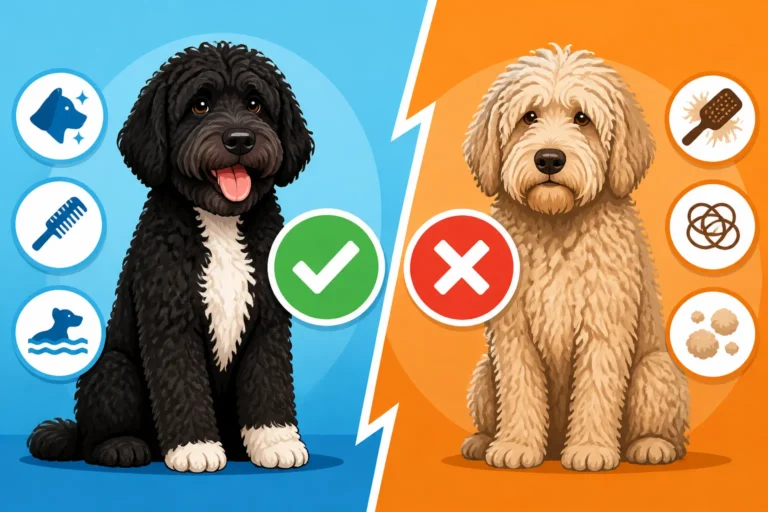
An Improper Coat means the dog has a soft, fluffy, continuously growing coat that sheds significantly, much like that of a Golden Retriever or a Labrador. Unlike the correct PWD coat, which is designed to be water-resistant and minimally shedding, the IC coat lacks these vital characteristics. It also tends to be much more prone to matting and will require a different kind of grooming regimen than a proper PWD coat. Visually, an IC dog will look distinctly different; their coat will appear much fluffier and less dense, often lacking the tight curls or waves of a correct PWD. The hair on their face might also be longer and softer.
For those who acquired a PWD hoping for a non-shedding companion, an Improper Coat can be a rude awakening, as these dogs do shed. While an IC dog can still be a wonderful pet and is generally healthy, it does not conform to the breed standard and cannot be shown in conformation events. Responsible breeders test their breeding stock for the IC gene to avoid producing affected puppies. If a puppy has an Improper Coat, they are often sold at a lower price and on spay/neuter contracts to prevent them from being bred. Understanding What an Improper Coated Portuguese Water Dog Looks Like is essential for distinguishing this genetic trait.
Why Your PWD Might Not Look Like Bo or Sunny
When the Obama family welcomed Bo, and later Sunny, to the White House, the Portuguese Water Dog breed surged in popularity. Suddenly, everyone recognized the breed, and many desired a PWD that looked "just like Bo." However, it's important to realize that Bo and Sunny, while excellent examples of the breed, represented only a small fraction of the PWD's diverse appearance. Expecting every PWD to be a carbon copy is unrealistic and overlooks the natural variations within the breed.
Bo and Sunny were both black, curly-coated males. While black is a common color and the curly coat is one of the two accepted types, PWDs also come in various shades of brown, white, and parti-colors. They can also have a wavy coat, which looks quite different from Bo's tight curls. The media often focused on their specific look, inadvertently creating an idealized image that isn't representative of the breed's full spectrum. Furthermore, the way a dog is groomed can drastically change its appearance. Bo and Sunny were typically kept in a fairly uniform Retriever clip, which gives a clean, athletic look. Other PWDs might have longer coats, or be trimmed in a traditional Lion clip, completely altering their silhouette.
Just like people, individual dogs within a breed have their own unique characteristics and variations. While Bo and Sunny were fantastic ambassadors for the breed, they were just two dogs. Your PWD might be brown and wavy, black and white parti-colored, or have a slightly different build, and still be a perfectly healthy, standard-conforming Portuguese Water Dog. Appreciating the full range of What a Portuguese Water Dog Looks Like allows you to embrace the individuality of each dog and the rich diversity of the breed.
| Feature | Curly Coat | Wavy Coat |
|---|---|---|
| Texture | Dense, compact, often described as woolly | Softer, looser, often described as silky |
| Appearance | Tight, cylindrical curls; duller sheen | Gentle waves; noticeable sheen, shaggier |
| Maintenance | Prone to tight mats if not brushed daily | Can mat quickly, especially when long |
| Insulation | Excellent in cold water | Very good in cold water |
| Shedding | Minimal, hairs trapped in curls | Minimal, hairs trapped in waves |
| Growth | Continuous | Continuous |
Disclaimer
This article is for general informational purposes only and does not constitute professional advice. Laws, prices and regulations vary by location and change over time. Consult a qualified professional for guidance on your specific situation.