Dock Diving and Water Trials With a Portuguese Water Dog
If you're a Portuguese Water Dog owner, you already know the magnetic pull water has on these incredible canines. It’s practically in their DNA! But simply letting them splash around is just scratching the surface of their incredible aquatic potential. This guide dives deep into dock diving and water trials, offering a comprehensive look at how these sports can channel your PWD’s natural talents, provide unparalleled enrichment, and forge an even deeper bond between you.
The Unmistakable Drive: Why Portuguese Water Dogs Excel in Water Sports
For anyone who lives with a Portuguese Water Dog, their innate connection to water isn't just a quirk; it's a defining characteristic. This isn't a breed that tolerates water or occasionally enjoys a dip; it's a breed that lives for it, thrives in it, and often seems more at home in the waves than on dry land. Understanding this profound relationship is the first step in appreciating why they excel so naturally in competitive water sports like dock diving and formal water trials. It's not just about physical ability; it's about a deep-seated instinct passed down through generations.
Born for the Water: Understanding Their Instinctive Abilities
The history of the Portuguese Water Dog is inextricably linked to the fishing fleets off the coast of Portugal. These dogs weren't just companions; they were integral crew members, performing a variety of critical tasks that demanded both intelligence and an unwavering love for the water. Imagine a bustling fishing boat, lines being cast, nets being hauled, and a keen-eyed dog waiting for its moment to spring into action. This deep historical purpose instilled in them an inherent drive to work in and around water, an instinct that remains vibrantly alive in today's PWDs. They were tasked with retrieving lost tackle, carrying messages between boats, and even driving fish into nets. It was a demanding job that required courage, stamina, and an absolute lack of hesitation when it came to plunging into cold, choppy seas.
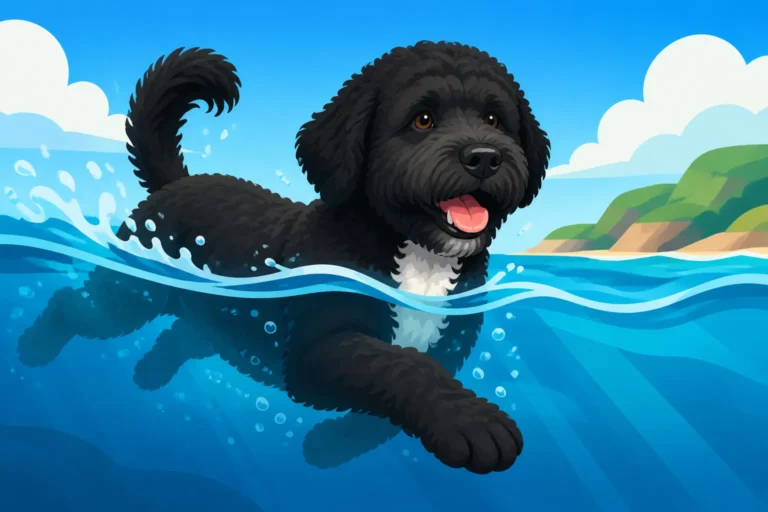
This isn't a behavior that needs to be taught from scratch; it’s practically hardwired. A young Portuguese Water Dog puppy, often before it even fully understands complex commands, will naturally gravitate towards water, splashing and retrieving with an enthusiasm that's truly infectious. You'll see them nose the edge of a puddle, paw at the garden hose, or gaze longingly at a pond, their body language conveying an undeniable desire to get wet. This innate joy means that introducing them to formal water activities often feels less like training and more like simply unleashing a talent they already possess. They don't just swim; they work the water, using their bodies and minds in a way that fulfills their ancestral purpose. When you engage your PWD in water sports, you're not just providing exercise; you're honoring centuries of breeding and allowing them to express the very essence of who they are.
This deep-seated instinct also means they approach water challenges with a different mindset than many other breeds. While some dogs might hesitate at the edge of a dock or a large body of water, a PWD typically sees it as an invitation, a playground, or even a calling. Their enthusiasm is a powerful motivator, not just for them, but for their handlers too. It transforms what could be a chore into a shared adventure, reinforcing the incredible partnership that these dogs are so famous for. When a PWD takes to the water, they move with a confidence and purpose that clearly demonstrates that this is where they belong.
Physical Attributes That Make Them Water Warriors
Beyond their instinct, the Portuguese Water Dog possesses a suite of physical adaptations that make them uniquely suited for aquatic prowess. First and foremost are their distinctive webbed feet. These aren't just slightly webbed; they are significantly so, acting like powerful paddles that propel them through water with incredible efficiency. Unlike many land-focused breeds whose paws are primarily designed for traction on solid ground, the PWD's feet maximize propulsion and minimize drag in water, giving them a distinct advantage in terms of speed and endurance. This anatomical feature is a direct result of generations of selective breeding for a life spent in the water, allowing them to swim for extended periods without fatiguing quickly.
Their body structure further reinforces their aquatic capabilities. Portuguese Water Dogs have powerful, well-muscled hindquarters that act as a strong engine for swimming, pushing them forward with considerable force. Their deep chest and well-sprung ribs contribute to excellent lung capacity, allowing them to hold their breath longer and endure strenuous water activity. But perhaps one of their most unique and functional features in the water is their thick, strong tail. Often described as a "rudder," the tail is carried high and used actively to steer, balance, and change direction with surprising agility while swimming. This rudder-like action is crucial for complex tasks in water trials, where precise movements and turns are often required. Why a Portuguese Water Dog's Tail Works as a Rudder
And then there's that iconic coat. Whether curly or wavy, the Portuguese Water Dog's single coat is dense, waterproof, and provides excellent insulation against cold water. It's not a fluffy, absorbent coat that would weigh them down; rather, it’s designed to shed water quickly and offer protection, akin to a natural wetsuit. This insulating quality means they can remain comfortable and efficient in water temperatures that would send other breeds shivering to shore. While it requires diligent grooming to prevent matting, especially after swims, its functional design is a testament to the breed's origins. These combined physical traits—webbed feet, powerful musculature, and a specialized coat—all work in harmony to create an animal perfectly engineered for a life of water work and sport. Why a Portuguese Water Dog Has Webbed Feet
The Mental Game: Intelligence and Trainability
While physical attributes and instinct are crucial, the Portuguese Water Dog’s intelligence and temperament truly set them apart in the realm of dog sports. These are incredibly bright dogs, historically valued not just for their physical capabilities but for their ability to think independently and problem-solve alongside their human partners. Fishermen needed dogs who could understand complex commands, adapt to changing conditions, and make decisions when out of sight or beyond direct instruction. This heritage has gifted the modern PWD with a keen intellect and a strong desire to engage with their handlers in meaningful, productive ways.
Their intelligence manifests as quick learning and an impressive ability to retain information. They pick up new commands and understand complex sequences of tasks with remarkable speed. However, this intelligence comes with a caveat: PWDs are also known for their independent nature. They were bred to be partners, not automatons, and they often "think for themselves." This means training needs to be engaging, varied, and based on positive reinforcement to keep them interested and prevent boredom. Repetitive, drill-like training can quickly lead to disengagement or even creative "misinterpretations" of commands (see Training a Portuguese Water Dog That Was Bred to Think for Itself). The best approach leverages their natural enthusiasm and frames training as a fun, collaborative puzzle rather than a strict imposition.
Their trainability is further enhanced by their eagerness to please their beloved people. While they might occasionally try to "negotiate" a command or offer an alternative solution they deem superior, ultimately, they thrive on the praise and connection that comes from working successfully with their handler. This combination of high intelligence, independent thinking, and a strong desire for partnership makes them incredibly rewarding to train for intricate sports like water trials, where precision and collaboration are paramount. They enjoy the challenge, the mental stimulation, and the undeniable satisfaction of a job well done, especially when that job involves splashing around in their favorite element.
Introduction to Dock Diving: The Leap of Faith
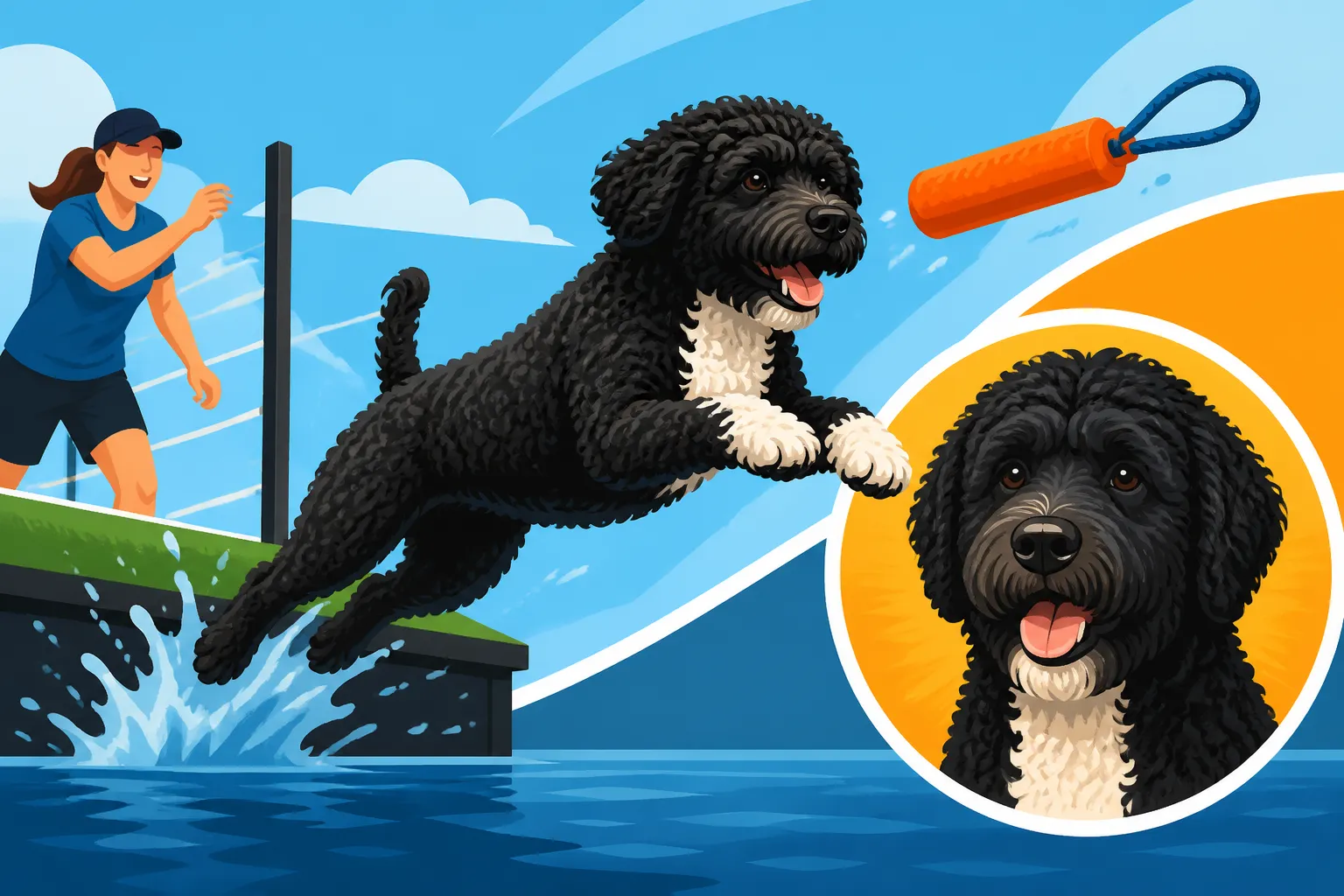
If you've ever watched a Portuguese Water Dog launch themselves off a dock with unbridled enthusiasm, a toy firmly gripped in their mouth, you've witnessed the pure joy of dock diving. It's an increasingly popular canine sport that celebrates a dog's natural drive to jump, swim, and retrieve, making it an ideal outlet for the energetic and water-loving PWD. For many owners, it’s often the first competitive water sport they explore with their dogs because of its relatively simple premise and high entertainment value.
What Exactly Is Dock Diving?
At its core, dock diving is a canine aquatic sport where dogs run down a 40-foot dock and launch themselves into a large pool (typically 40 feet long or more) to retrieve a toy. The goal depends on the specific discipline. The most common discipline, "Big Air," measures the distance the dog jumps from the end of the dock to where the base of their tail breaks the water. It’s all about getting that maximal horizontal leap. Another popular discipline is "Extreme Vertical," where the dog jumps to retrieve a toy suspended increasingly high above the water. A personal best here is about height. Then there's "Speed Retrieve," which measures how fast a dog can run down the dock, jump into the water, swim to the end of the pool, and retrieve a toy hanging at the far end. This tests both speed and swimming prowess.
The sport is dynamic, visually exciting, and incredibly engaging for both participants and spectators. It taps directly into a dog's prey drive and love for retrieving, combined with the exhilaration of a big splash. For breeds like the Portuguese Water Dog, whose entire history is rooted in water retrieval, dock diving feels like a natural extension of their instincts, albeit in a more formalized and competitive setting. There’s something undeniably captivating about watching a dog give their absolute all, flying through the air, driven by nothing more than the desire for their favorite toy. It’s a powerful display of athleticism, focus, and pure, unadulterated joy.
Unlike some other dog sports that require intricate sequences or highly specialized equipment, the basic concept of dock diving is easy to grasp, making it accessible for newcomers. While there are advanced techniques and strategies to maximize performance, the entry point is simply having a dog that loves water and retrieving. This accessibility, combined with the sheer fun factor, contributes to its widespread appeal and makes it a fantastic starting point for PWD owners looking to delve into canine sports.
Getting Started: From Backyard Sprinklers to the Big Pool
The journey to the dock diving pool often begins much closer to home. Before your PWD is launching off a professional dock, they need to be completely comfortable and confident in water, and have a strong retrieve drive on land. If your puppy is already chasing sprinklers, splashing in puddles, or trying to dunk its head in the water bowl, you're off to a great start! The first step is to foster this natural love for water in a positive, pressure-free environment. Start by playing retrieve games in shallow water – a kiddie pool, a shallow stream, or even just the edge of a lake. This helps them get used to the sensation of water on their paws and body.
Once they're happily retrieving in shallow water, gradually introduce them to deeper water. Always ensure their first experiences are positive. Never force a dog into water; this can create a lifelong aversion. Instead, use their favorite floating toy or a high-value treat to entice them. Wade in yourself if necessary, making it a fun, shared activity. Some PWDs, especially puppies, might be a little hesitant with large, deep bodies of water at first, even with their strong instincts. Patience and positive reinforcement are key. It’s important to let them discover the joy of swimming at their own pace. Teaching a Portuguese Water Dog Puppy to Enter Water
As they gain confidence, you can begin to introduce them to a low dock or a pool with easy-entry steps. The key is to make each progression feel like an exciting new game. Your PWD should associate the water and the 'dock' with high-energy fun and rewards. Remember that while a PWD's natural swimming ability is phenomenal, teaching them to enter water calmly and retrieve reliably in varied conditions is essential for their safety and success in any water sport. Always supervise closely and make sure the environment is safe and free of strong currents or hazards. The goal is to build a rock-solid foundation of water confidence before you even think about the competitive aspect. The Age a Portuguese Water Dog Can Start Swimming
Basic Equipment and Initial Training Steps
Fortunately, getting started with dock diving doesn't require a huge investment in specialized gear. The most critical piece of equipment is a sturdy, floating retrieve toy. Think about what your PWD loves: a rubber bumper, a tennis ball, a specific disc, or a soft, squishy floating toy. The toy should be highly visible in water, durable enough to withstand vigorous retrieving, and something your dog is absolutely obsessed with. Having a couple of identical toys can be helpful for building drive and practicing sequences. You might even find a great selection of durable, floating retrieve toys on Amazon that are perfect for this purpose.
For safety, especially when first introducing a dog to deep water or a new jumping scenario, a well-fitting dog life jacket is highly recommended. Even though Portuguese Water Dogs are phenomenal swimmers, a life jacket can provide an extra layer of confidence for a hesitant learner, offer buoyancy for older dogs, or simply allow you to have better control in the water. Look for one with a strong handle on the back. While not strictly "equipment," access to a safe body of water – a pool, lake, or pond – is, of course, essential. If you don't have personal access, many dog training facilities or even public dog parks now offer dedicated dog swimming areas or dock diving pools for practice.
The initial training steps focus on building drive and establishing the retrieve. Start on land or a very low, short "dock" (even a sturdy plank can work initially). The process usually involves two key components: the "place" (where the dog waits on the dock) and the "send" (the command to jump and retrieve). Begin by having your dog sit or stand at the edge, throw the toy a very short distance into the water, and then give your release command. Celebrate enthusiastically when they retrieve it. Don't worry about distance at first; focus on building a consistent, enthusiastic retrieve from the edge. As your dog's confidence grows, you can gradually increase the distance of the throw and eventually the height of the dock. The primary goal in these early stages is to make the entire experience incredibly fun and rewarding, creating a positive association with jumping and retrieving from an elevated surface.
Mastering the Dive: Techniques and Training for Dock Diving
Once your Portuguese Water Dog is comfortable with the basics of jumping from a low dock and retrieving, it's time to refine their technique and potentially boost their distance. There are a couple of primary methods handlers use in dock diving, each with its own advantages, and understanding them can help you tailor your approach to your PWD's natural tendencies.
The "Place and Send" vs. "Chase" Method
In dock diving, the two most prevalent methods for getting your dog to jump are the "Place and Send" and the "Chase" method. Each technique aims to maximize the dog's jump, but they achieve it through different mechanics and handler actions.
The "Place and Send" method involves the handler placing the dog at a designated spot on the dock, typically near the end. The handler then throws the retrieve toy first and, once the toy is in the air or has hit the water, releases the dog with a clear "go" or "jump" command. This method relies heavily on the dog's impulse control (waiting until released) and its ability to mark the toy's landing spot. It can be excellent for maximizing horizontal distance because the dog has a visual target and can launch itself with full force directly towards it. It gives the handler control over the timing of the throw relative to the dog's release. For some PWDs, especially those with strong prey drive, the wait can build immense tension and explode into a powerful jump.
The "Chase" method, on the other hand, involves the handler and dog running down the dock together. The handler carries the toy, often using it to "lure" the dog, and then throws the toy mid-run or just as the dog reaches the edge of the dock. The dog's jump is fueled by the momentum of the chase, often leading to a very energetic, speed-driven leap. This method can be particularly effective for dogs that are highly motivated by motion and the thrill of the chase. Many Portuguese Water Dogs, with their high energy and love for interactive play, naturally gravitate towards the chase method because it feels like an exciting game of pursuit. It can be challenging to coordinate the handler's throw with the dog's stride to get the perfect launch, but when executed well, it results in impressive, fluid jumps. The right choice depends on your dog's individual personality and what truly ignites their drive.
| Feature | "Place and Send" Method | "Chase" Method |
|---|---|---|
| Handler Action | Places dog, throws toy, then releases dog | Runs with dog, throws toy mid-run or at dock edge |
| Dog Action | Waits for release, then jumps towards thrown toy | Chases handler/toy, jumps with running momentum |
| Primary Advantage | Maximizes horizontal distance; builds anticipation | Maximizes speed and enthusiasm; feels like a chase |
| Key Skill for Dog | Impulse control, marking toy, strong retrieve drive | Speed, agility, high prey drive, coordination with handler |
| Common Challenge | Dog breaking early, losing enthusiasm during wait | Timing of throw, dog jumping too early or late |
| Best For | Dogs with strong focus and impulse control | Dogs with high energy and strong chase instinct |
Building Confidence and Distance
Once your Portuguese Water Dog understands the basic concept of jumping, the next step is to gradually build their confidence and extend their jumping distance. This isn't just about forcing them to jump further; it's about making them want to jump further, fueled by their intrinsic motivation and your positive encouragement. Start by consistently rewarding any and all enthusiasm. Every splash, every retrieve, every leap, no matter how small, should be met with effusive praise, high-value treats, and exciting play with their favorite toy. Remember, for a PWD, the experience itself should be highly rewarding.
Gradual progression is key. If your dog is consistently jumping a certain distance, try throwing the toy just a little bit further. Don't make drastic changes that might overwhelm or discourage them. The goal is to build incremental success. Some dogs benefit from seeing other dogs jump, so attending practice sessions or local events can be a great way to let them observe and learn. Keep training sessions short, especially in the beginning. Portuguese Water Dogs are intelligent and can maintain focus, but mental and physical fatigue can set in, making sessions less productive. Ending on a high note, when your dog is still excited and wanting more, helps maintain their enthusiasm for the next session.
Another important aspect is to work on your throwing technique. A consistent, well-placed throw can significantly impact your dog's jump. Practice throwing your dog's favorite toy so it lands in a consistent spot, slightly beyond their current jump distance, to encourage them to stretch further. Remember, confidence isn't just about physical ability; it's also about the trust between you and your dog. Your calm demeanor and consistent commands will help your PWD feel secure, allowing them to truly "go for it." With consistent, positive training, you'll be amazed at how far your PWD can fly. How Far a Portuguese Water Dog Jumps Off a Dock
Common Challenges and How to Overcome Them
Even with their natural affinity for water, Portuguese Water Dogs can encounter specific hurdles in dock diving. One common challenge is a reluctance to jump off the dock itself. While they love water, the concept of launching from an elevated platform can sometimes be daunting. To overcome this, start incredibly small. Begin by having your dog retrieve from the very edge of the dock, or even from a ramp leading into the water. Gradually introduce a tiny step or height. Use high-value treats or their absolute favorite toy to lure them over the edge. You might even need to get in the water yourself and call them, making it feel safe and inviting. Positive reinforcement for any step towards the jump is crucial.
Another challenge can be a dog that jumps before the toy is thrown or released. This often stems from high drive and impatience. This is where impulse control training comes into play. Practice "wait" or "stay" commands on the dock, gradually increasing the duration before you throw the toy. If you're using the "place and send" method, you might need to practice holding them back physically until your release command, rewarding heavily when they wait patiently. For the "chase" method, refine your timing so that the toy is thrown just as they hit the edge, discouraging premature leaps.
A third hurdle might be a lack of consistent drive for the toy once they're in the water, or a tendency to drop it prematurely. Ensure you're using a toy they are absolutely crazy about. Experiment with different textures, sizes, and weights. Make the retrieve a high-energy, celebratory event every single time. If they drop the toy, don't fuss; calmly redirect them back to it or have a second toy ready to maintain their interest. Sometimes, boredom can set in if sessions are too long or repetitive. Keep it fresh, keep it fun, and always end on a high note to leave them wanting more. Patience, consistency, and a deep understanding of your PWD's unique motivations are your best tools for overcoming these common dock diving challenges.
Understanding Portuguese Water Dog Water Trials: More Than Just Swimming
While dock diving is a spectacular display of athleticism, Portuguese Water Dog Water Trials offer a profoundly different, yet equally rewarding, experience. These trials are designed not just to test a dog's affinity for water, but to evaluate their intelligence, trainability, endurance, and most importantly, their ability to work in partnership with their handler, just as their ancestors did on the fishing boats of Portugal. It’s a testament to their heritage and a celebration of their original working purpose.
The Historical Context of PWD Water Work
To truly appreciate modern water trials, one must understand the historical role of the Portuguese Water Dog. These dogs were never merely pets; they were essential members of the fishing crew. Their job was incredibly diverse and demanded a high degree of intelligence, courage, and stamina. Imagine a rough day at sea: a net breaks, a piece of vital tackle goes overboard, or communication is needed between two distant vessels. This is where the PWD shone. They would bravely plunge into the frigid Atlantic to retrieve valuable equipment, often diving deep to recover lost items. They were also used to carry messages or samples of fish between boats, ensuring crucial information was exchanged quickly and reliably. Whether a Portuguese Water Dog Carried Messages Between Boats
Perhaps one of their most unique and fascinating tasks was "herding" fish into nets. This wasn't herding in the traditional sense of a sheepdog on land, but rather using their presence and movement in the water to direct schools of fish towards waiting nets. This required an understanding of currents, fish behavior, and precise timing. It demonstrates their incredible adaptability and problem-solving skills, applying their herding instincts to an aquatic environment. How a Portuguese Water Dog Worked a Net This historical context underpins every aspect of modern water trials. The exercises are not arbitrary; they are carefully designed to simulate the real-world tasks that these magnificent dogs performed for centuries. They test not just a dog's swimming ability, but their willingness to work under direction, their mental fortitude, and their unwavering bond with their handler.
Participating in these trials is therefore a way of connecting with the very soul of the breed, honoring their working heritage, and preserving the unique traits that make the Portuguese Water Dog so special. It’s a powerful experience to see your PWD perform tasks that their ancestors mastered, demonstrating that the spirit of the old fishing dogs lives on. It's a living history lesson, brought to life by your dog's incredible capabilities.
Different Levels and Exercises in Water Trials
Portuguese Water Dog Water Trials are typically structured in progressive levels, much like other canine sports, allowing dogs and handlers to build skills and confidence over time. These levels usually include Junior Water Dog (JWD), Water Dog (WD), and Working Water Dog (WWD), each increasing in complexity and demanding higher levels of precision, independence, and teamwork.
At the Junior Water Dog (JWD) level, the exercises focus on basic water control and retrieval. Dogs might be asked to perform a "retrieve from shore," where the handler throws an object from the shore, and the dog retrieves it and brings it back. Another common task is the "retrieve from boat," where the dog must comfortably enter a small boat, wait patiently, and then retrieve an object thrown from the boat. They might also face an "in-water retrieve," where the dog is sent to retrieve a floating object from the water. The emphasis at this level is on enthusiasm, willingness, and a basic understanding of commands in an aquatic environment. It's all about establishing a solid foundation of water confidence and cooperation.
As you progress to the Water Dog (WD) level, the exercises become more challenging. Here, you'll encounter tasks like "directed retrieves," where the dog must be guided by the handler's signals to retrieve an object that may not have been seen thrown. There might be a "blind retrieve" where the dog retrieves an object it hasn't seen placed. Dogs may also need to swim with an object in their mouth for a sustained period or perform more complex boat entries and exits. Precision, handler communication, and sustained focus become increasingly important. Finally, the Working Water Dog (WWD) level represents the pinnacle of accomplishment. These advanced exercises often simulate real-world scenarios, such as retrieving multiple objects, delivering a "message" (a contained object) between points, or performing long-distance retrieves with multiple changes of direction. These tasks demand exceptional endurance, problem-solving abilities, and an incredibly strong, intuitive partnership between dog and handler, truly echoing the versatile work of their historical counterparts. What a Water Trial Asks of a Portuguese Water Dog
Scoring and Judging Criteria
Unlike dock diving, where a precise measurement dictates the outcome, Portuguese Water Dog Water Trials are judged more qualitatively, focusing on the dog's performance, attitude, and the partnership between handler and dog. Judges are looking for a dog that not only completes the task but does so with willingness, enthusiasm, and efficiency, reflecting the breed's historical working temperament. It’s not just about what the dog retrieves, but how it retrieves it.
Key criteria include willingness and enthusiasm: Does the dog eagerly enter the water? Do they show joy in their work? A hesitant or reluctant dog, even if it eventually completes the task, will not score as highly as one that dives in with gusto. Handler control is also paramount. This means the dog responds promptly and accurately to commands, maintains focus on the task, and doesn't become distracted. The partnership is central; a dog that seems to be working independently without handler direction is less desirable than one that is clearly attuned to its human. Efficiency in completing tasks is another important factor. This involves swimming directly to the object, retrieving it quickly, and returning efficiently to the handler. Extra splashing, meandering, or unnecessary actions can deduct points.
Furthermore, judges observe the correct execution of tasks. Each exercise has specific requirements, and the dog must meet these. For instance, in a "retrieve from boat," the dog must typically remain in the boat until sent, retrieve the object, and then return to the boat without undue fuss or struggle. Any deviation from the prescribed sequence or method can result in deductions. The ultimate goal is to find a dog that demonstrates the intelligent, cooperative, and water-loving traits for which the breed was originally developed. A successful trial is a beautiful ballet of teamwork, where the PWD's natural abilities are harmonized with the handler's guidance, creating a seamless and effective working unit. It’s a truly rewarding experience to witness, and even more so to participate in.
Training for Water Trials: Developing Skill and Partnership
Training for Portuguese Water Dog Water Trials is a journey that goes beyond simple obedience; it's about cultivating a sophisticated partnership where handler and dog communicate seamlessly in a challenging aquatic environment. It requires a solid foundation, specialized skill-building, and a deep understanding of your dog's motivations and capabilities.
Foundational Obedience and Water Comfort
Before you even think about complex water trial exercises, your Portuguese Water Dog needs an absolutely rock-solid foundation in obedience. Commands like "sit," "stay," "come," and a reliable "fetch" or "take it" are not just helpful; they are non-negotiable prerequisites. Imagine being in the middle of a lake trying to direct your dog to a blind retrieve; if their recall isn't instantaneous or their "stay" isn't bulletproof, the entire exercise can fall apart. These foundational commands must be practiced extensively on land, then proofed in increasingly distracting environments, and finally, integrated into water activities. Your dog needs to understand that a command is a command, regardless of whether they are on solid ground or splashing excitedly in a pond.
Equally important is ensuring your PWD has unparalleled water comfort. This isn't just about liking to swim; it's about being completely at ease and confident in various aquatic settings. They should be comfortable in calm pools, choppy lakes, and even the open ocean if that's where trials might be held. This comfort extends to entering and exiting water gracefully, tolerating different water temperatures, and remaining focused despite the novelty of various water environments. Exposure to different types of boats, docks, and shorelines is also beneficial. Think of it as building their aquatic "street smarts." If your dog hesitates or shows anxiety in any water situation, you need to go back and reinforce that comfort before progressing. Many dog owners find that a structured obedience program, such as the one offered by BAXTER & Bella, can provide the essential ground training needed to build this kind of reliable foundation, setting the stage for more specialized water work. This program focuses on positive reinforcement and building a strong working relationship, which is precisely what water trials demand.
Once basic obedience is sound and water comfort is assured, you can begin to integrate the two. Practice your "come" command while your dog is swimming. Ask for a "stay" before they enter the water. Make sure they retrieve consistently from various depths and entry points. This integration reinforces that training isn't confined to a specific location but applies universally, building a more versatile and responsive water dog.
Specific Skill Building: Retrieving and Directing
With a strong foundation in place, you can move on to the specific skills required for water trials. These tasks demand not just physical ability but also a sophisticated understanding of how to work with your handler over a distance and often without direct visual cues.
Blind retrieves are a cornerstone of water trials. This is where an object is placed in the water without the dog seeing it, and the handler must direct the dog to its location using verbal cues (like "over," "back," "right," "left") and hand signals. To train for this, start with very short distances and visible objects, gradually increasing the distance and making the object less obvious. Use directional casts on land first, then transfer these skills to water. It’s a bit like teaching your dog to be a canine GPS, relying entirely on your guidance. Patience is critical here, as is a consistent reward system for correct responses.
Directed retrieves build on this, requiring the dog to retrieve a specific object from a group of objects or from a particular area, again often guided by the handler. This requires acute focus from the dog and clear, unambiguous communication from the handler. It hones their ability to discriminate and follow precise instructions over a distance. For both blind and directed retrieves, breaking down the task into tiny, achievable steps is crucial. Don't expect perfection immediately; celebrate effort and gradual improvement.
Boat work is another distinct skill. Portuguese Water Dogs need to be able to enter and exit various types of boats (canoes, kayaks, small dinghies) calmly and on command. They must learn to wait patiently in the boat, even when it's moving, and perform retrieves from it. Start with a stable boat on dry land, then move to calm water. Practice getting in and out, rewarding composure. Gradually introduce movement and then the throwing of retrieve objects from the boat. The goal is for the boat to be a neutral, comfortable space where work can happen, not a source of excitement or anxiety. Teaching a Portuguese Water Dog to Stay in the Boat Each of these skills requires dedicated practice, clear communication, and a deep understanding of positive reinforcement to build a confident, capable water trial partner.
Building a Strong Handler-Dog Bond
While skill and obedience are vital, the true essence of success in water trials lies in the unbreakable bond and seamless partnership between the handler and the Portuguese Water Dog. These trials are not merely about a dog performing tricks; they are a test of teamwork, trust, and mutual understanding. Building this bond is an ongoing process that permeates every aspect of your training and daily life together.
Firstly, consistency and clarity in your commands and expectations are paramount. Your PWD needs to know exactly what you're asking of them, especially in the often-distracting environment of a water trial. Use consistent verbal cues and hand signals, and ensure everyone in the household uses the same language. This eliminates confusion and builds confidence. Secondly, embrace positive reinforcement with open arms. Portuguese Water Dogs thrive on praise, enthusiastic encouragement, and play. Every successful retrieve, every correct direction taken, every moment of calm focus should be rewarded with something your dog values – whether it's their favorite squeaky toy, a high-value treat, or a joyful game of tug. Harsh corrections or frustration can be incredibly counterproductive, particularly for a sensitive and intelligent breed like the PWD, potentially damaging their willingness to perform and dampening their natural enthusiasm for water work. What a Harsh Word Does to a Portuguese Water Dog's Water Work
Spend quality time together outside of formal training. Go on hikes, play games in the yard, or simply cuddle on the couch. These non-training interactions build trust and strengthen your relationship, which translates directly into better performance in the trial ring. Understanding your dog’s body language, knowing their limits, and recognizing when they need a break are all parts of being an effective partner. When you build a strong, positive bond, your PWD will be eager to work with you, trusting your guidance even in unfamiliar or challenging situations. They will see the trial as a shared adventure, a testament to your connection, rather than just a series of tasks. This deep partnership is not only rewarding in terms of trial success but enriches your entire life together, creating memories that last a lifetime.
Essential Gear and Resources for Water Sports Enthusiasts
Embarking on the exciting journey of dock diving or water trials with your Portuguese Water Dog means having the right tools and knowing where to find the best support. Beyond just a leash and collar, certain gear is essential for safety, efficiency, and maintaining your PWD's health and happiness. Plus, connecting with the right resources can make all the difference in your training success.
Safety First: Vests, Toys, and Drying Tools
When your Portuguese Water Dog is spending significant time in and around water, safety gear is non-negotiable. A well-fitting dog life jacket is at the top of the list. While PWDs are superb swimmers, a life jacket provides buoyancy, conserves energy, and offers a secure handle for you to assist or guide your dog if needed, especially in currents or unfamiliar waters. Look for bright colors for visibility and a design that doesn't restrict movement. You'll find a wide variety of high-quality life jackets available on Amazon, suitable for different sizes and activities.
Next up are durable, highly visible floating retrieve toys. These are the motivators for dock diving and the objects your dog will be retrieving in trials. They need to be robust enough to withstand repeated throwing and biting, buoyant enough to stay easily accessible on the water's surface, and brightly colored for easy spotting. Having a few favorites on hand is always a good idea. Think about bumpers, rubber rings, or specialized floating discs.
Finally, and crucially for a breed with a dense, water-retaining coat, you need proper drying tools. A Portuguese Water Dog should never be allowed to air-dry after a swim, especially if they are frequently in the water. A damp coat is a breeding ground for skin infections, hot spots, and matting. A high-velocity force dryer is an absolute game-changer. These dryers blow warm (not hot) air at a high speed, effectively blasting water out of the coat down to the skin, preventing moisture-related skin issues and drastically reducing drying time. What a Force Dryer Does for a Portuguese Water Dog Alongside the dryer, ensure you have a good quality ear cleaner and ear-drying solution. A PWD's ears are prone to trapping moisture, which can lead to chronic ear infections. Cleaning and drying their ears thoroughly after every swim is vital for preventing problems. Why a Portuguese Water Dog's Ear Canal Traps Water
Training Aids and Online Courses
Beyond the essential safety gear, several training aids can enhance your water sports journey. A long line (a very long leash, often 30-50 feet) is invaluable for practicing recalls around water, teaching directional cues, and ensuring safety in open water before your dog's off-leash reliability is perfect. It allows you to give them freedom to explore while maintaining a connection. Whistles can also be incredibly effective for distance commands, especially in noisy environments or when your voice might not carry over water. They offer a consistent sound that your dog can learn to associate with specific actions like recall or stopping.
For structured guidance, online courses and books dedicated to dock diving or water trial training can be immensely helpful. These resources often provide step-by-step instructions, troubleshooting tips, and visual demonstrations that you can follow at your own pace. While not exclusively a water sports resource, a foundational online obedience program like BAXTER & Bella can be a fantastic precursor. Their comprehensive curriculum builds the essential communication skills, impulse control, and handler focus that are absolutely critical before layering on specialized water tasks. Mastering general obedience through such a program ensures your PWD is mentally ready for the more complex demands of water sports.
Additionally, consider investing in a good quality dog ramp or set of steps if you have a pool at home or regularly use a private water source. This provides an easy, low-impact entry and exit point for your dog, especially valuable for puppies whose joints are still developing, or for older dogs. These small investments in training aids and educational resources can significantly streamline your progress and deepen your understanding of how to work with your aquatic companion.
Finding Clubs and Competitions
The world of canine water sports is vibrant and welcoming, and connecting with clubs and organizations is key to finding competition opportunities, experienced mentors, and a supportive community. For dock diving, the major organizations are DockDogs and North American Diving Dogs (NADD). Both host events across the country, offering various disciplines and levels, from novice to elite. Their websites typically have event calendars and lists of affiliated clubs or facilities that offer practice time. These organizations are a great starting point for finding local events where you can introduce your PWD to the dock and see how they take to it.
For Portuguese Water Dog Water Trials, the primary governing body is typically the national breed club, such as the Portuguese Water Dog Club of America (PWDCA). These clubs are dedicated to preserving the working heritage of the breed and host sanctioned water trials that align with the breed's historical tasks. The PWDCA website is an invaluable resource for finding trial schedules, rules, and contact information for regional clubs that often organize training days and offer mentorship. Connecting with experienced PWD owners through these clubs can provide invaluable insights and guidance, as they have firsthand knowledge of the breed's specific needs and quirks in water work.
Beyond breed-specific clubs, explore local all-breed dog sports clubs. Many of these clubs offer introductory classes or practice sessions for various disciplines, including dock diving. They can be a great place to start, meet other dog enthusiasts, and get a feel for the competitive environment before committing to more specialized events. Networking with other PWD owners at dog parks, training classes, or even online forums can also lead to discoveries of private practice facilities or informal training groups. The camaraderie within the water sports community is a huge part of the fun, offering a supportive network to share successes, troubleshoot challenges, and celebrate your PWD's amazing abilities.
The Rewards Beyond the Ribbons: Benefits of Water Sports for Your PWD
While the thrill of competition and the sparkle of a ribbon are certainly enjoyable, the real treasures gained from participating in water sports with your Portuguese Water Dog extend far beyond any physical prize. These activities offer a holistic suite of benefits that deeply enrich your dog’s life, strengthen your bond, and connect you with a passionate community.
Physical Health and Mental Stimulation
One of the most significant advantages of water sports for a Portuguese Water Dog is the incredible physical workout they provide. Swimming is a fantastic, low-impact exercise that is incredibly gentle on joints, making it ideal for dogs of all ages, from growing puppies to senior PWDs. Unlike high-impact activities like running on hard surfaces, swimming reduces stress on hips, elbows, and other joints, helping to prevent or manage conditions like arthritis or hip dysplasia. Why Swimming Protects a Portuguese Water Dog's Joints It builds lean muscle mass, strengthens the core, and improves cardiovascular health without the jarring impact, leading to a more robust, athletic dog. Regular swimming and jumping also contribute to maintaining a healthy weight, which is crucial for overall well-being.
Beyond the physical, water sports offer profound mental stimulation. These activities are not just mindless splashing; they require focus, problem-solving, and adherence to commands, often in dynamic and unpredictable environments. In dock diving, a dog must focus on the toy, time their leap, and retrieve efficiently. In water trials, they need to process complex directional cues, remember sequences, and maintain composure under pressure. This mental engagement is just as important as physical exercise for a breed as intelligent and driven as the PWD. A mentally stimulated dog is a happy dog, less prone to boredom, destructive behaviors, or anxiety. It channels their inherent intelligence and working drive into a productive and fulfilling outlet. Why a Portuguese Water Dog Needs a Job This combination of intense physical activity and demanding mental work ensures that your PWD is not just tired, but truly satisfied at the end of the day, leading to a calmer, more well-adjusted companion at home.
Strengthening Your Bond
Perhaps the most profound benefit of engaging in water sports with your Portuguese Water Dog is the immense strengthening of the bond you share. These activities are not solitary endeavors; they are shared adventures that require teamwork, trust, and mutual understanding. Every time you successfully guide your dog through a retrieve, every enthusiastic jump they make at your command, every moment you celebrate their success, you are reinforcing the unique connection between you.
The process of training for water sports creates countless opportunities for positive interaction. You learn to read your dog's subtle cues, anticipate their needs, and respond in ways that build their confidence. Your PWD, in turn, learns to trust your judgment, to rely on your commands, and to look to you for guidance and reassurance. This dynamic exchange deepens the understanding you have of each other, making your relationship more nuanced and responsive. Imagine the pride you feel when your dog executes a perfect blind retrieve, knowing that their success is a direct result of your communication and their trust in you. That shared accomplishment is incredibly powerful.
These experiences also create lasting memories. The joy of watching your PWD fly through the air, the triumphant return with a retrieved object, the moments of laughter and exhilaration – these are all moments that cement your bond. They transform you from merely an owner into a true partner, engaged in a shared passion. This deepened connection extends beyond the water, making your daily life together more harmonious and enjoyable, as the foundation of trust and respect established in training permeates all your interactions.
Community and Camaraderie
Participating in dog sports, particularly niche ones like Portuguese Water Dog water trials or dock diving, opens the door to a wonderful community of like-minded individuals. You'll quickly discover a network of fellow PWD owners and water enthusiasts who share your passion, understand your triumphs, and empathize with your challenges. This sense of belonging is a huge, often underestimated, benefit.
This community provides a wealth of knowledge and support. You'll meet experienced handlers who can offer invaluable training tips, share insights into the breed's specific traits, and help you troubleshoot any issues you encounter. Whether it's advice on improving your dog's jump, refining a retrieve technique, or simply sharing stories about life with a PWD, the collective wisdom of the community is an incredible resource. Many PWD owners enjoy the company of other water dogs and often end up owning more than one, drawn by the unique blend of intelligence and athleticism. Whether Portuguese Water Dog Owners Keep More Than One
Beyond practical advice, there's the camaraderie. You'll find genuine friendships blossoming over shared training sessions, weekend competitions, and post-event debriefs. Celebrating successes together, commiserating over near-misses, and simply enjoying the presence of others who "get it" creates a supportive and enriching social environment for both you and your dog. Your PWD will also benefit from interacting with other well-socialized dogs, learning appropriate play and competition etiquette. This community aspect adds another layer of joy and fulfillment to the experience, making water sports not just about training your dog, but about expanding your own social circle and finding a supportive network that truly understands the unique delights and demands of living with a Portuguese Water Dog.
Disclaimer
This article is for general informational purposes only and does not constitute professional advice. Laws, prices and regulations vary by location and change over time. Consult a qualified professional for guidance on your specific situation.