Whether a Dremel Suits a Portuguese Water Dog’s Nails
One of the most common struggles many Portuguese Water Dog owners face isn't just grooming their magnificent coats, but the often-dreaded task of nail trimming. Those beautiful webbed feet come with strong, fast-growing nails that can make traditional clippers feel like a wrestling match, leaving both you and your beloved PWD stressed. This guide is here to shed some light on an alternative that many swear by: the Dremel tool, and whether it’s truly a suitable solution for keeping your Portuguese Water Dog's nails in tip-top shape.
The Unique Challenges of Portuguese Water Dog Nails and Traditional Clippers
Let's be honest, clipping your dog's nails can feel like defusing a bomb, especially with a breed as active and sometimes opinionated as a Portuguese Water Dog. Their nails are often thick and dark, making the quick—the sensitive blood vessel and nerve—virtually invisible. This isn't just a minor inconvenience; it's a major source of anxiety for many owners, and a potential pain point for our furry friends.
The Anatomy of a PWD's Nail
Portuguese Water Dogs are built for work, and their feet are no exception. Their nails are sturdy, designed to provide traction and withstand the rigors of land and water. Unlike some breeds with finer nails, a PWD's nails can be quite robust. Adding to the challenge, many PWDs have naturally dark nails, sometimes even black, which completely obscures the quick. This means you're often guessing where to cut, leading to that heart-stopping moment when you cut too far and cause bleeding and pain. No one wants to hurt their dog, and one bad experience can make subsequent trims an absolute nightmare. The memory of pain can linger, turning a routine chore into a battle of wills.
Why Clippers Can Be Problematic
Traditional guillotine or scissor-style clippers work by applying pressure to the nail and severing it. For a dog that's already sensitive about its feet, this pressure can be uncomfortable even if you don't hit the quick. Some dogs develop an aversion simply to the squeezing sensation, let alone the sharp snap sound. Think about it: you're holding their paw, they feel pressure, hear a loud noise, and suddenly, they're pulling away or trying to mouth your hand. It becomes a struggle, and when it’s a struggle, nobody wins. Many owners tell me they end up giving up and their dog's nails grow too long, leading to other issues. You can read more about How Fast a Portuguese Water Dog's Nails Grow and How Often a Portuguese Water Dog's Nails Need Trimming to understand the importance of regular care.
The Fear Factor for Both Dog and Owner
The fear isn't just on your PWD's side; it's on yours too. Every time you pick up those clippers, you might be picturing a bleeding nail, a yelp of pain, or the subsequent struggle. This anxiety can translate directly to your dog, who picks up on your tension like a sponge. It creates a negative feedback loop: you're nervous, your dog senses it and gets nervous, making the process harder, which makes you even more nervous next time. It's exhausting for everyone involved. This is precisely why so many owners seek out alternatives, something that can break this cycle of dread.
Introducing the Dremel: A Different Approach to Nail Care
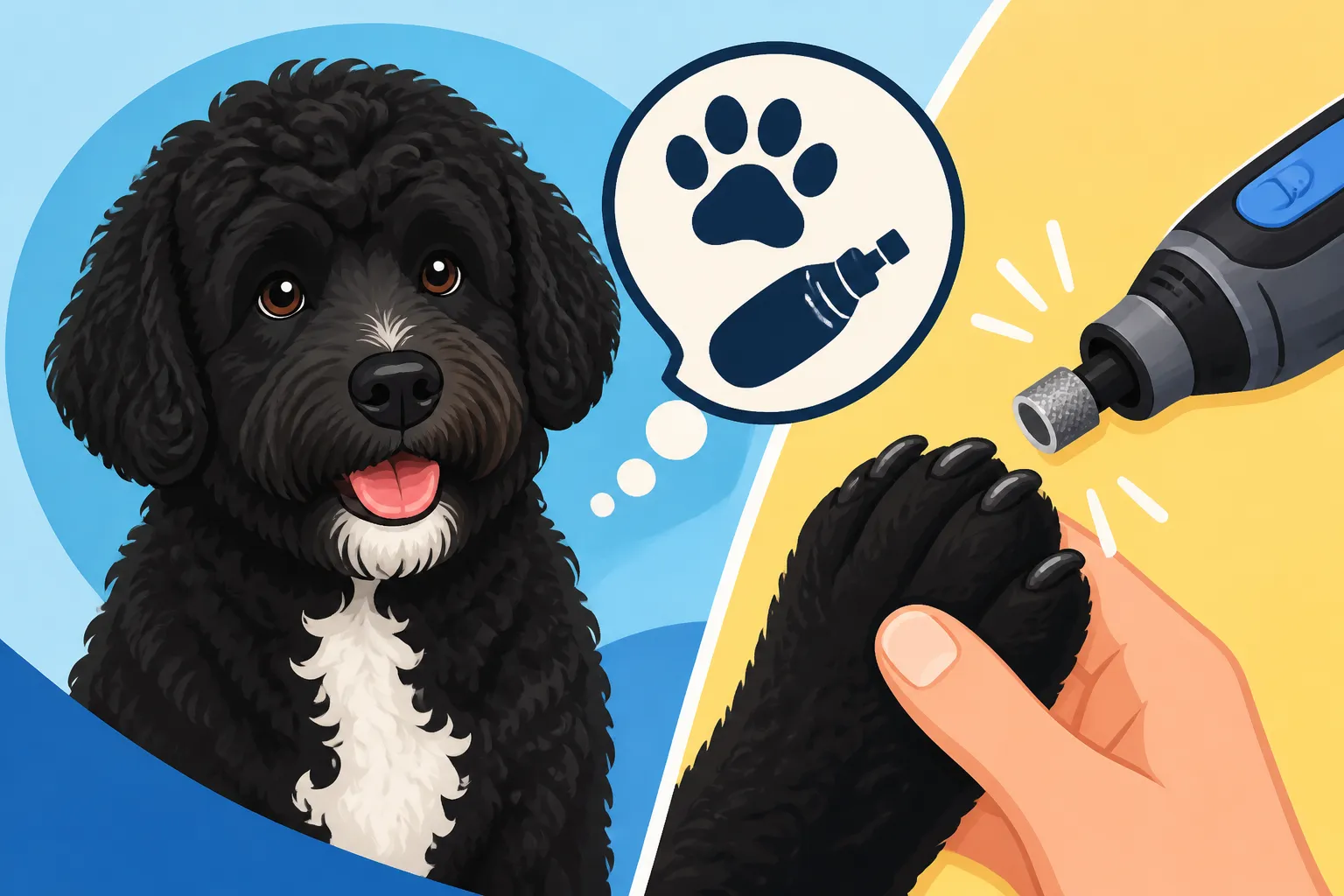
So, if traditional clippers are often a source of stress, what's the alternative? Enter the Dremel, or rather, a rotary tool designed specifically for pet nail grinding. This isn't your grandfather's workshop tool; modern pet-specific Dremels are quieter, often cordless, and much more ergonomic for grooming. The concept is simple: instead of clipping, you're gently grinding the nail down, layer by layer.
How a Rotary Tool Works on Dog Nails
A Dremel uses a rotating abrasive band or stone to file down the nail. Instead of a sudden cut, it's a gradual reduction. This has several key advantages. First, you're removing small amounts of nail at a time, giving you much more control. You can see the layers of the nail as you grind, making it easier to identify the quick before you hit it. As you get closer, you'll often see a small, dark dot appear in the center of the nail, which is your cue to stop. This visibility drastically reduces the risk of cutting too far.
Second, the grinding action seals the tip of the nail, leaving it smooth. Clippers can sometimes leave sharp edges or even splinter the nail, which can be uncomfortable for your dog or scratch your floors. A smooth, rounded nail is much more pleasant for both your PWD and your furniture.
Types of Dremel Tools for Pets
When we talk about a "Dremel," we're often using the brand name generically for any pet nail grinder. While the Dremel brand certainly makes excellent rotary tools, there are many other excellent brands specifically tailored for pets. These often come with features like quieter motors, ergonomic grips, safety guards to prevent hair entanglement, and variable speed settings. You can find a good selection of these on sites like Chewy or Amazon, making it easy to compare options and read reviews from other pet parents. Remember, a quieter model is often a huge bonus, especially for PWDs who might be sensitive to noise.
The Importance of Gradual Introduction
Just like any new grooming tool, a Dremel needs to be introduced slowly and positively. Don't just grab it and go straight for the nails! Start by simply letting your Portuguese Water Dog see and sniff the tool while it's off. Reward them with high-value treats. Then, turn it on in another room so they hear the sound without direct pressure. Gradually bring the running tool closer, always pairing it with treats and praise. Touch the vibrating tool to their paw, then to a single nail, for just a second or two, rewarding them each time. The goal is to build a positive association, not to get all the nails done in one go. Slow and steady wins the race when it comes to desensitization. This process can be greatly aided by the techniques discussed in Teaching a Portuguese Water Dog to Stand for Grooming.
The Benefits of Using a Dremel for Your Portuguese Water Dog's Nails
Switching from clippers to a Dremel can feel like a game-changer for many Portuguese Water Dog owners. The benefits extend beyond just avoiding the quick; they contribute to overall foot health and a more positive grooming experience for everyone involved.
Precision and Safety in Nail Trimming
The biggest advantage, without a doubt, is the enhanced precision and safety. With a Dremel, you're removing tiny increments of nail at a time. This allows you to "paint" the nail down, shaping it and keeping a close eye on the quick. For dark-nailed Portuguese Water Dogs, this is invaluable. You can grind until you just start to see the quick, stopping well before any pain or bleeding occurs. This vastly reduces the anxiety for both you and your dog. When your dog learns that nail trims no longer mean pain, they become much more cooperative.
Another aspect of precision is the ability to maintain a consistently short nail. Because you can grind more frequently and safely, you can often encourage the quick to recede over time. This means you can get the nails even shorter than you might with clippers, which is ideal for an active breed like the PWD. Shorter nails mean better foot posture, less risk of snagging, and less click-clacking on your floors.
Smoother Edges, Fewer Scratches
Think about the difference between a clean cut from scissors and a smoothly filed edge. Clippers can leave sharp, sometimes jagged, edges on nails. This isn't just a cosmetic issue. These sharp edges can scratch your floors, furniture, and even you or other pets during playtime. More importantly, they can be uncomfortable for your dog, especially if they catch on something or break off unevenly.
A Dremel, by its very nature, creates a smooth, rounded edge. This not only looks tidier but also feels much better for your Portuguese Water Dog. It reduces the risk of snags and tears, and means less damage to your home. Plus, no more accidental scratches from an overly enthusiastic paw during greetings!
Encouraging Quick Recession
This is a fantastic, long-term benefit. When a dog's nails are consistently kept long, the quick grows longer with them. This is why it feels impossible to get them short enough with clippers without hitting the quick. By using a Dremel frequently and grinding a little bit off each time—even if it's just barely touching the nail—you encourage the quick to recede. Over weeks and months, you'll find you can safely grind the nails shorter and shorter, bringing them closer to the pad. This is incredibly beneficial for a Portuguese Water Dog's foot health, ensuring they maintain proper posture and weight distribution on their pads rather than their nails. Proper nail length is a huge part of Nails, Feet and Webbing on a Portuguese Water Dog and overall comfort.
Less Stress for Both Handler and Dog
This is arguably the most valuable benefit. The less traumatic the grooming experience, the better for everyone. With the Dremel, the absence of sudden pressure and the reduced risk of pain transform nail care from a dreaded chore into a manageable routine. When your PWD isn't stressed, they're more likely to cooperate, making the process faster and more pleasant. You'll feel less pressure, and your dog will respond positively to your calm demeanor. This positive association can even spill over into other grooming tasks. Imagine your PWD actually tolerating nail trims – it’s a wonderful reality for many who make the switch.
Potential Drawbacks and How to Overcome Them
While the Dremel offers many advantages, it's not without its own set of considerations. Being aware of these potential drawbacks and knowing how to address them can ensure a smooth transition and successful long-term use.
Noise and Vibration Sensitivity
For some Portuguese Water Dogs, the biggest hurdle to Dremel use is the noise and vibration. While pet-specific Dremels are designed to be quieter than workshop tools, they still produce a whirring sound and a noticeable vibration that can be startling or unsettling for sensitive dogs. This is where that gradual desensitization process, which we touched on earlier, becomes absolutely crucial.
Overcoming it:
- Start extremely slow: As mentioned, introduce the Dremel in steps: sight, sound from a distance, sound up close, brief touch while off, brief touch while on. Each step should be paired with lavish praise and high-value treats. Think small, delicious treats your dog only gets during Dremel time.
- Use a quiet model: Invest in a good quality, low-noise pet nail grinder. Brands like Casfuy, Hertko, or even specific Dremel pet models are often reviewed for their quiet operation. You can often find detailed product descriptions and reviews on platforms like Chewy or Amazon that highlight noise levels.
- Create a positive association: Turn Dremel time into "spa time" with positive reinforcement. Massage their paws, give them treats, speak in a calm, soothing voice. If your dog is particularly stressed, consider working with a professional groomer or trainer who uses a Dremel and can guide you. Remember the importance of patience, especially with a dog that was bred to think for itself; they'll need convincing that this is a good idea!
Time Commitment
Let's be real, grinding nails takes a bit longer than a quick clip. Each nail needs individual attention, and if your PWD has longer nails to begin with, bringing them down to a good length through grinding can take some time initially.
Overcoming it:
- Frequent, short sessions: Instead of trying to do all four paws in one sitting, especially when starting out, aim for shorter, more frequent sessions. Perhaps just two nails a day, or one paw every other day. This keeps the experience positive and prevents your dog from becoming overwhelmed.
- Integrate into routine: Make it part of your regular grooming routine. You already brush their coat frequently to prevent mats, so why not add a few nails to the schedule? This might happen while you're watching TV or after a calm play session. Remember, How Long Home Grooming a Portuguese Water Dog Takes Weekly can be considerable, so building nail care into that schedule makes sense.
- Set up for success: Have all your supplies ready: Dremel, treats, styptic powder (just in case, though less likely with a Dremel), and a good light source. A grooming table can also help keep your dog still and at a comfortable height for you. Consider What a Grooming Table Costs for a Portuguese Water Dog as a worthwhile investment.
Heat Generation
The friction from grinding can generate heat on the nail. If you hold the Dremel in one spot for too long, it can become uncomfortably hot for your dog.
Overcoming it:
- Short bursts: Use the Dremel in short, quick bursts, moving it from nail to nail or even from one side of a nail to the other. Grind for a second or two, then lift and move. This allows the nail to cool down.
- Check the nail: Periodically touch the nail with your finger (not the grinding bit!) to check its temperature. If it feels warm, give it a break.
- Low speed settings: Start with a lower speed setting on your Dremel. This generates less heat and gives you more control, which is ideal for both learning and for dogs sensitive to the sensation.
Entanglement of Long Coat Hair
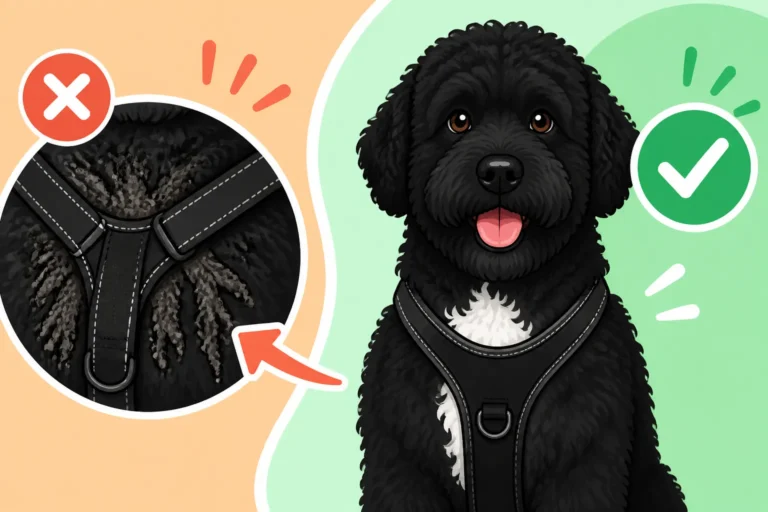
A Portuguese Water Dog's beautiful coat can be a double-edged sword when using a Dremel. Their curly or wavy hair, especially around the paws, can easily get caught in the spinning bit of the Dremel, leading to painful pulling or entanglement.
Overcoming it:
- Trim paw hair first: Before you even bring out the Dremel, make sure the hair around your PWD's paws and between their pads is trimmed short. This creates a clear working area.
- Use a Dremel with a safety cap: Many pet-specific Dremels come with a clear plastic safety cap or guard that has a small opening for the nail. This is a lifesaver for PWDs, as it helps push the hair away from the spinning bit.
- Hold paws carefully: When you're grinding, hold your dog's paw firmly but gently, spreading the toes and pulling the surrounding hair back. You can also use a bit of tape or a thin elastic band (be very careful not to make it too tight or leave it on for too long) to temporarily hold back longer hair on the leg, though this is usually only necessary if the hair is quite long. This attention to detail contributes to the overall What Care a Portuguese Water Dog Needs Its Whole Life.
By proactively addressing these potential issues, you can turn the Dremel into a powerful and positive tool for managing your Portuguese Water Dog's nail health.
Step-by-Step Guide to Dremeling Your Portuguese Water Dog's Nails
Alright, you've done your research, you've got your Dremel, and you've started the desensitization process. Now, let's talk about the practical steps for actually grinding those nails. Remember, patience is your best friend here.
Gathering Your Supplies
Before you even start, make sure you have everything within arm's reach. This prevents you from having to break focus or let go of your dog's paw mid-session.
- Your Dremel/Nail Grinder: Charged and ready to go.
- High-Value Treats: Small, easy-to-swallow, delicious treats your PWD absolutely loves. Think soft cheese, cooked chicken, or training treats from a brand like Ollie (though generally for food, they often have good training treats too).
- Styptic Powder: Just in case, even though the risk is lower with a Dremel, accidents can happen. Kwik Stop is a popular brand.
- A Good Light Source: This is essential for seeing the quick. A headlamp works wonders because it directs light exactly where you're looking.
- Comfortable Setup: A non-slip mat on the floor, or a grooming table if your dog is comfortable with it. You want both you and your dog to be relaxed. If you plan to trim the hair between their paw pads beforehand, make sure you have small clippers or blunt-nosed scissors ready.
Positioning Your Portuguese Water Dog
How you position your dog can make a huge difference. The goal is to keep them relaxed and still, allowing you easy access to their paws.
- Calm environment: Choose a quiet spot where there are no distractions.
- Comfort is key: Many PWDs are comfortable lying on their side while you work on their paws. Others might prefer to sit or stand, with you holding a paw gently. Experiment to find what works best for your dog. For smaller dogs, lap-sitting works, but for an adult PWD, you might need them on the floor or a grooming table.
- Support the paw: Hold their paw firmly but gently. Make sure you support the entire paw and leg so they don't feel unbalanced or uncomfortable. Gently push up on the toe pad to extend the nail, making it easier to access. Be mindful of their Hips and Joints in a Portuguese Water Dog if they're older or have mobility issues, ensuring they are in a comfortable position.
The Grinding Technique
This is where the magic happens! Remember the principles of short bursts and keeping the nail cool.
- Start slow: Turn the Dremel on to its lowest speed setting.
- Angle the Dremel: Hold the Dremel at a slight angle to the bottom of the nail, rather than directly perpendicular. This helps you shape the nail and round it off.
- Short bursts, constant movement: Touch the grinding band to the nail for just 1-2 seconds, then lift it off. Don't press hard; let the tool do the work. Move it from side to side across the tip of the nail, rounding it as you go. This prevents heat buildup and allows you to constantly check your progress.
- Watch for the quick: As you grind, you'll see layers of the nail being removed. For dark nails, you're looking for a small, dark circle or dot to appear in the center of the nail. This signals you're getting close to the quick. Stop immediately when you see this, or just before.
- Round the edges: Focus on grinding the tip and gently rounding the edges. You can also carefully grind the underside of the nail, near the pad, to further shorten and shape it.
- Praise and reward: After each nail, or even after a few seconds of grinding, stop, give a treat, and offer praise. This reinforces the positive experience. If your dog gets stressed, take a break.
Dealing with the Dewclaws
Don't forget the dewclaws! Many Portuguese Water Dogs have them, and if not trimmed, they can grow very long, curve back into the leg, and cause pain or infection.
- Gentle handling: Dewclaws are often more sensitive, so be extra gentle.
- Same technique: Use the same short burst and rounding technique.
- Frequent checks: Because they don't touch the ground, dewclaws can grow quickly and often unnoticed. Incorporate them into your regular Dremel routine.
Consistency is Key
The more consistently you use the Dremel, the easier it becomes. Frequent, even weekly, short sessions are far better than infrequent, long, stressful ones. Consistency helps keep the quick recessed and your PWD accustomed to the process. You can even check out comprehensive resources on sites like Chewy or Amazon for tools and instructional videos to refine your technique. A little practice, a lot of patience, and plenty of treats will have your Portuguese Water Dog rocking perfectly groomed nails in no time!
| Feature | Traditional Clippers | Dremel (Rotary Tool) |
|---|---|---|
| Method | Snips the nail in a single cut | Grinds the nail down gradually |
| Precision | Lower, especially with dark nails; risk of hitting quick | High; allows visible quick identification |
| Nail Finish | Can leave sharp edges or splinter | Smooth, rounded edge; seals nail tip |
| Quick Recession | Difficult to encourage | Easier to encourage with consistent, short trims |
| Noise/Vibration | Sudden "snap" sound | Continuous whirring/vibration (can be mitigated) |
| Time per Nail | Faster if successful | Slower, but more controlled |
| Dog's Comfort | Pressure, sudden cut, potential pain | Gentle abrasion, less pain risk, can be desensitized |
| User Anxiety | High fear of quicking | Lowered due to visual control and gradual process |
| Cost | Typically less for clippers | Higher initial investment for grinder |
| Learning Curve | Low for basic cut, high for dark nails | Moderate, requires desensitization and practice |
Long-Term Nail Care and Overall Health for Your Portuguese Water Dog
Switching to a Dremel isn't just about making nail trims easier; it's about fostering better long-term foot health and a more harmonious relationship with your Portuguese Water Dog during grooming. Their feet are crucial to their active lifestyle, whether they're swimming, running, or working.
The Impact of Nail Length on PWD Health
Long nails aren't just an aesthetic issue; they can seriously impact your Portuguese Water Dog's physical health and comfort. When nails are too long, they push up into the nail bed, creating pressure on the toe joints. Over time, this can lead to discomfort, pain, and even arthritis, especially in an aging dog. It also forces their toes to splay and can affect their gait, altering the natural alignment of their feet and legs. Imagine walking around with shoes that are too small and constantly pushing your toes back – it's uncomfortable and detrimental to joint health. For a breed known for its athleticism and water prowess, optimal foot health is non-negotiable. This ties into the broader topic of Hips and Joints in a Portuguese Water Dog.
Properly trimmed nails allow your PWD to stand and walk on their pads, distributing their weight correctly. This is vital for their balance, agility, and overall skeletal health. It contributes to their ability to run, jump, and swim effectively, maintaining the robust physical condition characteristic of the breed.
Integrating Dremel Use into a Holistic Grooming Routine
Nail care is just one piece of the grooming puzzle for a Portuguese Water Dog. Their unique coat, webbed feet, and active lifestyle require a comprehensive approach.
- Regular Brushing: A PWD's curly or wavy coat requires frequent brushing to prevent mats. You can learn more about How Often a Portuguese Water Dog Needs Brushing to keep that coat healthy. While you’re brushing, take a few minutes to check their nails.
- Ear Care: Their ears, especially after swimming, are prone to infections. Checking and cleaning them weekly is crucial, as detailed in Why a Portuguese Water Dog's Ears Need Checking Every Week.
- Coat Clipping: Depending on the clip you choose, regular professional or home clipping is essential. The popular The Retriever Clip Is the Coat Most Portuguese Water Dogs Wear still requires regular maintenance.
- Paw Pad Checks: Regularly inspect their paw pads for cuts, cracks, or foreign objects, especially if they’re active outdoors. Their webbing, too, needs to be kept clean and free of debris.
By viewing Dremel use as an integral part of this broader grooming routine, rather than an isolated task, you create a more efficient and positive experience for your dog. Perhaps on brush-out day, you tackle a few nails, making it all part of their regular "spa treatment."
When to Seek Professional Help
Even with the best intentions and tools, some Portuguese Water Dogs might remain highly resistant to nail trims. If you've tried everything—slow desensitization, high-value treats, different Dremel models—and your dog is still showing extreme fear or aggression, it's okay to seek professional help.
- Professional Groomers: Many professional groomers are skilled in using Dremels and have tricks and techniques for nervous dogs. They can often get the job done efficiently and safely.
- Veterinary Technicians: Your vet's office often has technicians who can help with nail trims, sometimes even providing light sedation if absolutely necessary for highly anxious dogs.
- Positive Reinforcement Trainers: A professional dog trainer specializing in positive reinforcement can help you work through your dog's fear of the Dremel, providing tailored strategies and support. They can help you address underlying anxieties that might make your PWD "hide pain" or express discomfort in subtle ways.
Ultimately, the goal is healthy, comfortable feet for your Portuguese Water Dog, and a stress-free experience for both of you. The Dremel offers a fantastic pathway to achieving this, proving to be a highly suitable tool for managing their robust, fast-growing nails. With a little practice, patience, and a whole lot of love, you'll master the art of Dremeling and ensure your PWD continues to stride confidently through life.
Disclaimer
This article is for general informational purposes only and does not constitute professional advice. Laws, prices and regulations vary by location and change over time. Consult a qualified professional for guidance on your specific situation.